Photo:AP
Introduction
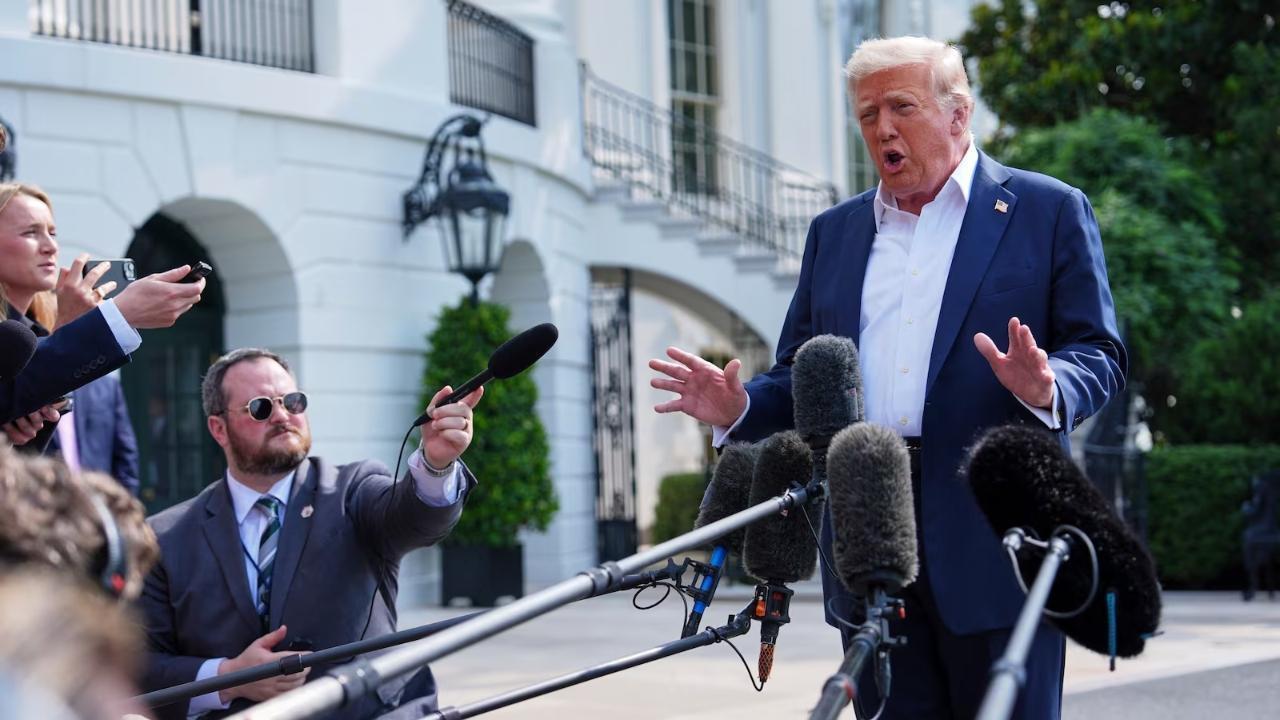
In a statement that has sparked renewed debate over the U.S. role in the Russia-Ukraine conflict, former President Donald Trump announced that the United States is implementing a strategy to sell weapons to NATO allies, who will then funnel those arms to Ukraine. According to Trump, this method allows Ukraine to receive critical military support without requiring the United States to directly bear the cost or logistical burden. The move has significant geopolitical implications as the war in Ukraine enters its third year and Russia escalates its offensive capabilities with increased missile and drone attacks.
A Shift in U.S. Military Assistance Strategy
Trump’s announcement marks a significant shift from the traditional U.S. military aid model. Previously, under both the Trump and Biden administrations, Washington authorized direct arms transfers to Ukraine through programs like the Presidential Drawdown Authority (PDA) and Foreign Military Financing (FMF). These programs have been instrumental in providing Ukraine with air defense systems, ammunition, drones, and heavy weaponry.
However, faced with mounting criticism from within the Republican Party over continued financial support for Ukraine, Trump now seeks a middle-ground strategy. By having NATO countries purchase U.S. weapons and then send them to Ukraine, the United States remains indirectly involved while reducing domestic political risk.
Explaining the Mechanism: NATO as the Intermediary
In his statement, Trump said:
"We're sending weapons to NATO, and NATO is paying for those weapons, 100 percent... The weapons that are going out are going to NATO, and then NATO is going to be giving those weapons [to Ukraine]."
The plan suggests the U.S. would sell weapons to NATO member countries like Germany, Poland, and the United Kingdom, which would then transfer those weapons to Ukraine. While the U.S. military-industrial complex continues to benefit economically, the financial responsibility shifts to Europe.
Key Advantages of This Approach
-
Reduced Political Backlash in the U.S.
Domestic opposition to continued funding of Ukraine has intensified, particularly among some Republicans and fiscally conservative Democrats. By offloading the cost to NATO partners, Trump’s plan seeks to minimize that criticism.
-
Faster Transfer of Arms
NATO countries already have infrastructure in place near Ukraine, including airbases, transport hubs, and maintenance crews. They can deliver weapons much faster than through lengthy U.S. export processes.
-
Burden Sharing Among Allies
This strategy places more financial responsibility on European countries, many of which are geographically closer to the conflict. Trump and others argue that these nations should carry more of the financial load.
-
Avoids Legislative Delays in Congress
U.S. arms sales typically require Congressional approval—something that has become difficult with the growing divide in Washington. Selling to NATO sidesteps these procedural roadblocks.
Weapons Included in the Sales
The list of U.S. weapons likely to be sold to NATO allies for Ukraine includes:
-
Patriot Missile Systems: These systems are crucial in intercepting Russian ballistic and cruise missiles. Ukraine has repeatedly requested additional Patriot batteries as Russia ramps up long-range missile strikes.
-
HIMARS Rocket Systems: Capable of firing precision-guided rockets at extended range, HIMARS have proven decisive in Ukraine’s battlefield successes.
-
155mm Artillery Shells: These are in constant demand by Ukrainian ground forces, who use Western artillery extensively.
-
FIM-92 Stinger and Javelin Missiles: These shoulder-fired weapons have become symbols of Ukrainian resistance.
-
Air-to-Air and Anti-Drone Systems: With Russia’s increased use of Iranian-made Shahed drones, Ukraine requires more interceptive capabilities.
Geopolitical Reactions
Ukraine’s Response
Ukrainian officials have cautiously welcomed the idea, emphasizing their desperate need for ammunition and air defense systems. President Volodymyr Zelenskyy reportedly held private talks with Trump and expressed gratitude for any sustained support. Ukraine’s military leaders also stated that “timing and quantity” are critical, regardless of who is funding or delivering the weapons.
European Allies
Many European NATO members, particularly Germany, the Netherlands, and Poland, have already been active suppliers of weapons to Ukraine. Germany recently committed to providing additional Patriot systems and may act as a primary buyer in Trump’s strategy. However, some smaller countries with limited budgets, such as Slovakia and Hungary, may not be in a financial position to participate fully.
Russia’s Response
The Kremlin condemned the move, accusing the United States of continuing to “sponsor terrorism” in the region. Russian foreign ministry officials stated that the transfer of arms through NATO would not change the “inevitability of Ukraine’s defeat.” Russia has also hinted at retaliatory measures, possibly including cyberattacks and escalated airstrikes.
Domestic Political Implications in the U.S.
The strategy represents a significant gamble in U.S. domestic politics. On one hand, it appeals to isolationist elements by reducing direct U.S. financial exposure. On the other, critics argue it is a semantic workaround that doesn’t change America’s complicity in the war.
Supporters’ Viewpoint
-
Senator Lindsey Graham praised the plan as “smart diplomacy”.
-
Conservative think tanks, including the Heritage Foundation, said the approach “protects American interests while supporting democratic values.”
-
Defense contractors may view it as a boon—keeping production lines active without the headache of domestic controversy.
Critics’ Viewpoint
-
Some progressives and anti-war activists argue the U.S. is simply laundering war support through NATO.
-
Democratic leaders say the lack of transparency is troubling, and that Congress should still retain oversight of such arms transfers.
-
Human rights organizations warn that continued escalation, regardless of the mechanism, risks turning Ukraine into a permanent war zone.
Historical Context: Comparing Past Conflicts
The current strategy resembles Cold War-era tactics, such as the Lend-Lease Program or U.S. arms deliveries to Afghan Mujahideen via Pakistan in the 1980s. In those cases, the U.S. avoided direct military involvement while heavily influencing the conflict.
In Vietnam, too, the U.S. initially supported the South Vietnamese government indirectly before becoming more entangled. Critics argue the NATO route might serve as a slippery slope toward broader U.S. engagement.
Legal and Ethical Considerations
International law generally allows arms sales to sovereign nations, but indirect arms transfers to active war zones carry legal and ethical complications. Arms sent to Ukraine via third parties might still hold the U.S. legally responsible under the Arms Export Control Act and international arms treaties.
There are also concerns about weapons proliferation—some fear that weapons sent to Ukraine may be lost, stolen, or diverted to black markets, as has occurred in past conflicts.
Long-Term Strategic Goals
From a strategic standpoint, Trump’s plan aligns with broader U.S. goals of:
-
Weakening Russia economically and militarily.
-
Sustaining NATO cohesion by promoting collective responsibility.
-
Strengthening U.S. defense industries without spending directly from federal budgets.
Still, it raises questions about the future of U.S. foreign policy. Will the U.S. continue to outsource its global leadership role? Is this a sustainable model for future conflicts?
Military Logistics and Supply Chain Impact
Defense analysts have noted that the U.S. defense supply chain is under strain. With delays in ammunition production and pressure to replenish stockpiles, this NATO strategy may offer breathing room to American suppliers.
Moreover, the NATO route may also decentralize logistics, reducing risk for U.S. convoys and minimizing reliance on U.S. bases in Eastern Europe.
Conclusion
Trump’s proposal to use NATO allies as intermediaries for transferring U.S.-made weapons to Ukraine represents a strategic recalibration in the West’s approach to the Russia-Ukraine war. It aims to balance domestic political pressure, maintain support for Ukraine, and preserve U.S. strategic leadership—all while forcing European allies to shoulder more of the burden.
Whether this model becomes the new standard for U.S. military diplomacy—or a temporary workaround in a politically divided America—remains to be seen. What is clear, however, is that as Russia intensifies its attacks and Ukraine seeks ever more weapons, the urgency of delivering aid—by any method—will only grow.