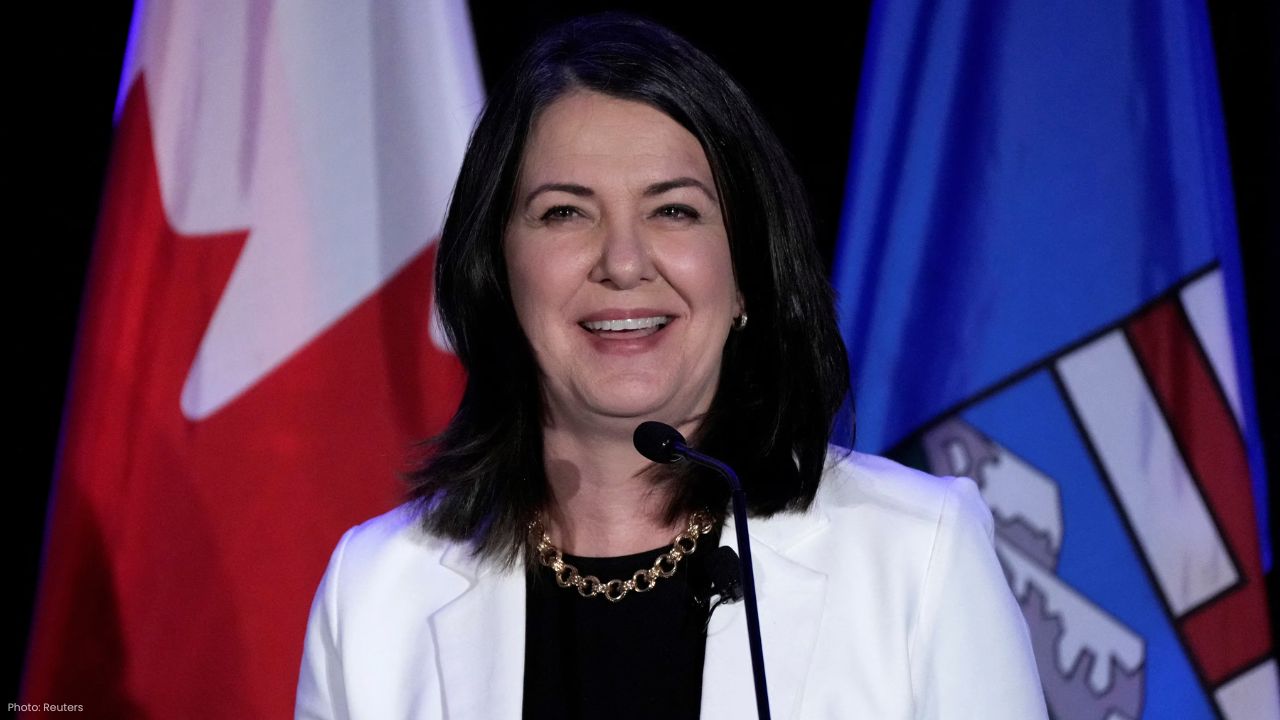
Alberta Premier Danielle Smith indicated the province may adjust aspects of its industrial carbon pricing program, including the current $95 per tonne rate, which is frozen through 2026. This price remains below the federal backstop, set to rise to $110 per tonne next year.
Smith spoke to reporters in Ottawa following a meeting with Prime Minister Mark Carney, emphasizing Alberta's goal to balance industrial viability with investments in green technology. “The $95 per tonne carbon price is still open for discussion,” she said, adding that the province wants to maintain its carbon pricing framework, which has been in place since 2007.
Federal Backstop and Uncertainty for Industry
Federal ministers have not confirmed whether Ottawa will enforce the higher federal backstop if Alberta’s program falls short of federal standards. The federal backstop is designed to activate if provinces lag in compliance, though Carney has not yet acted against Saskatchewan, which eliminated its industrial carbon price earlier this year.
A study from the Canadian Climate Institute underscores the significance of industrial carbon pricing, showing it reduces more greenhouse gases than the consumer carbon levy.
Proposed Alberta Program Changes
Alberta also proposed updates to its industrial carbon pricing last month:
While these changes have been praised by industry, economists warn they create uncertainty. Dave Sawyer, principal economist at the Canadian Climate Institute, told a parliamentary committee that proposed modifications have chilled the market, with future credit prices potentially falling to $65 per tonne, reducing incentives for clean growth investment.
Carbon pricing systems allow companies under the emission cap to sell credits to those exceeding it. If credit prices are too low, firms may opt to buy credits rather than invest in reducing emissions.
Pipeline and Policy Negotiations
Smith is negotiating with Carney on building a new pipeline from Alberta to the B.C. coast. She has urged the federal government to:
-
Lift the tanker ban off B.C.’s coast
-
Eliminate the electric vehicle sales mandate
-
Drop the oil and gas emissions cap
-
Scrap the federal industrial carbon price, allowing provincial regulation
Smith highlighted Carney’s willingness to revise federal policies, referencing repeals of the retail carbon tax and delays in implementing the EV mandate.
She also suggested a potential “grand bargain”, combining the Pathways Alliance carbon-capture project with the proposed pipeline. Smith hopes the pipeline proposal, which currently lacks a private sector backer, can be submitted to Ottawa’s Major Projects Office by next spring, aiming for a deal by the Grey Cup on Nov. 16.