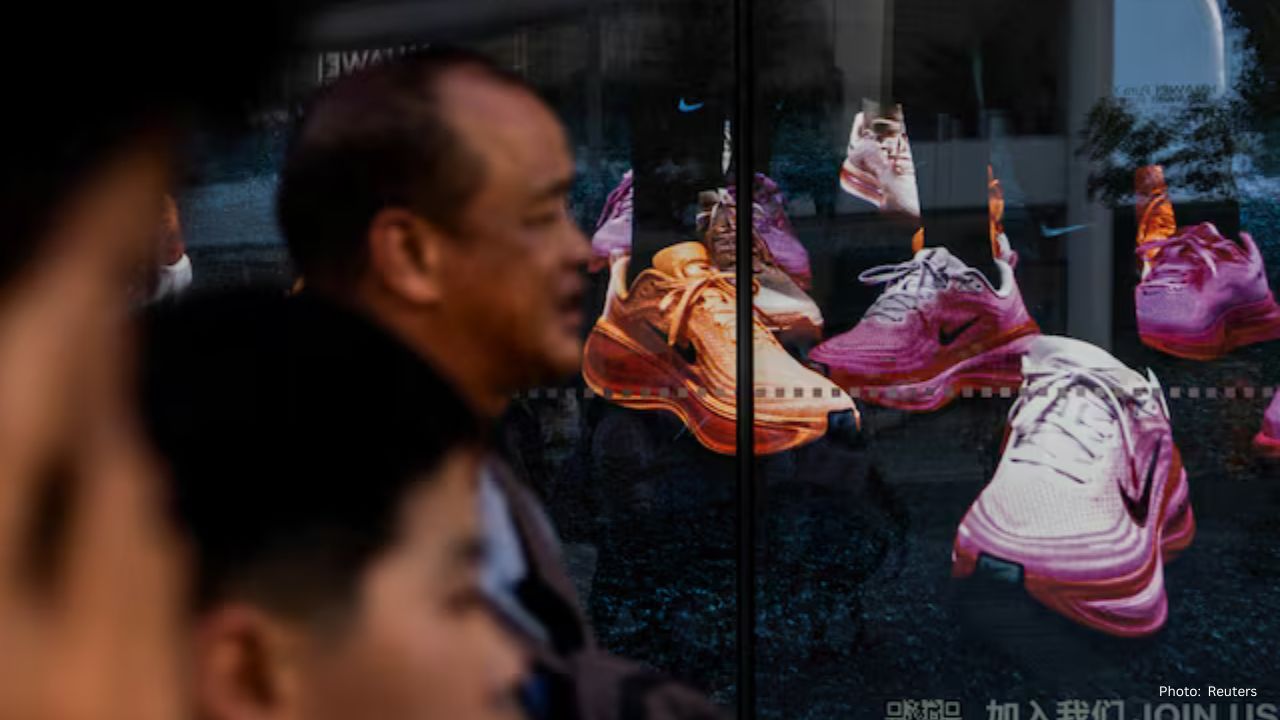
Nike is currently grappling with significant challenges in China, a region once viewed as a key area for growth. Recent data indicates that the company's recovery initiatives there are failing to deliver desired outcomes, raising alarm among shareholders and resulting in a drop in stock prices.
This marks the sixth consecutive quarter of falling sales for Nike in China, with footwear sales plummeting by approximately 20%. Given that China constitutes about 15% of Nike’s global revenue, this downturn presents a critical issue for the company's overall financial health.
The repercussions were immediate, with Nike's stock nosediving over 10% in premarket trading on Friday. In the last year, shares have decreased by 13%, signaling a potential for a fourth successive annual drop. This trend highlights mounting skepticism regarding Nike's ability to recover in one of the world’s toughest retail arenas.
CEO Elliott Hill acknowledged the need for a strategic overhaul in their approach to the Chinese market. After the latest earnings report, he emphasized the necessity for Nike to “reset” its customer engagement strategies. While investors did not expect a quick turnaround, many were anticipating a clearer upward trajectory, which now seems increasingly elusive.
A significant factor in this ongoing struggle is the increasing strain on profit margins. During the second quarter, Nike's gross margins took a hit due to elevated tariff costs and surplus inventory with dwindling demand. In response, the company is scaling back on outdated lifestyle lines and aiming to prioritize sports performance products, but tangible improvements have yet to materialize.
Moreover, competition within China has intensified markedly. Local brands such as Anta and Li-Ning are captivating consumers with innovative designs, strong local appeal, and competitive pricing. Concurrently, more cautious spending patterns among Chinese shoppers are compelling brands to lower prices and provide discounts, complicating Nike's efforts to maintain its premium branding.
Nike's digital sales, expected to fuel future growth, have also been troubling, with online sales plunging by 36%. This signals a loss of ground in areas that were traditionally strengths for the brand. Both online and brick-and-mortar store traffic have declined, and analysts warn that Nike's direct-to-consumer strategy in China is becoming vulnerable.
Challenges also persist regarding Nike's store strategy. Many international brands prefer operating their own outlets in China rather than using third-party retailers. Nike has admitted to insufficient investment in store upgrades to draw in customers, hampering its ability to replicate the multi-channel success seen in markets like the U.S.
To safeguard long-term profitability, Nike is scaling back on discounts during major sales events like Singles’ Day and is reducing future inventory orders. Company officials state that this is a strategic decision to eliminate outdated stock and reinvigorate demand. Nevertheless, this could negatively impact short-term sales.
While some analysts argue that Nike deserves some leeway—pointing to similar issues the company faced in North America before seeing improvements—China presents a complex and swiftly evolving market. With rising competition and rapidly changing consumer preferences, the road to recovery for Nike is uncertain.
Currently, Nike's prospects in China have shifted from being its most promising growth opportunity to a significant challenge. The speed and effectiveness of the company's adaptation strategies will be crucial in determining whether it can restore investor faith or continue to falter in this vital market.