Sri Lankan officials issued fresh landslide warnings on Sunday as torrential rains persist in regions already devastated by a fierce cyclone, escalating the confirmed death toll to 627. Recent weeks have seen multiple tropical storms and monsoon downpours batter South and Southeast Asia, resulting in widespread flooding, obstructing transport routes, and triggering landslides from Sumatra's jungles to Sri Lanka's mountainous regions. In total, at least 1,826 individuals have perished across Sri Lanka, Indonesia, Malaysia, Thailand, and Vietnam amidst these catastrophic events, leading to one of the most severe humanitarian crises in the area in years.
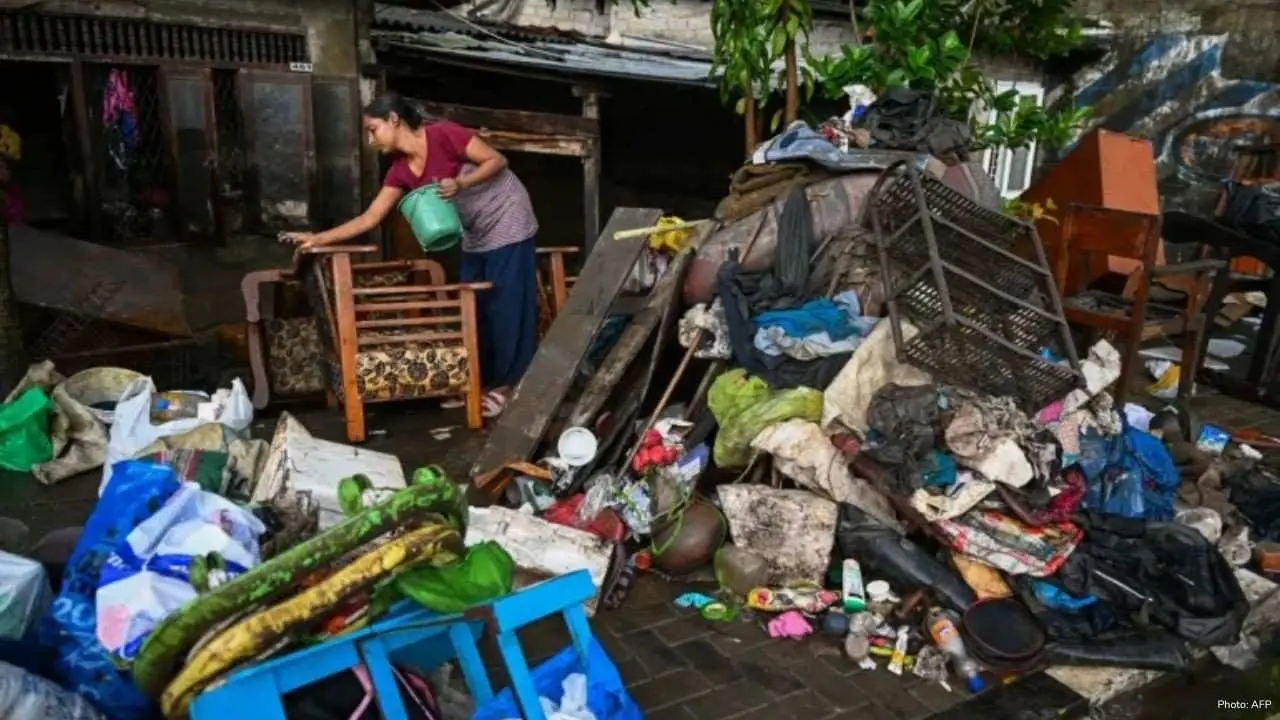
In Sri Lanka alone, over two million residents—approximately 10% of the population—are grappling with the impacts of flooding and landslides brought on by Cyclone Ditwah, the most formidable storm the island has faced in decades. The Disaster Management Centre has reported that continuing monsoon conditions are exacerbating the situation and destabilizing slopes in central and northwestern regions. On Sunday, helicopters and aircraft were dispatched to assist communities isolated by landslides, and the Sri Lanka Air Force confirmed it received another delivery of foreign aid supplies, including a consignment from Myanmar.
According to government reports, 471 of the confirmed fatalities occurred in the central tea-producing regions, while 190 individuals remain unaccounted for. The number of displaced persons in temporary shelters has decreased from 225,000 to 90,000 as floodwaters gradually subside. Nevertheless, over 80,000 dwellings have suffered damage, with nearly 5,000 completely destroyed, underscoring the extensive devastation. Officials indicated that recovery efforts will demand substantial time and resources.
In Indonesia, the death total has reached 921 with hundreds still missing; President Prabowo Subianto returned to the severely affected Aceh province on Sunday to oversee emergency response operations. Although some critics labeled the visit as “disaster tourism,” the government defended Mr. Prabowo’s presence as an effort to accelerate aid distribution, facilitate the reopening of blocked routes, and assess evacuation strategies. Reports indicated long queues for water and fuel in Banda Aceh, with sharp price increases for daily necessities like eggs. Despite the extensive damage, Indonesian authorities have not yet declared a national disaster, which could activate more resources.
Back in Sri Lanka, the government introduced a significant financial aid initiative on Friday aimed at reconstructing homes and revitalizing businesses impacted by the cyclone. Officials estimate that total recovery and rebuilding efforts could require up to $7 billion. The International Monetary Fund (IMF) has confirmed it is evaluating Sri Lanka’s appeal for an additional $200 million to aid in recovery, separate from the $347 million expected to be released later this month as part of the country’s four-year bailout initiative.
President Anura Kumara Dissanayake addressed parliament, stating that while Sri Lanka's economic situation has improved since the 2022 crisis, it remains insufficient to confront a disaster of this magnitude without international aid. With ongoing heavy rains and unstable ground conditions, authorities indicate that the following days will be critical for rescue operations, distribution of relief aid, and long-term recovery. The situation remains extremely dire for millions affected, and the government has prioritized national reconstruction.