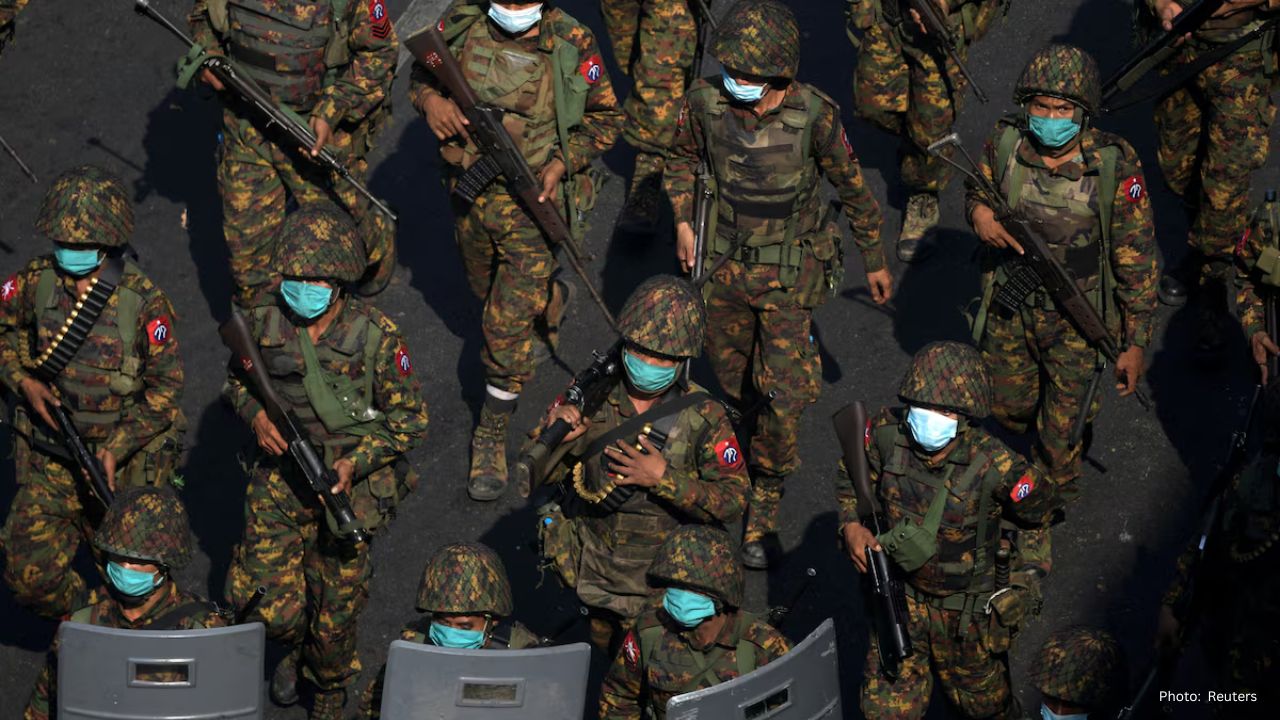
The military government of Myanmar is altering its combat strategy in the context of a protracted civil war. Following significant losses and retreat in various regions, the junta has escalated its methods, deploying harsher tactics to regain control. This includes drafting young individuals into military service, amplifying drone usage, and launching mass assaults to overwhelm rebel factions.
Reports from central Myanmar indicate that rebel fighters are experiencing unprecedented intensity in clashes, with heavy artillery and drone attacks concentrated on their positions. Waves of soldiers often advanced post-airstrikes, remaining undeterred by substantial casualties. Rebels noted this marked a departure from previous military engagements they had encountered, resulting in significant strain and forcing them to retreat to safer locations.
The conflict reignited following the military coup in 2021 that ousted the democratically elected government, an event that has since led to widespread hostilities throughout the nation. Armed dissident groups have wrested control over numerous towns and border territories, especially after a major rebel offensive in late 2023 exposed the military’s vulnerabilities.
However, the military has been undertaking strategic reforms over the past year. In early 2024, it instituted mandatory military service, influxing tens of thousands of new recruits into the ranks. While many lack adequate training, their sheer numbers have allowed for sustained assaults and rapid replenishment of lost personnel.
Additionally, the junta has shifted leadership, replacing inexperienced officers with seasoned leaders. Troops are now afforded improved intervals between deployments, leading to enhanced combat readiness. These modifications have rendered the military operations more coherent and relentless.
Drones have emerged as pivotal assets for the junta, being utilized for reconnaissance and precision strikes, transforming air operations into more lethal engagements. While rebels also employ drones, they lack the sophisticated technology to counter government aircraft effectively.
Moreover, a significant adjustment has been in the swiftness of operational decisions. Ground commanders can now swiftly request air support, streamlining coordination between aerial and ground forces, effectively targeting rebel positions preemptively.
China’s involvement remains an underlying factor, maintaining its view of Myanmar as an essential ally and exerting influence to stabilize its borders. Beijing's pressure has instigated ceasefires among some rebel factions while diminishing resource flows to others, forcing them into a corner.
Despite these developments, the junta's territorial reclaims are characterized by inconsistency. Resistance groups continue to maintain resilience across the nation, with no side asserting full control. Fighting persists from the Chinese frontier to the Bay of Bengal.
The renewed military efforts coincide with plans for a general election scheduled for this month. Critics from international organizations express skepticism regarding the fairness of the vote, citing the imprisonment of pivotal opposition figures and widespread party boycotts. To many, the election represents little change amid the ongoing strife.
The trajectory of Myanmar remains precarious. While the military's new tactics might temporarily bolster its position, they have simultaneously exacerbated the crises faced by civilians. The ongoing conflicts, forced conscription, and airstrikes underscore the country’s deepening turmoil. In the absence of genuine negotiation and peace initiatives, Myanmar is poised for further violence in the future.