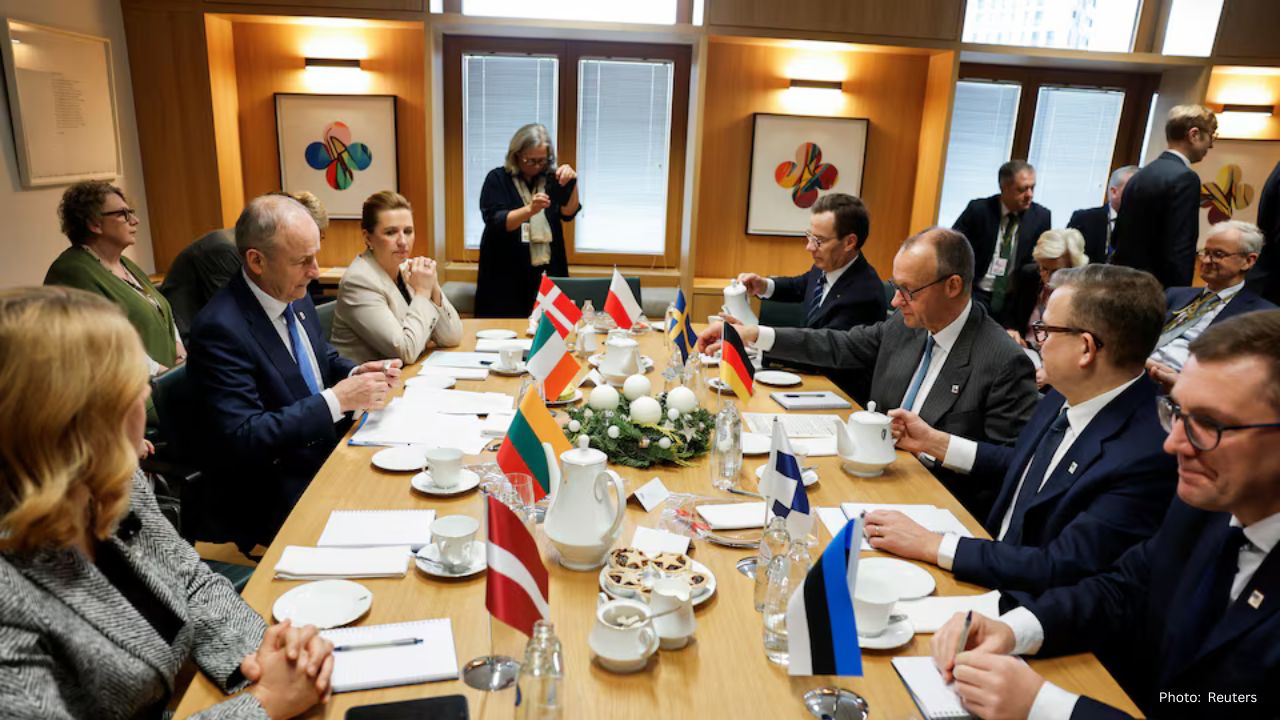
On Friday, global financial markets exhibited a cautious demeanor in response to European Union leaders' approval of a significant funding initiative aimed at bolstering Ukraine's defense in its conflict with Russia. Opting not to utilize frozen Russian assets—an approach that had caused division among member states—the EU decided to secure a loan amounting to €90 billion. This move was intended to circumvent potential legal and political repercussions, while ensuring stability within financial markets.
In the wake of this announcement, the yield on German 10-year government bonds experienced a minor uptick of approximately 1.8 basis points, reaching 2.867%. Despite this increase, the yield stayed below the nine-month peak recorded the previous day, indicating that market participants did not display excessive alarm. Meanwhile, the euro maintained stability against a stronger U.S. dollar, suggesting that currency traders perceived the decision as mostly neutral.
Analysts noted that the EU's decision to refrain from seizing Russian assets helped sustain confidence in European debt markets. Concerns that government-held funds could be vulnerable in Europe might have led global investors to reassess the safety of such investments, potentially elevating borrowing costs for EU nations. By opting for a borrowing strategy, EU leaders aimed to safeguard Europe’s reputation as a secure investment destination.
Kyle Rodda, a senior market analyst based in London, pointed out that appropriating Russian assets might have rendered European government bonds less appealing and driven interest rates up. He emphasized that while the additional borrowing imposes a minor burden, it is significantly less impactful than the risk of alienating major investors, including nations like China, that invest in European debt.
Market experts also speculated on the implications of this decision for gold pricing. Senior investment manager Shaniel Ramjee highlighted that a focus on safeguarding assets through legal means may slightly dampen demand for gold, which is often sought as a refuge in times of uncertainty.
Others scrutinized the potential effects on future EU borrowing strategies. Christoph Rieger, a rates strategist located in Frankfurt, noted that the EU may increase the issuance of short-term bills for fund-raising, while keeping long-term bond issuance stable. This could establish the EU as a frequent borrower in international markets, especially following the conclusion of its current extensive funding programs.
From a broader perspective, some investors embraced the decision. George Boubouras, head of research at an Australian asset management firm, described the agreement as a positive step but cautioned that further funding will likely be essential. He also warned that markets may be underestimating potential future risks, particularly if current geopolitical tensions escalate again in 2026.
In conclusion, the EU's funding choice elicited a measured yet attentive market response. While investors displayed relief at the preservation of frozen Russian assets, they remain conscious of the ongoing financial implications of supporting Ukraine and the effects on global market confidence in the foreseeable future.