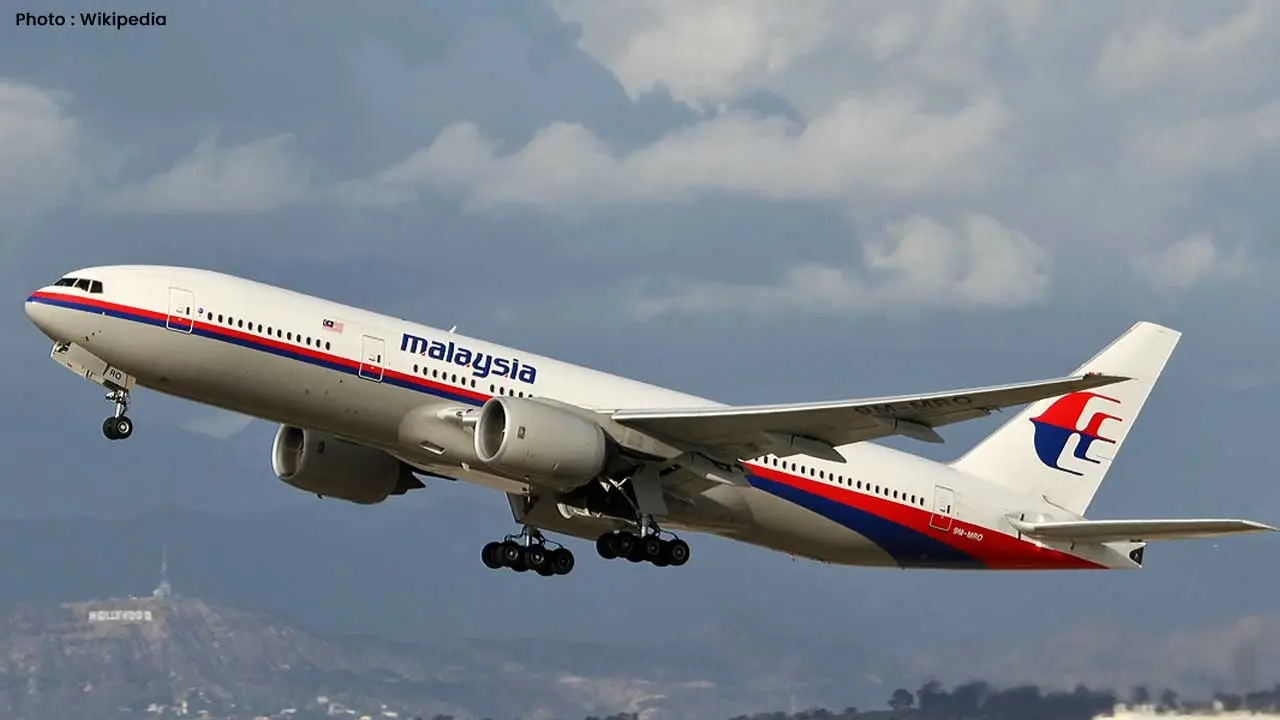
Over a decade has passed since Malaysia Airlines Flight MH370 disappeared during its flight, leaving a world captivated by its mystery. Despite exhaustive multinational search efforts, the fate of the Boeing 777 and its 239 occupants remains unknown. On Wednesday, Malaysian authorities revealed that Ocean Infinity, an American marine robotics firm, would recommence a seabed search for the missing flight starting on December 30, rekindling hopes of uncovering the lost aircraft.
The flight vanished on March 8, 2014, shortly after leaving Kuala Lumpur for Beijing. Just 39 minutes into the journey, the pilot's final communication, “Good night, Malaysian Three Seven Zero,” was recorded before the plane moved towards Vietnamese airspace. Subsequently, its transponder ceased operations, and military radar indicated that the aircraft turned back over the Andaman Sea. Satellite data implies the plane continued flying for hours, potentially until it ran out of fuel and crashed into a remote area of the southern Indian Ocean.
The vanishing of MH370 ignited extensive searches spanning the South China Sea, Andaman Sea, and southern Indian Ocean. Despite the investigation being the largest underwater search ever undertaken—covering nearly 120,000 square kilometers of seabed off western Australia—only minimal wreckage has been found. A few fragments, such as a flaperon discovered on Reunion Island in 2015, have been the only confirmations of its fate, while many black box signals traced during the investigations were determined to come from unrelated sources.
Among the 239 individuals aboard were 227 passengers, including five small children, along with 12 crew members. The majority were Chinese nationals, but there were also individuals from nations like the U.S., Indonesia, France, and Russia. Notable figures included two Iranian nationals traveling on stolen passports, a collective of Chinese calligraphy artists, 20 members of the Freescale Semiconductor team, a stunt double for actor Jet Li, and families with children.
MH370 has inspired numerous theories, encompassing hijacking, intentional interference, cabin depressurization, or technical failure. Malaysian officials have cleared all passengers and crew of wrongdoing but admit the possibility that someone might have consciously diverted the aircraft and terminated all communications.
In 2018, Ocean Infinity conducted a “no-find, no-fee” search using advanced robotics and seabed mapping technology but could not establish the plane's location. Plans are now in place for targeted searches across a 15,000-square-kilometer area of the southern Indian Ocean, where the likelihood of finding MH370 is deemed highest. Ocean Infinity stands to receive $70 million but only if the aircraft is located.
The search area poses unique challenges, with average depths around four kilometers and erratic weather patterns complicating the operations. However, this renewed effort signifies one of the final chances to solve the mystery of MH370 and deliver closure to families of the individuals lost in one of aviation's most perplexing incidents.
With the search's resumption, Malaysia Airlines Flight MH370 remains a focal point in news, sustaining the hope that the world might finally uncover the truth about the missing plane and those who were on board.