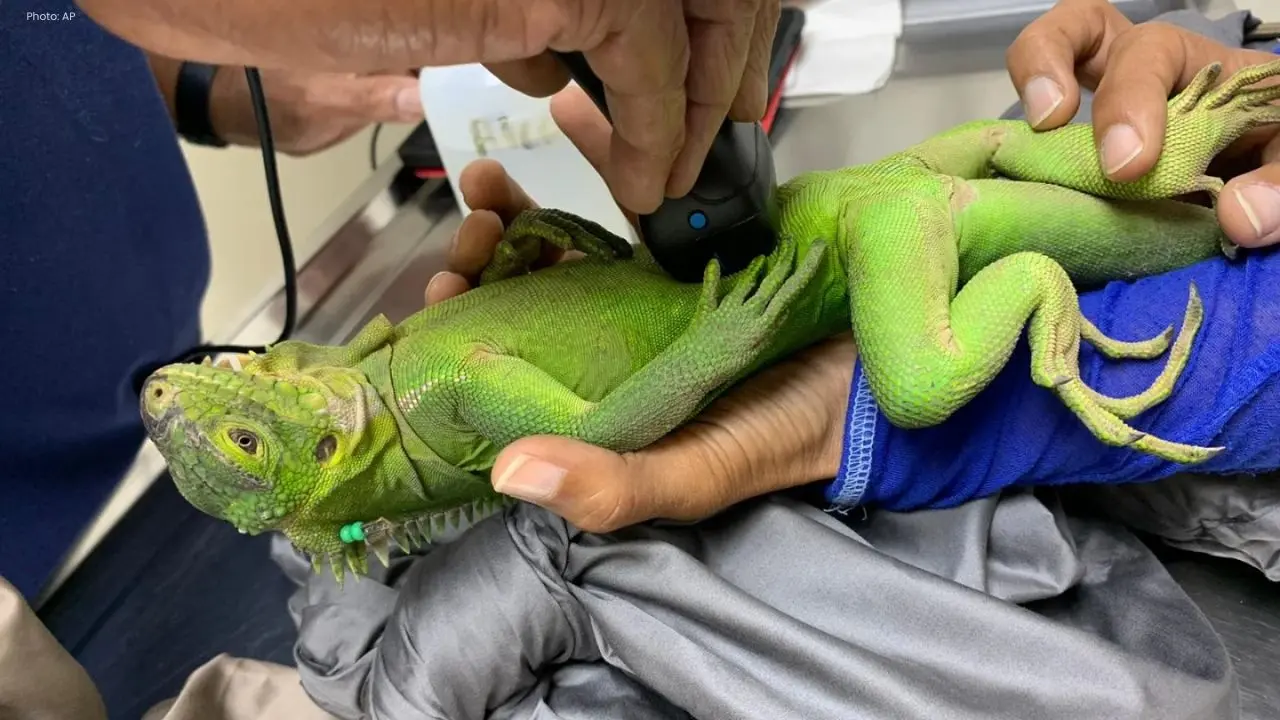
Once a quiet and desolate area, Prickly Pear East Cay has become a vibrant sanctuary for the critically endangered Lesser Antillean iguana. Scientists and conservationists are now greeted by the cheerful sounds of these reptiles as their numbers have surged from zero to 300, all thanks to meticulous conservation initiatives.
The success story is celebrated by organizations like the Anguilla National Trust, demonstrating the positive impact of human involvement and strategic planning on wildlife conservation.
Near Extinction Level
Historically, the Lesser Antillean iguana, scientifically known as Iguana delicatissima, thrived in various Caribbean regions. For centuries, indigenous populations coexisted with these unique reptiles. It is believed that they arrived in the Caribbean via driftwood or debris from South American rivers.
However, they now face dire threats due to habitat loss, native predators, and vigorous competition from the invasive green iguana, leading to a drastic decline in their populations. Today, they are extinct in islands like Antigua, Barbuda, St. Kitts, Nevis, and St. Martin, with only a scant 20,000 left globally.
A Bold Rescue Initiative
Nearly a decade ago, Prickly Pear East Cay was devoid of any Lesser Antillean iguanas. Its predator-free environment termed it an ideal location for a rejuvenation project. Conservationists aimed to provide a protected habitat for the iguanas to thrive.
Armed with specialized capture equipment, conservation teams scoured Anguilla for these endangered reptiles. Local residents assisted by sharing sighting data and photographs.
After extensive searching, only 23 pure-bred iguanas were located, potentially the last of their kind on the island. Genetic testing ensured they had not interbred with green iguanas, which could compromise the species’ survival.
The first group of iguanas was carefully placed in cotton bags and transported to the cay, followed by subsequent groups that adapted well to their new home.
Rapid Population Growth
The relocation proved fruitful.
The iguanas rapidly acclimated to their new environment, leading to the discovery of burrows, nests, and new hatchlings. A population initially comprising mere 10 iguanas has now reached 300 and continues to grow.
Today, Prickly Pear East Cay hosts one of the few thriving populations of the Lesser Antillean iguana, serving as a beacon of hope among conservationists.
Combatting the Green Iguana Threat
The invasive green iguana presents a persistent threat to the survival of the Lesser Antillean iguana, with their rapid reproduction rates and territorial aggression exacerbating the situation. Most critically, they pose a genetic threat by interbreeding with their endangered counterparts.
To combat these threats, the relocation of pure-bred iguanas to safe spaces has been crucial.
Ensuring Genetic Diversity
Despite the remarkable recovery, scientists expressed concerns about the limited genetic diversity among the restored population. The initial group of 23 could face genetic challenges in the long term.
To address this, researchers sought to incorporate iguanas from Dominica, which has a more substantial population of pure-bred individuals. During the COVID-19 pandemic, Anguillian conservationists managed to travel to Dominica after adhering to quarantine protocols.
Temporary habitats were constructed to monitor and care for the captured iguanas, accommodating their dietary needs, including special feeding.
Eventually, these iguanas were safely transported back to Anguilla and returned to their burgeoning colony.
Existence on the Cay
The cay is nearly uninhabited, except for a couple of small eateries welcoming visitors. Guests can savor local delicacies, but the iguanas remain protected.
The environment provides the iguanas with vital resources:
-
secure nesting spots
-
ample vegetation
-
absence of predators
-
no roads or vehicles
The iguanas can live for over 20 years, changing hues from bright green juveniles to darker shades as they mature.
A Promising Future
Every sound and movement of the iguanas is a testament to the resilience of endangered species when given the right circumstances.
Conservationists view the iguana's revival not merely as a success in species recovery but as a crucial reminder of the importance of biodiversity to ecosystem health.
The journey of Prickly Pear East Cay exemplifies humanity's ability to rectify environmental damage with dedication and science.
Transforming from a silent isle to a pulsating one with 300 iguanas, the Lesser Antillean iguana is granted a renewed chance at existence.
This Caribbean haven stands as a powerful testament to what wildlife conservation can achieve with hope and unwavering commitment.