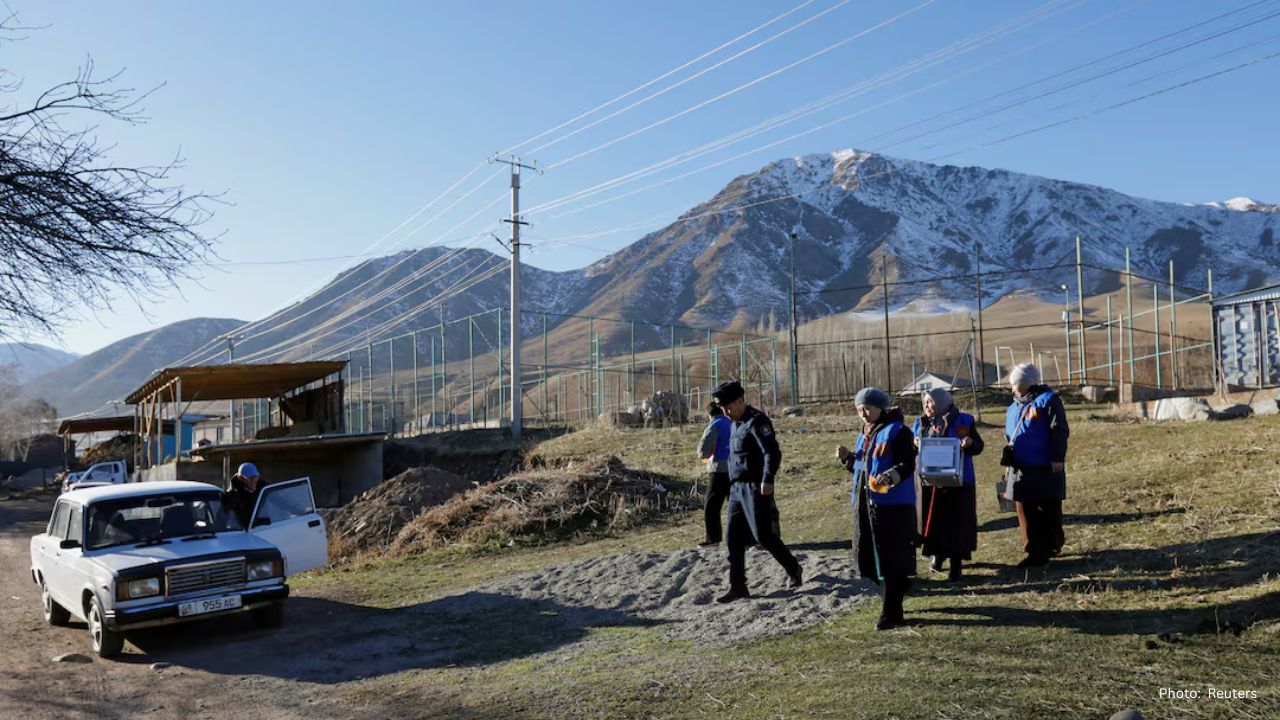
Kyrgyzstan is gearing up for a snap parliamentary election that is set to enhance the authority of President Sadyr Japarov and his political allies. Scheduled for Sunday, this election represents a pivotal moment in the nation’s evolving political scene, characterized by increasing centralization of power under the current regime. Although for years, Kyrgyzstan was recognized as Central Asia’s most democratic nation with vibrant political discourse and independent media, significant shifts have occurred since 2020, and this election is likely to reveal the extent of Japarov’s grip on power.
The rise of President Japarov came following the 2020 protests that led to the ousting of the former government, paving the way for his ascent. He has since bolstered his influence across parliament, government sectors, and local institutions. Analysts predict that this snap election will fortify his control over the country, setting the groundwork for the next presidential election in 2027, for which he is anticipated to run again. Political expert Emil Juraev notes that the current government is keen to avoid any instability, especially after consecutive waves of protests and political upheavals.
Conversely, critics argue that the government has implemented stringent measures against dissenting voices. Media freedom has notably deteriorated, with certain journalists branded as “extremists.” Opposition factions have been marginalized, reducing their competitive capacity. Initially slated for late 2026, the election was hastily arranged following parliament's self-dissolution, allowing the government to proceed with the snap vote while Japarov and his allies still enjoy considerable popularity. Opposition figure Bolot Ibragimov estimates that about 80% of the new parliament will again consist of members loyal to the president, leaving scant space for political variety.
Japarov’s standing is further buoyed by Kyrgyzstan’s robust economic performance. Currently, the nation boasts the highest economic growth rate in Central Asia, largely driven by its evolution into a crucial transit point for goods entering Russia, which is grappling with intense Western sanctions due to the Ukraine conflict. As a member of the customs union with Russia, Kyrgyzstan has reaped benefits from this commerce, albeit amidst pressure. Several Kyrgyz banks and cryptocurrency enterprises have recently drawn Western sanctions for purportedly aiding Russia in bypassing these restrictions. However, alongside this growth, civilians face challenges from elevated inflation rates and electricity shortages, complicating everyday life.
Additionally, Kyrgyzstan’s political trajectory is heavily influenced by its close ties with Russia, where many citizens work as migrant laborers. The two nations maintain deep political and economic connections, with Russia also hosting military installations in Kyrgyzstan. Just last week, President Vladimir Putin paid a visit to Bishkek, heavily advertised via prominent billboards across the city. Japarov has embraced Russia as a vital ally, particularly as Western nations grow increasingly critical of his domestic strategies.
Human rights advocates contend that Kyrgyzstan is drifting from the democratic principles that once distinguished it in Central Asia. Prominent activist Nurbek Toktakunov suggests that the country is grappling with the challenges of rapidly adopting Western-style democracy. He asserts that a significant portion of the populace favors a strong leader who can act decisively without incessant public input, which has enabled the current administration to consolidate power. He believes that the ruling class heavily relies on public sentiment, which has shifted towards demanding a firm and centralized leadership.
As the snap election unfolds, Kyrgyzstan stands at a pivotal juncture. The anticipated results are likely to affirm the supremacy of President Japarov and his allies, further consolidating the political course he has charted since taking office. Advocates argue that this path promises stability following years of unrest, while detractors express concerns over potential curtailments on freedoms, suppression of dissent, and constriction of democratic space. The election outcome will not only influence Kyrgyzstan’s immediate political landscape but will also set the stage for the nation’s future as it approaches the 2027 presidential election.