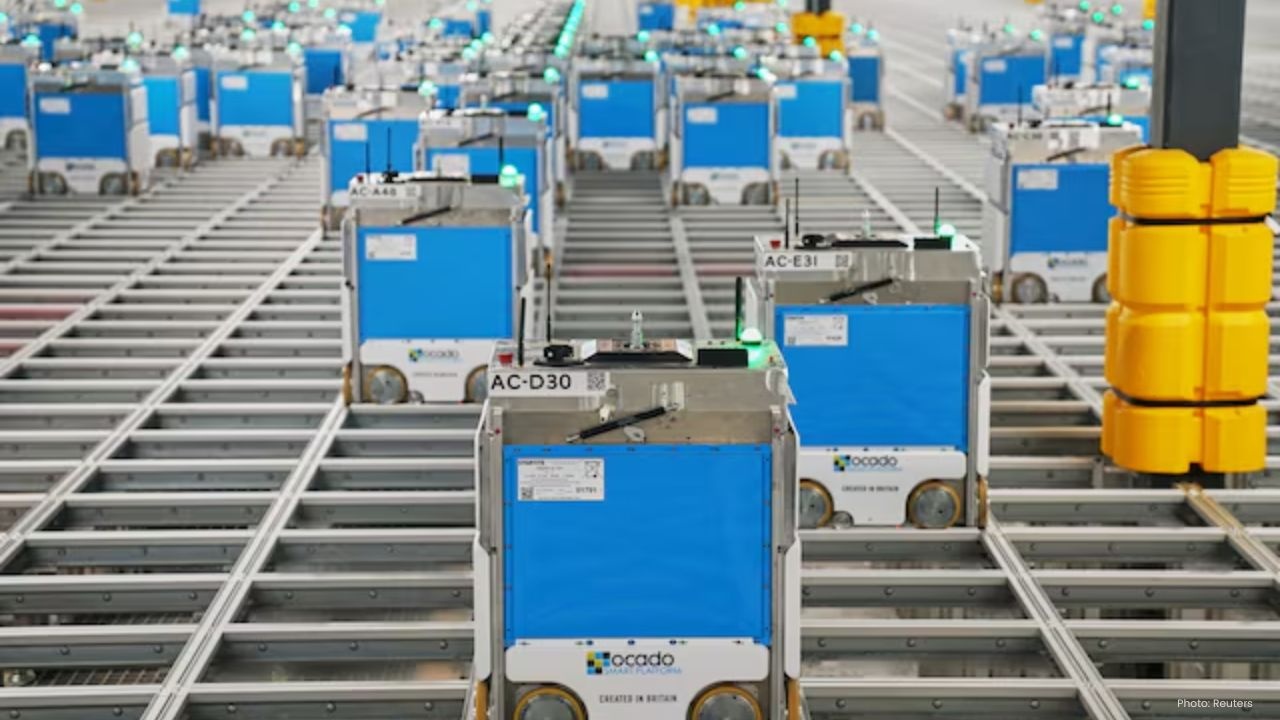
In a significant strategy shift highlighting the evolving online grocery sector, U.S. retail powerhouse Kroger has made the decision to close three of its eight automated warehouses developed in collaboration with British technology firm Ocado. This choice notably reflects the competitive pressure from fast-delivery services such as Instacart and DoorDash.
Ocado, initially a leader in robotic warehouse automation, offers advanced systems to retailers for processing online food orders. However, Kroger disclosed that these three locations failed to meet financial targets. The retailer intends to strengthen its collaboration with rapid delivery platforms that utilize existing stores, aiming to cut expenses while addressing the rising consumer preference for same-day deliveries.
“Consumers increasingly desire their orders quickly—ideally within a few hours,” analysts comment, underlining the evolving expectations that automated systems have struggled to fulfill.
While Ocado had a promising start in the U.S. market, competitors like Instacart and DoorDash are leading the pack. Instacart’s market performance has soared by over 30% since its listing in 2023, driven by robust quarterly results, while DoorDash shares have risen by 21% this year. In contrast, Ocado’s market capitalization has seen a steep decline, dropping around 90% from its pandemic highs.
Some of Ocado’s automated sites were situated in regions where Kroger did not maintain a strong retail presence, making profitability a challenge. Nevertheless, facilities in states like Ohio have shown better performance, indicating that the technology can succeed under favorable conditions.
Kroger’s recent setback calls into question Ocado’s potential for expansion in the U.S., even as the firm forges ahead with international partnerships, including collaborations with Aeon in Japan, Lotte in South Korea, and Coles in Australia. Its joint venture with Marks & Spencer in the U.K. remains a bright spot, demonstrating notable growth in e-commerce sales.
Experts suggest that Ocado's model thrives best in densely populated urban areas where multi-temperature automated distribution can effectively service affluent clientele. In less urban settings, faster, store-based delivery options seem to offer more practicality and cost efficiency.
As Kroger pivots toward accelerated, store-supplied delivery options, the future of large robotic warehouses in the U.S. grocery sector is under increased scrutiny—reflecting a broader reconsideration of how automation integrates into today's rapid e-commerce landscape.