Nvidia’s latest breakthrough, the Blackwell chip, is sparking a new surge in the AI landscape, positioning Taiwan Semiconductor Manufacturing Co. (TSMC) at the forefront.
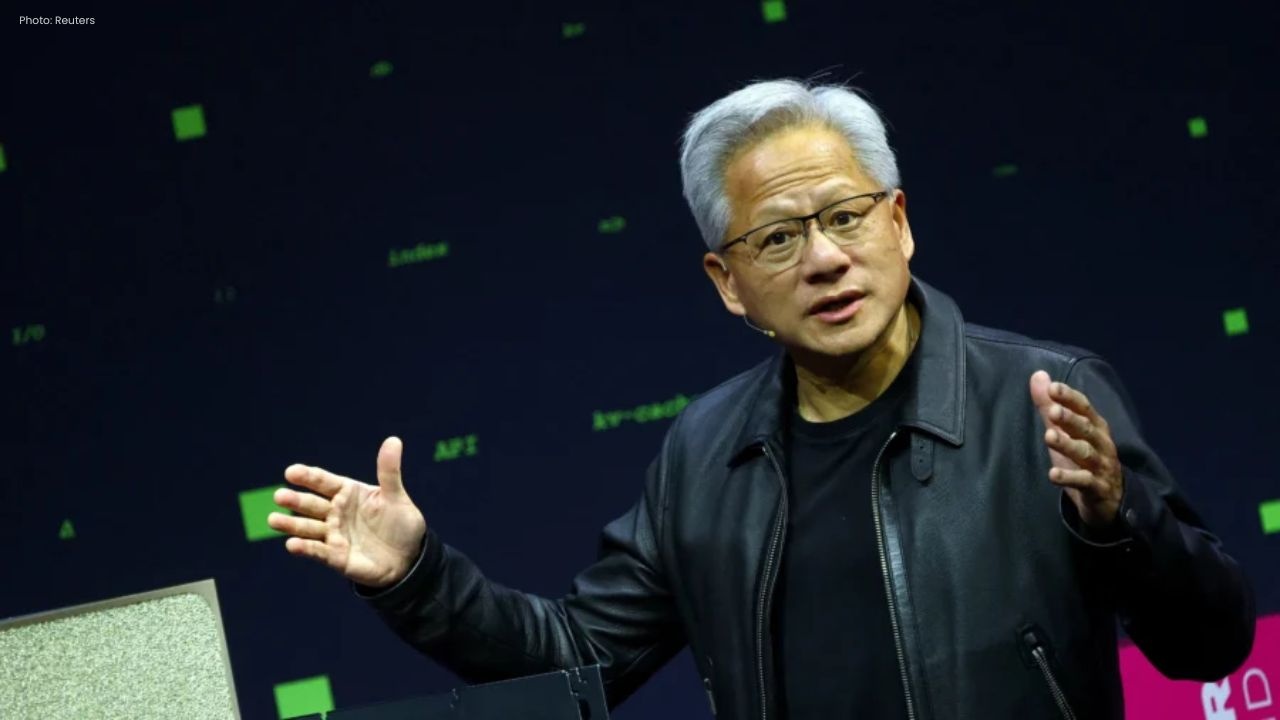
During a recent gathering in Hsinchu, CEO Jensen Huang indicated that the company is witnessing “exceptionally high demand” for its cutting-edge chips, designed to cater to the booming Artificial Intelligence sector. This demand, he noted, is equally reflected in the rising need for wafers — the thin silicon disks that serve as the foundation of every semiconductor — from their longstanding partner, TSMC.
“TSMC has been exceptionally supportive in providing us with wafers,” Huang remarked, acknowledging the essential role played by the Taiwanese manufacturer in Nvidia’s achievements.
This was Huang's fourth visit to Taiwan this year, amid the backdrop of ongoing challenges related to U.S.-China trade tensions. Nvidia's activities in China face restrictions due to U.S. limitations on advanced chip exports, while TSMC is also working to maintain equilibrium between Western and Asian clients.
Huang elaborated that the demand for the Blackwell series extends well beyond GPUs. “While we manufacture GPUs, we also develop CPUs, networking, and switches — a myriad of chips linked to Blackwell,” he stated. TSMC's CEO, C.C. Wei, confirmed that Nvidia has placed further wafer orders, though precise figures remain under wraps.
The alliance between these two industry titans showcases remarkable expansion. Nvidia has recently made history as the first corporation to reach a market value of $5 trillion, leading Wei to refer to Huang as a “five-trillion-dollar man.”
Addressing supply chain hurdles, Huang acknowledged that shortages may crop up in various sectors as demand surges. Nevertheless, he expressed optimism by highlighting robust support from memory chip leaders such as SK Hynix, Samsung, and Micron, each ramping up production to keep in step with the AI-driven chip “super cycle.”
SK Hynix has already projected that its chip output for the upcoming year is fully sold out, while Samsung has confirmed that discussions with Nvidia regarding the provision of next-generation HBM4 memory chips are ongoing.
In spite of the global growth trend, Nvidia is currently unable to market its top-tier Blackwell chips to China, following persistent U.S. export restrictions. Huang clarified that there are “no active discussions” regarding the potential resumption of such sales.
As the AI boom accelerates, the world’s two largest chip manufacturers — Nvidia and TSMC — appear well-synchronized, driving the next major advancement in high-performance computing.