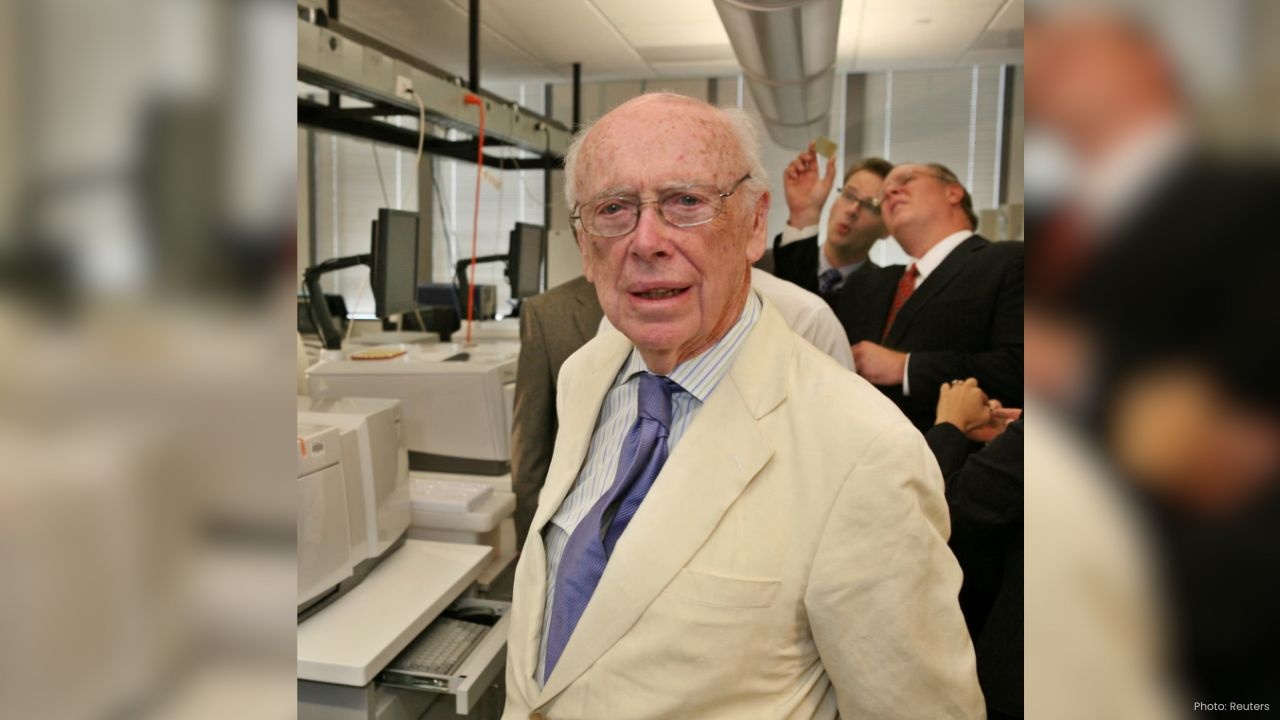
James D. Watson, the renowned American scientist renowned for unveiling the double helix structure of DNA, has passed away at the age of 97. His 1953 collaboration with Francis Crick and Maurice Wilkins was a landmark moment that changed the landscape of biology and medicine entirely.
At only 24, Watson played a key role in deciphering the code of hereditary information. The double helix discovery was pivotal, unlocking the secrets of genetic material duplication that spurred advancements across genetics, medicine, family heritage, and forensic science. The effects of his groundbreaking work echo strongly even decades later.
This significant discovery quickly evolved into a cultural icon. The helix structure found its way into various forms of art, literature, and even on postage stamps, symbolizing the essence of scientific pursuit. Watson later contributed to the Human Genome Project, mentoring the next generation of scientists and shaping science policy, although he did not achieve another innovation of the same caliber again.
Watson's career wasn't without its disputes. His controversial remarks on race and intelligence, particularly regarding the Black community, drew global backlash. In 2007, comments questioning equality resulted in his suspension from Cold Spring Harbor Laboratory, where he held leadership roles for almost four decades. He subsequently retired, with his statements prompting the lab to revoke his honorary titles in 2019.
Regardless of these controversies, Watson's impact on science remains immense. His double helix finding not only clarified the molecular processes of life replication but also ignited ethical and social discussions surrounding genetics. Today, researchers, healthcare experts, and educators worldwide continue to draw inspiration from his work.
Watson's legacy encompasses both unparalleled scientific achievements and challenging public dialogue, encapsulating a narrative of brilliance interwoven with complexity that future generations will continue to explore.