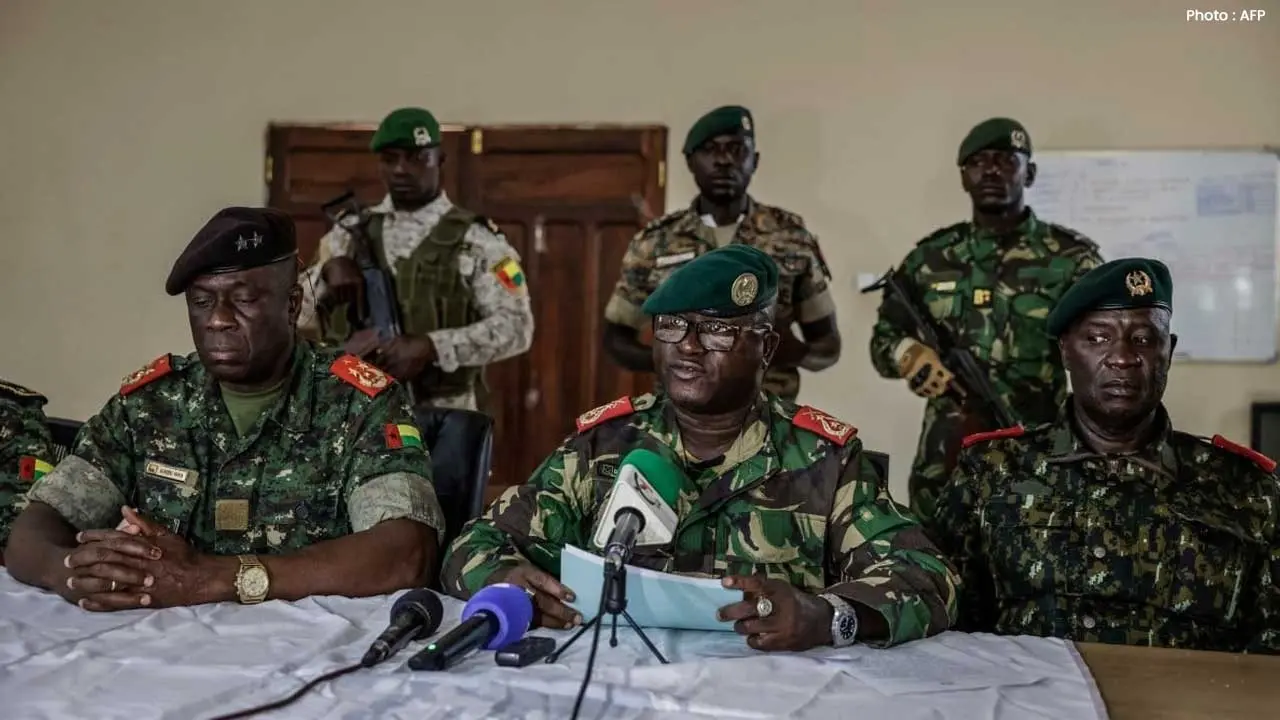
Guinea-Bissau is thrust into a significant political crisis as soldiers announced their takeover on state television on Wednesday. This announcement followed reports of intense gunfire near the presidential palace in the capital, Bissau, just three days post-national elections.
Military Claims Presidential Ouster
In the broadcast, military spokesperson Dinis N’Tchama conveyed that they had removed the president and suspended all state operations indefinitely. The military asserted that their actions were prompted by alleged attempts to manipulate election results, implicating local politicians, a prominent drug trafficker, and foreign entities without presenting proof.
The armed forces declared an immediate halt to the electoral processes, suspended media operations, and shut the borders.
Gunfire Erupts Near Palace
At midday, gunfire was reported around the presidential palace. Heavily armed soldiers wearing masks blocked access to the area. Officials mentioned an attempted assault on the palace, sparking a firefight with security guards. Similar gunfire incidents occurred near the National Electoral Commission's office.
Later, the military barricaded the commission’s headquarters and reportedly detained its director.
President Confirms His Arrest
President Umaro Sissoco Embalo confirmed his detention by military forces and acknowledged his ousting, assuring that he is unharmed. Embalo was already facing legitimacy issues, with opposition claims stating his term expired earlier this year, accusing him of unlawful rule.
According to the constitution, the presidential term lasts five years. Embalo took office in February 2020; critics argue that his term should conclude in February 2025. Nonetheless, a court ruling extended it to September, with elections held just this week.
Detention of Opposition Leaders
Military forces also apprehended opposition candidate Fernando Dias and Domingos Simoes Pereira, a former prime minister and prominent political figure. Pereira had been barred from running but had openly supported Dias against Embalo.
International Reaction
International observers and regional organizations condemned the military actions. They expressed concerns that halting election results and arresting officials undermined democracy, urging a return to calm, lawful conduct, and the swift release of detainees.
A civil society organization in Guinea-Bissau criticized both the president and the military, labelling the situation a “simulated coup” intended to obstruct the announcement of election results. They accused Embalo of attempting to delay the official count to maintain power.
A Growing Pattern in West Africa
Guinea-Bissau's history is marked by coups and attempts since its independence, as the region serves as a significant narcotics transit point connecting Latin America and Europe.
This latest upheaval contributes to a disturbing trend of military takeovers in West and Central Africa. Since 2020, the governments of Mali, Niger, Burkina Faso, Guinea, and Gabon have faced overthrow by military factions.
Currently, Guinea-Bissau remains in a precarious state, with borders sealed, elections suspended, and military dominance casting uncertainty over the nation’s future.