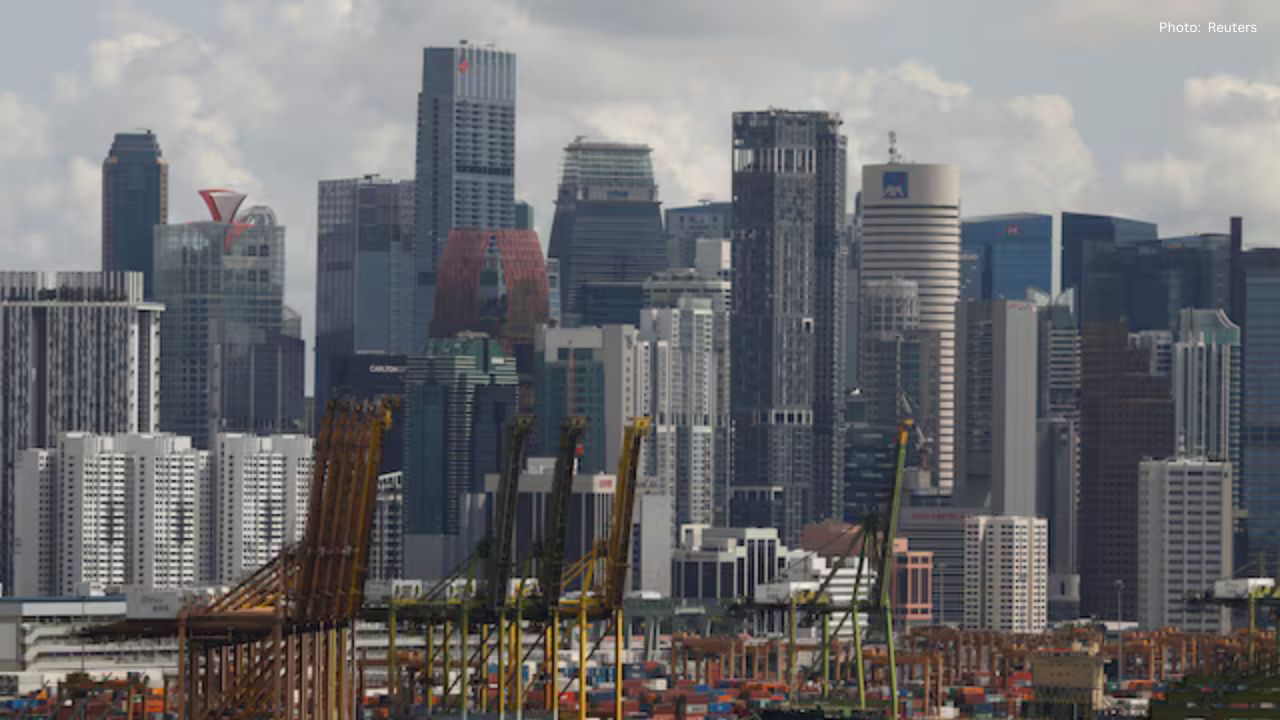
Economists are displaying an optimistic outlook for Singapore’s economy in 2025, as revealed by a recent survey from the Monetary Authority of Singapore (MAS). Enhanced economic indicators have encouraged analysts to elevate their projections for the upcoming year. However, there's an underlying warning that growth may decelerate in 2026 amid increasing global uncertainties.
Notably, Singapore’s economy grew by 4.2% in the third quarter year-on-year, surpassing initial estimates and contributing to the heightened confidence among economists. Additionally, in November, the trade ministry revised its official growth forecast for 2025 upwards to approximately 4.0%, bolstering the optimistic outlook.
Looking ahead to 2026, however, forecasters anticipate a slowdown, estimating growth could drop to around 2.3%. This is largely attributed to concerns regarding a potential decline in global demand and the possibility that current growth drivers like trade and technology may lose steam.
The survey identifies a range of risks potentially impacting Singapore's economy, with most economists highlighting rising geopolitical tensions as the primary concern. Given Singapore's status as a small and open economy, it is particularly vulnerable to global conflicts, trade challenges, and supply chain disruptions.
Moreover, a new emerging concern is the potential for an artificial intelligence bubble to burst. Nearly 40% of the economists cited this risk, escalating from prior surveys that did not mention it. While AI has spurred significant investments and optimism within the tech landscape, experts caution that shifts in investor confidence could adversely impact growth.
Conversely, a robust AI-driven technology cycle alongside stable global economic conditions could further bolster Singapore’s economy. Should global demand persist, Singapore may reap benefits from increased trade, investment, and innovation.
Maintaining a steady monetary policy seems likely, with all respondents predicting that the MAS will not alter its stance during the forthcoming January review. Most anticipate the same during the April assessment, with only about 11% suggesting a tightening could occur by July 2026.
In terms of inflation, expectations remain low for the immediate future. The survey findings indicate steady projections for core inflation and overall inflation in 2025 at 0.7% and 0.9%, respectively. However, a slight increase is expected for 2026, with core inflation forecasted at 1.3% and headline inflation at 1.5%.
These predictions align with the MAS’s guidance from October, which estimated that core inflation should average around 0.5% in 2025, while headline inflation is expected to range between 0.5% and 1.0%.
In summary, the survey paints a promising yet cautious outlook. Singapore is poised for substantial economic growth in 2025, underpinned by solid advancements and stable policies. Nonetheless, economists emphasize the importance of vigilance regarding global risks and emerging challenges to maintain enduring stability.