Photo:AP
An Unexpected Shakeup Inside the Department of Justice
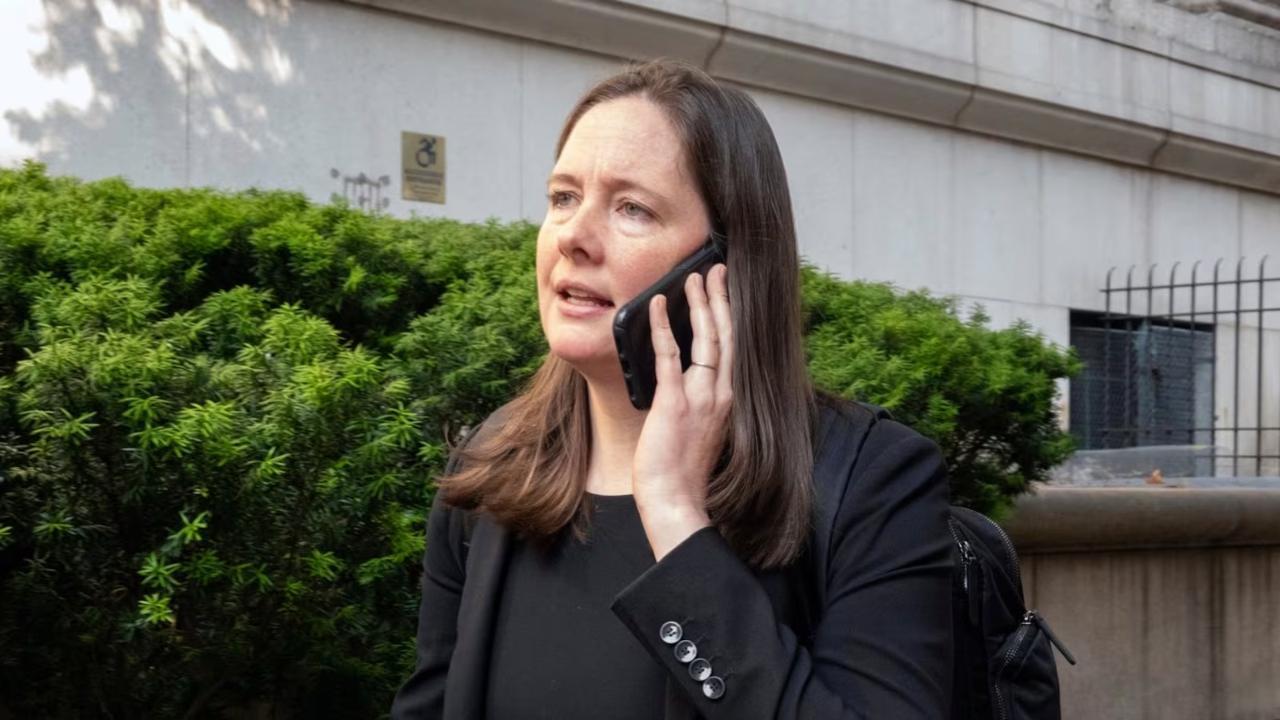
In a sudden and controversial move, the United States Department of Justice has terminated Assistant U.S. Attorney Maurene Comey, a prominent prosecutor in the Southern District of New York (SDNY). The firing has shocked the legal community and raised serious questions about politicization within the DOJ. Comey, best known for her role in high-profile cases involving Jeffrey Epstein and Sean “Diddy” Combs, was informed of her dismissal via formal memo citing the President's authority under Article II of the U.S. Constitution.
Maurene Comey’s firing marks one of the most prominent dismissals of a career prosecutor under the current administration. As the daughter of former FBI Director James Comey, who was fired by Donald Trump in 2017, her termination has inevitably stirred speculation about political motivations, professional retribution, and the state of justice in modern America.
A Decade of Distinguished Federal Service
Maurene Comey began her tenure at the U.S. Attorney’s Office for the Southern District of New York in 2015. From the outset, she earned a reputation as a sharp, methodical, and deeply ethical prosecutor. Her work often involved complex cases involving organized crime, public corruption, financial fraud, and human trafficking. Over nearly ten years, she became one of the SDNY's most trusted prosecutors—one who repeatedly took on some of the highest-profile and most politically charged cases in the country.
Comey's most notable involvement came during the prosecutions of Ghislaine Maxwell, long-time associate of convicted sex offender Jeffrey Epstein, and hip-hop mogul Sean "Diddy" Combs. Both cases involved allegations of sexual exploitation, underage victims, and abuse of power by the rich and famous. Her dogged efforts, particularly in the Maxwell case, were praised for their sensitivity to victims and precise legal strategy.
Despite the intense media attention and political sensitivity surrounding these cases, Comey remained focused on upholding justice, adhering strictly to due process, and preserving the integrity of the judicial system.
The Shadow of Her Last Name
Although she built her own career from the ground up, Maurene Comey could never fully escape the public attention and scrutiny that accompanied her last name. As the daughter of James Comey—the former FBI Director whose dismissal by President Trump led to the appointment of Special Counsel Robert Mueller—Maurene found herself working within a Department of Justice increasingly split by political allegiances.
James Comey became a polarizing figure in American politics, viewed by Democrats as a bulwark against Trump-era authoritarianism and by many Republicans as a symbol of the so-called “deep state.” In this politically charged context, Maurene's mere presence within the Justice Department drew criticism from far-right media commentators and Trump allies.
Political operatives often referenced her familial ties to undermine her credibility, even as she continued to deliver results in the courtroom. The perception, fair or not, was that she represented continuity with a faction of the DOJ viewed by Trump loyalists as disloyal or obstructionist.
A Firing Without Explanation
Maurene Comey’s firing was abrupt and, for many, stunning. The memo she received reportedly cited only the President’s broad constitutional authority to remove federal employees serving at the pleasure of the Executive Branch. No specific reason, accusation, or violation was listed. This silence has only deepened suspicions about the political motivations behind her dismissal.
Within legal and governmental circles, the lack of transparency has alarmed many. Career prosecutors, especially those in sensitive or controversial cases, are supposed to enjoy a degree of protection from political pressure. The principle of prosecutorial independence is foundational to the integrity of the American justice system.
By removing a high-profile prosecutor with an unblemished record—without any public justification—the DOJ under the Trump administration has once again provoked a national debate over the weaponization of federal agencies.
The Political Underpinnings and Broader Context
Maurene’s termination appears to be part of a broader effort to reshape the Justice Department in line with the administration's political priorities. Since returning to office, Trump has frequently criticized the so-called “deep state,” vowing to “drain the swamp” and remove career officials he perceives as adversaries.
Attorney General Pam Bondi, a loyal Trump ally and former Florida Attorney General, has reportedly been tasked with “cleaning house” inside the DOJ. Several career attorneys, particularly those involved in politically sensitive investigations—including those related to January 6, Trump’s classified documents, and alleged foreign influence campaigns—have been dismissed or reassigned in recent months.
Critics argue that these moves are meant to neutralize legal threats to the administration and its allies. Others suggest it is a long-term effort to centralize power within the executive branch, particularly the Department of Justice.
Celebrated by Some, Condemned by Many
Right-wing media and figures like activist Laura Loomer have celebrated Maurene Comey's firing. Loomer took to social media to claim credit for pressuring DOJ leadership into removing Comey, whom she described as a “leftist operative” and “Trump hater.” Loomer also targeted Comey’s husband, Lucas Issacharoff, also a DOJ employee, calling for his removal as well.
Mainstream legal professionals, however, have widely condemned the firing. Former prosecutors, legal scholars, and civil liberties organizations argue that removing prosecutors for political reasons—especially without cause—damages the credibility of the justice system and discourages talented attorneys from public service.
Maurene’s colleagues in the SDNY were reportedly stunned and disheartened by the decision. Many of them had worked with her for years and knew her as a serious, fair, and apolitical legal mind. The fact that she was escorted from the building following the notification—standard procedure in such terminations—struck many as cruel and unnecessary for someone of her record and stature.
Implications for Ongoing Investigations
Comey’s firing comes at a critical time for several investigations that were either led or closely followed by her office. The Ghislaine Maxwell case continues to generate appeal activity, and further inquiries into Epstein’s financial network and potential co-conspirators remain open. Her removal could slow these efforts or cause institutional disruption in the handoff of cases to other prosecutors.
In the Combs case, which involved federal charges related to prostitution, drug trafficking, and financial misconduct, the abrupt leadership change raises new legal questions. Defense attorneys may seize on the firing to argue prosecutorial bias or flawed proceedings, potentially complicating sentencing or post-conviction phases.
Moreover, future cases involving politically powerful individuals could be influenced by this precedent. If career prosecutors begin to fear for their jobs when pursuing certain defendants, prosecutorial independence could be compromised on a national scale.
The Human Toll: Personal Fallout and Family Ties
While Maurene Comey has remained silent since the firing, those close to her say she is “deeply disappointed” by the turn of events. Friends describe her as a principled lawyer who believed in the mission of the DOJ and the importance of impartial justice. She reportedly had no desire for media attention and preferred to let her legal work speak for itself.
Her father, James Comey, has not commented publicly on the firing. However, observers believe the incident will likely reinforce his concerns—frequently expressed in writing and interviews—about threats to American democratic institutions and the erosion of rule-of-law principles under political pressure.
For the Comey family, the incident represents a new chapter in a broader saga of conflict between their sense of duty and a political environment that has increasingly targeted public servants for their perceived affiliations or family ties.
A DOJ at a Crossroads
The U.S. Department of Justice now stands at a critical juncture. The firing of Maurene Comey represents a test case for how the public and legal institutions respond to politicized dismissals. Will there be any formal review of the decision? Will the American Bar Association or congressional committees investigate whether norms were violated?
The answers to these questions will likely shape the next chapter of the DOJ’s legacy. If prosecutors can be fired without cause, without explanation, and without institutional pushback, a dangerous precedent will have been set—one that could affect how justice is pursued in the United States for generations to come.
Public Trust at Stake
For the public, Maurene Comey’s dismissal carries more than just political implications. It raises fundamental questions about who the law serves, how independent federal prosecutors truly are, and whether justice remains blind in the face of presidential power.
The dismissal may also impact recruitment. Talented legal minds, especially those with high ethical standards, may think twice before joining the DOJ if they believe their jobs can be terminated for political optics rather than merit.
The DOJ must consider these consequences seriously. If trust erodes between the people and the institutions meant to serve them, the nation risks losing more than just skilled prosecutors—it risks compromising the foundation of its democratic values.
A Legacy Cut Short, but Not Forgotten
Despite her forced departure, Maurene Comey leaves behind a legacy of professionalism, courage, and excellence in public service. Her work helped hold powerful figures accountable and gave voice to survivors of heinous crimes. In a time of rising partisanship, she exemplified the core principles of justice: fairness, impartiality, and dedication to truth.
What happens next—for her personally and for the institution she served—remains uncertain. But one thing is clear: Maurene Comey’s firing will be remembered not just for who she is, but for what it says about the current state of American justice.