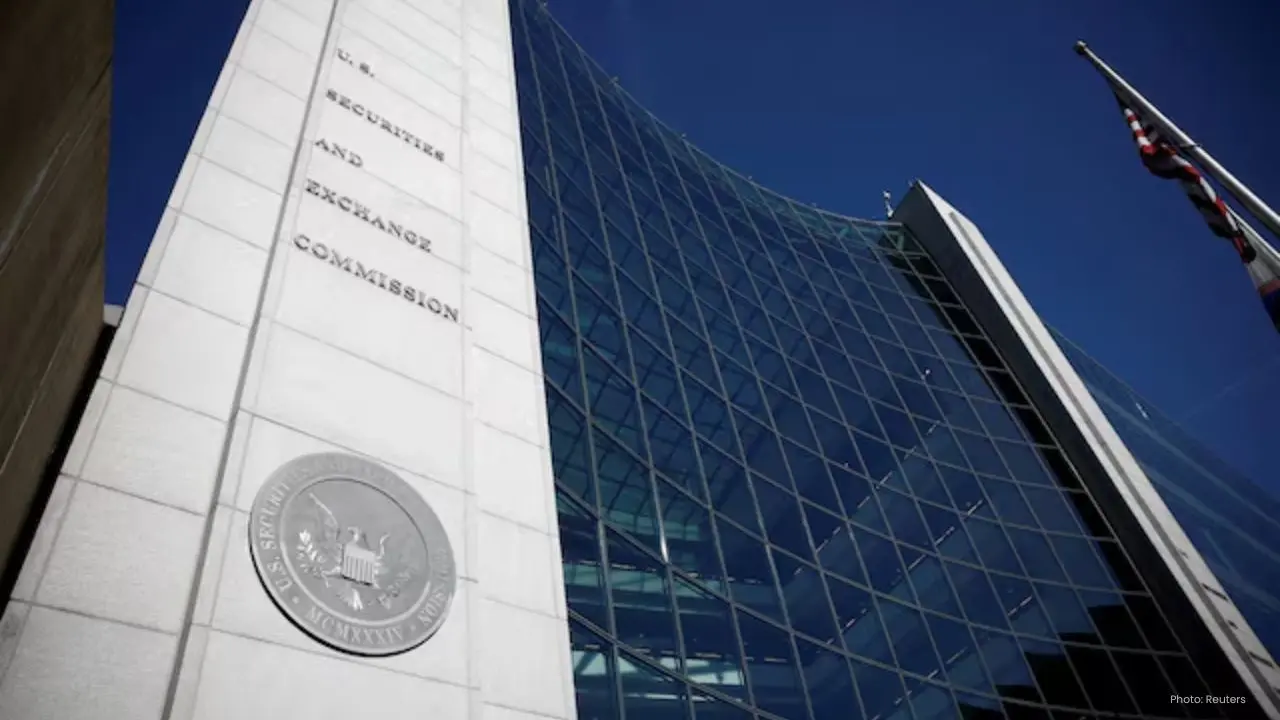
A significant conversation surrounding tokenised stocks has erupted in Washington, as several leading global exchanges urged the U.S. Securities and Exchange Commission (SEC) to reconsider its approach to regulating crypto companies. This comes in light of various digital platforms gearing up to introduce crypto tokens linked to U.S. publicly traded stocks for individual investors.
Many of these crypto ventures are not formally registered as broker-dealers and are requesting either a no-action letter or a unique regulatory exemption to operate lawfully in the U.S. The SEC is reportedly looking into a new "innovation exemption" aimed at giving room for emerging financial technologies to experiment with unconventional business models.
In a letter delivered on November 21, the World Federation of Exchanges (WFE)—with members including Nasdaq and Deutsche Boerse—issued one of the most robust criticisms yet from established financial institutions. The WFE warned that sidestepping established securities regulations could introduce unnecessary risks to investors and disrupt the foundational structures underpinning traditional equity trading.
The mechanism of tokenised stocks involves issuing a crypto token that is linked to a publicly listed share, providing users with stock-like exposure without the need for direct ownership. While advocates within the crypto space argue that this innovation could modernise trading and enhance efficiency, mainstream exchanges remain skeptical. The WFE acknowledged that while tokenisation may represent a "natural evolution," it should not jeopardize market stability or undermine the regulatory frameworks that have safeguarded investors for years.
Currently, under the existing U.S. administration, the SEC is adopting a more welcoming approach to digital assets, invigorating lobbying by the crypto industry. Concurrently, major financial institutions are investigating blockchain-deployed trading models, amplifying competition between conventional exchanges and emerging crypto platforms.
At present, the WFE's stance serves as a significant counterbalance to the crypto sector’s aspirations for broader market access in the U.S. As discussions on regulation continue, the trajectory of tokenised equities in the U.S. remains unpredictable and is keenly monitored by both traditional and digital financial sectors.