Photo:AP
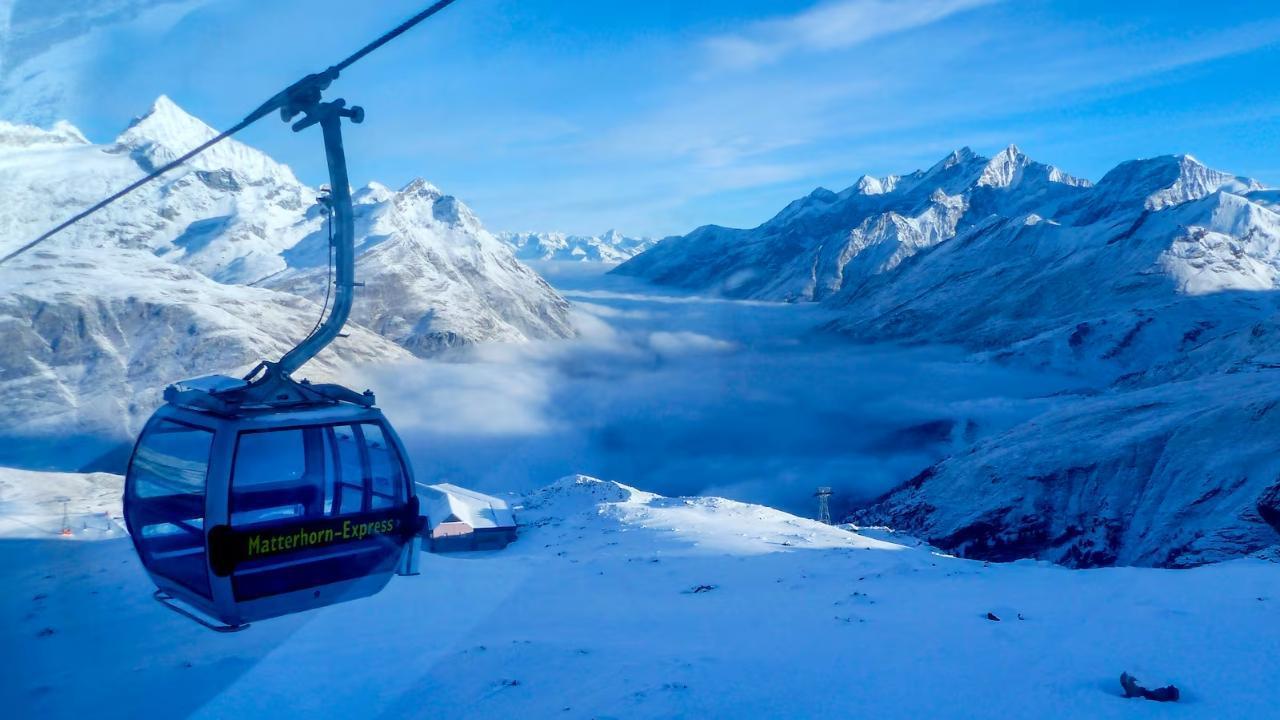
On July 4, 2025, what began as a routine alpine adventure on the Fee Glacier in Switzerland turned into a terrifying life-or-death situation. A solo hiker, accompanied only by his small dog—a Chihuahua—was trekking across the glacier near the tourist destination of Saas-Fee. As he made his way across what appeared to be a stable sheet of snow, the hidden danger beneath his feet gave way. The hiker had unknowingly stepped onto a fragile snow bridge, a deceptively solid-looking formation common on glacial surfaces. These snow bridges often span over deep crevasses, formed over time by the movement and cracking of ice. Without warning, the hiker plunged roughly eight meters—or around 26 feet—into the icy abyss below.
The fall was severe and sudden. As he hit the bottom of the crevasse, he sustained injuries, though he remained conscious. His position, however, was dire. Deep within the crevasse, surrounded by sheer walls of solid ice, he had limited mobility and little chance of escape on his own. He had fallen into one of the most dangerous environments known to climbers: an isolated, nearly invisible crack in the glacier, nearly impossible to locate without a precise reference point.
What ultimately saved his life was neither emergency equipment nor a passerby—but rather his small dog. The Chihuahua, which had remained unharmed and free on the surface, refused to leave the spot where the man had fallen. Its small, solitary figure stood out against the vast icy landscape, eventually drawing the attention of mountain rescuers. That sighting proved critical in leading the search and rescue team to the exact location where the man had fallen, initiating a successful and miraculous rescue operation.
an invisible crevasse and a terrifying fall
Glaciers are treacherous by nature. Despite their majestic appearance, they are filled with hidden dangers—particularly crevasses, which are cracks that can extend for meters in both depth and width. The snow that covers them in warmer seasons often conceals their presence. This hiker, like many others, likely assumed that the area he was crossing was safe. However, the surface gave way under his weight, sending him plunging into a narrow, icy shaft.
Inside the crevasse, he was injured and exposed to freezing temperatures. He did have a walkie-talkie, which he used to call for help, but the signal was weak and the vastness of the glacier made pinpointing his location extremely difficult. The rescue team was alerted by a faint radio signal, but given the vast scale of the glacier, finding the small crevasse where the man had fallen would not be easy. Visibility was poor, and the snow-covered surface lacked any obvious signs of disturbance.
a tiny chihuahua stands guard at the edge
The turning point in the rescue came in the most unexpected way. As Air Zermatt, a well-known mountain rescue service in Switzerland, deployed helicopters and on-foot teams to locate the hiker, they spotted something odd through their binoculars. Perched motionless on a small outcropping near the snow-covered surface was a tiny Chihuahua, seemingly out of place in such a rugged alpine environment. The dog was standing directly at the edge of the crevasse, refusing to move.
One of the rescue team members immediately recognized that the dog’s behavior was unusual. It was not wandering or fleeing, but rather standing firm—almost as though it was guarding something. Drawing closer, the team quickly realized that the dog had positioned itself at the very edge of the crevasse where the hiker had fallen. The animal’s alert posture, along with its small silhouette, was enough to signal that something was amiss.
Upon closer inspection, the rescuers found the narrow fissure in the glacier and heard the hiker’s faint voice echoing from below. Thanks to the Chihuahua’s steadfast vigilance and loyalty, the rescuers had located the accident site in time.
rescue mission begins as time runs short
With the crevasse located, rescuers knew they had limited time. The temperature inside the ice shaft was dangerously low, and the injured hiker's exposure could lead to hypothermia, even if his injuries were non-lethal. The rescue team acted quickly. Two highly trained specialists were lowered into the crevasse using ropes, harnesses, and ice anchors. Carefully navigating the narrow walls, they reached the hiker and began assessing his condition.
Despite the fall, the man was conscious and responsive. He had sustained injuries, but they were not immediately life-threatening. Rescuers stabilized him on the spot using standard emergency protocols. Then, with precise coordination, the team hoisted the hiker out of the crevasse using a combination of mechanical pulleys and a helicopter lift.
The Chihuahua, which had remained faithfully by the side of the hole throughout the entire ordeal, was also safely retrieved and transported with its owner. The entire operation, from the initial call for help to the successful extraction, lasted just over two hours. The hiker and his canine companion were flown to a hospital in the nearby town of Visp, where they were treated for shock and exposure.
how the chihuahua saved its owner’s life
Mountain rescue operations are inherently complex, and every minute counts. Without the precise location of the crevasse, rescue teams might have spent hours searching across miles of snow-covered terrain. The Chihuahua’s actions were more than just coincidental. By staying put, refusing to abandon the site, and remaining visible against the white snow, the dog provided the only concrete clue that led rescuers to its owner.
This action is not only remarkable because of the dog's small size and vulnerability in such a cold, harsh environment—it is extraordinary because Chihuahuas are not typically associated with rescue behavior. They are toy breeds, more often seen in city apartments than in alpine settings. Yet, this particular Chihuahua proved to be fiercely loyal, courageous, and aware enough to become the literal linchpin in saving its owner's life.
rescue teams acknowledge the unexpected hero
Air Zermatt issued a public statement praising the dog’s actions. According to their official account, “It is fair to say that his behavior contributed significantly to the successful rescue. The dog is a four-legged hero who may have saved his master’s life.” The acknowledgment highlights how critical the Chihuahua’s presence was in what could have otherwise been a tragic accident.
The statement further emphasized that while the team had technical tools, including GPS systems and radio signals, the animal’s silent and simple behavior provided a form of natural guidance that no technology could replace.
why snow bridges are so deadly
To understand the gravity of the situation, it’s important to understand what a snow bridge is. Snow bridges form when accumulated snow spans over a crevasse, creating a false surface that appears solid. These formations can be thick and strong during colder seasons but become increasingly fragile as temperatures rise. Even seasoned hikers and mountaineers can misjudge their stability.
In this case, the hiker likely stepped onto a bridge weakened by warm weather or ice melt, causing it to collapse beneath him. The hidden nature of such features makes them one of the most dangerous hazards in glacier travel. Without proper gear, guides, or rope systems, a fall into a crevasse often leads to fatal outcomes, especially if the victim is not quickly located.
the psychological impact of animal companionship in emergencies
Survival stories often highlight the critical role that emotional resilience plays in making it through harrowing situations. Experts in human-animal psychology note that the presence of a pet, even a small one, can offer significant emotional support during emergencies. In this case, the hiker likely took some measure of comfort knowing his dog was still nearby, even if he couldn’t see it.
More than emotional support, the dog’s response shows that even small pets can act instinctively in ways that are life-saving. Loyalty, attachment, and intuitive behavior can trigger actions—like staying near a fall site—that may aid rescue personnel in ways that human logic sometimes cannot replicate.
how this story changed public perceptions of small dogs
Traditionally, stories of mountain rescues involve large, powerful dogs like Saint Bernards, long known for their role in alpine search and rescue. These dogs are bred and trained for snowy terrain, often equipped with emergency packs and navigational skills. The image of a Saint Bernard coming to the aid of a stranded hiker is embedded in popular culture.
This incident flips that image on its head. The hero here is a Chihuahua—small, fragile, and entirely untrained in rescue work. And yet, by doing the most simple and natural thing—staying loyal—the Chihuahua accomplished what many trained dogs are praised for: guiding rescuers to someone in need. This has sparked widespread media attention, reshaping how people view the capabilities of small breeds. Across social media platforms, pet lovers have shared similar stories of small dogs showing courage in moments of crisis.
lessons for hikers and pet owners in wilderness settings
For all the awe and warmth this story inspires, it also carries serious messages for outdoor enthusiasts. Glacier hiking is not without risks, and this rescue could easily have turned into a fatality. Experts recommend that hikers traveling in glacial areas always use safety equipment such as crampons, safety ropes, GPS tracking devices, and beacon transmitters. Traveling with a companion is also highly encouraged.
Pet owners who bring their animals into wilderness areas are advised to consider the risks and benefits. While a dog’s presence can offer emotional support and, as seen here, unexpected aid in a crisis, not all pets are suited for cold, high-altitude, or unstable terrain. However, this incident shows that even the smallest companion animals may provide value that far exceeds expectations when the unthinkable happens.
moving forward after the rescue
The hiker was treated for minor injuries and released from the hospital within 48 hours. The dog was unharmed and was seen wagging its tail during its hospital visit, winning over doctors, nurses, and rescuers alike. Both have since returned home, but their story continues to spread across the internet and media outlets, celebrated as one of the most unlikely but heartwarming rescues of the year.
A story of loyalty, instinct, and survival
At its heart, this story is not just about a fall or a rescue. It is about the extraordinary bond between a person and their animal. In a world where we often depend on technology to save us, the loyalty of a tiny dog reminded everyone that sometimes, the simplest acts—standing still, staying close, refusing to leave—can make all the difference. In the cold expanse of a Swiss glacier, surrounded by danger and isolation, a Chihuahua became a beacon of hope, and in doing so, became an enduring symbol of loyalty and courage.