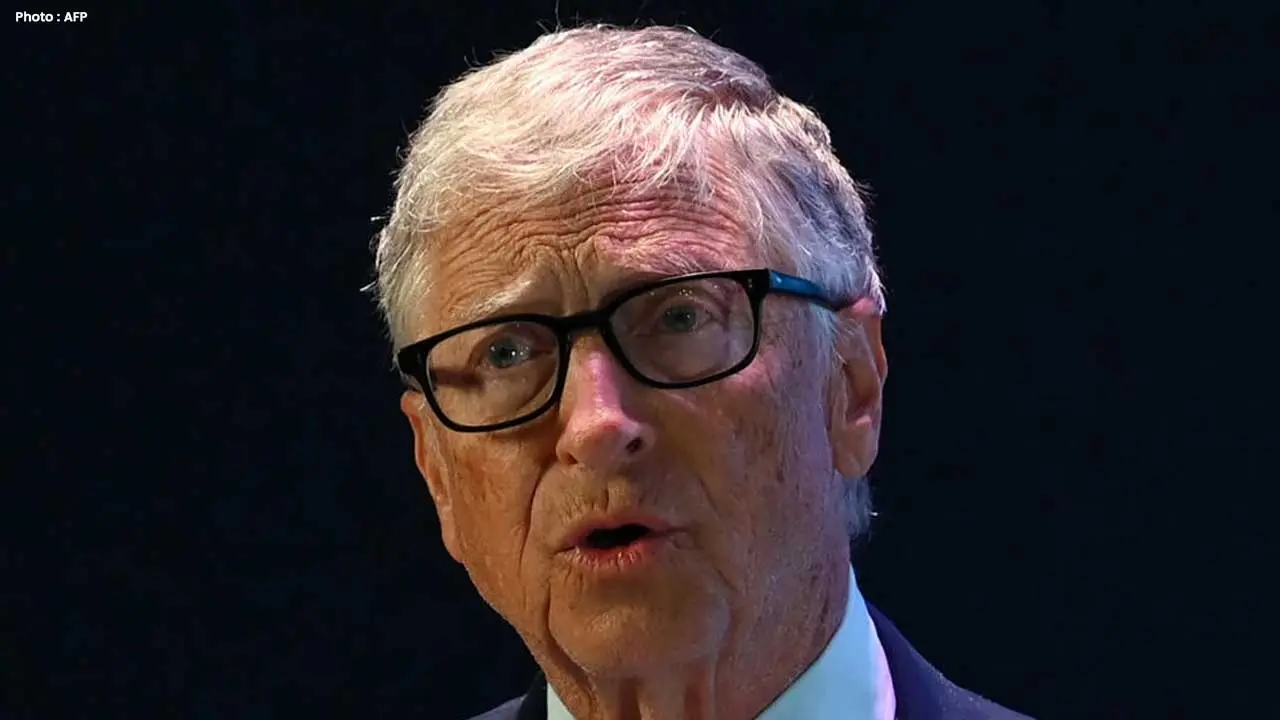
Bill Gates, the Microsoft co-founder and notable philanthropist, has raised concerns about a potential increase in child mortality rates worldwide, attributing this looming crisis to recent cuts in international aid. In a video interview with Agence France-Presse from Seattle, Gates expressed that it’s “tragic” for child deaths to potentially rise for the first time this century after years of decline.
He specifically pointed to the United States as making the most significant reductions in aid, criticizing Elon Musk’s initiative dubbed the US Department of Government Efficiency (DOGE) for contributing to increased mortality rates through erratic funding cuts to global health initiatives. Gates also mentioned that countries like Britain, France, and Germany have disproportionately slashed their aid, further endangering progress in poorer nations.
According to the latest Goalkeepers report from the Gates Foundation, the number of children dying before reaching the age of five is set to increase to 4.8 million in 2024, which represents an increase of 200,000 deaths compared to previous years. The report reveals a concerning 27 percent reduction in aid directed at developing nations, jeopardizing efforts to combat diseases like malaria, HIV, and polio. If these cuts continue, research funded by the Gates Foundation predicts that 16 million additional children could perish by 2045. Gates emphasized the heartbreaking impact, stating, “That’s 16 million mothers facing sorrow no one should endure.”
Gates described the DOGE-led funding reductions as “chaotic,” especially the abrupt withdrawal of funding from the US Agency for International Development (USAID), which has experienced significant cuts since Donald Trump’s return to office. Despite discussions with Trump to encourage a mild restoration of funding, Gates is uncertain about the outcome of those dialogues.
The philanthropist also expressed disappointment regarding the US government's failure to renew funding for Gavi, the global vaccine alliance, earlier this year. He remarked on a video message sent by US Health Secretary Robert F. Kennedy Jr. during a Gavi fundraising event that promoted “widely debunked and misguided ideas” about childhood vaccination.
Gates pointed out that even though the Gates Foundation cooperates with multiple administrations and sometimes finds common ground with Secretary Kennedy, their views on the global significance of vaccines are fundamentally divergent.
Recognizing the financial pressures in affluent countries, Gates lamented the disproportionate aid cuts coming from European nations. He confirmed having discussions with French leaders about the essentiality of international aid, urging them to appreciate its importance amid stringent budget restrictions.
Despite the setbacks, Gates showed a tempered optimism regarding new advancements that could help tackle child mortality in the next five years. He pointed out the emerging vaccines for respiratory syncytial virus (RSV) and pneumonia, along with the recent introduction in South Africa of lenacapavir, a revolutionary HIV-prevention injection administered biannually.
Since establishing the Bill and Melinda Gates Foundation in 2000, Gates has become a significant donor and advocate for global health. Following his divorce from Melinda French Gates last year, he announced intentions in May to donate his entire fortune of $200 billion over the upcoming two decades, aiming for completion by 2045.
Experts such as Jessica Sklair from Queen Mary University of London highlight that Gates holds substantial sway over global health policies. With the new wave of aid reductions, his influence is expected to amplify, though personal philanthropy may not sufficiently bridge the funding deficits. Research from the Barcelona Institute for Global Health mentioned that more than 22 million people could die from preventable causes by 2030, attributed to aid cuts from the US and Europe.
Gates's warning underscores the vulnerability of global health advancements and highlights the vital need for renewed international assistance to avert millions of child deaths worldwide.