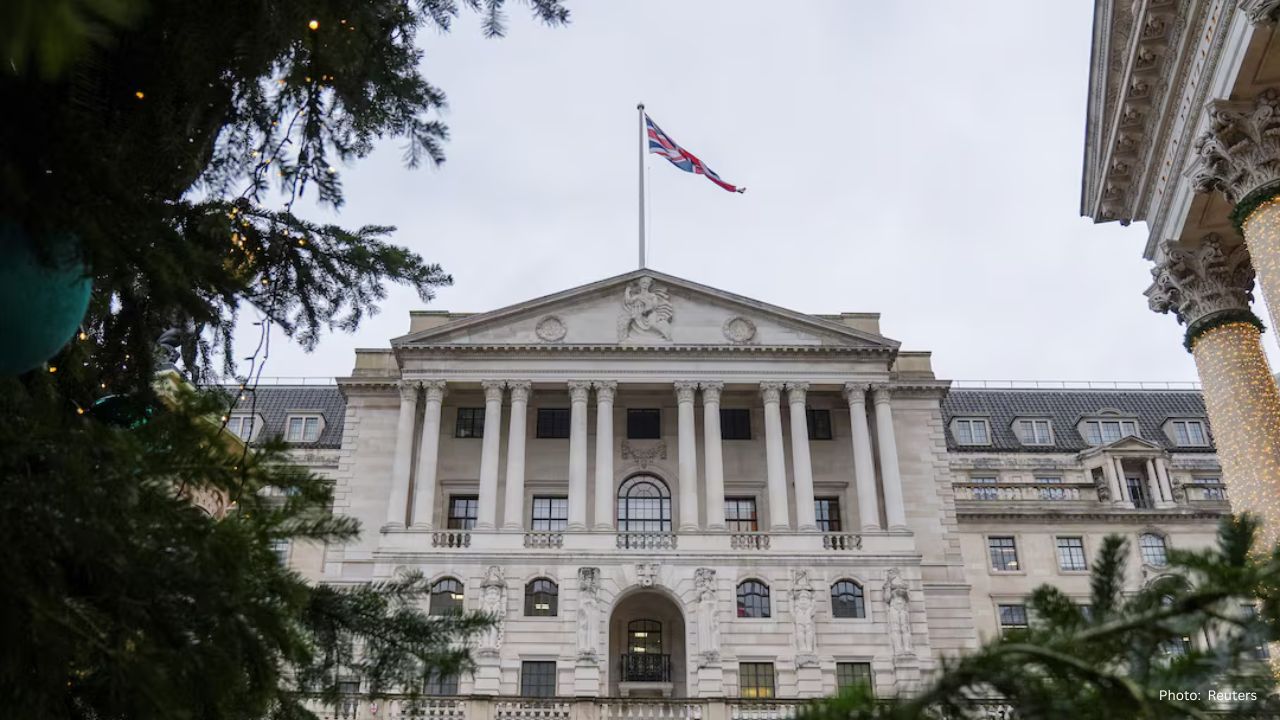
In a worrying update, the Bank of England has issued a new alert regarding the escalating risks to Britain’s financial landscape, stating that 2025 is shaping up with more unpredictability than previously anticipated. The latest Financial Stability Report from the central bank outlines that certain segments of the financial market are becoming increasingly fragile, although banks continue to hold strong and households aren't laden with excess debt.
A significant concern for the Bank is the swift emergence of companies associated with artificial intelligence. Enthusiasm for AI has surged among investors globally, driving the stock prices of many related firms to unusually elevated levels. According to the Bank of England, these valuations are currently at their most inflated since the dot-com era in the U.S. and the highest they’ve been since the financial crisis in the UK. Should the AI excitement wane suddenly, a sharp decline in stock prices could ripple through the markets, exacerbating lending losses.
Additionally, the Bank is closely monitoring risks accumulating in private credit markets. An increasing number of prominent firms are turning to private lenders for financial support in place of traditional banking channels. These loans carry elevated risks, highlighted by the recent failures of U.S. companies such as First Brands and Tricolor, indicating a potential escalation of troubles ahead. To better gauge the robustness of the private credit market under financial stress, the Bank of England is set to conduct a forthcoming stress test.
Concerns also extend to the government bond market, specifically the gilt repo market. Hedge funds have amassed nearly £100 billion via leveraged trades in this domain. These positions rely heavily on stable borrowing conditions, and the Bank cautioned that unexpected market shocks could lead to rapid unwinding of these trades, similar to the volatility that ensued in the bond market in 2022 after Liz Truss's budget triggered a panic.
The central bank acknowledged improvements in some areas, noting that liability-driven investment funds are better equipped now following changes made after the 2022 crisis. However, many non-bank financial entities still lack readiness for a significant shock, raising the risk of recurrent vulnerabilities. The Bank reminded that in past emergencies, public funds have been essential for stabilisation, an outcome policymakers are eager to avert.
Global uncertainties further exacerbate these pressures. Ongoing conflicts, trade disputes, and rising fears over governmental debt across various nations are continuing to impact financial markets. Combined with inflated corporate valuations and precarious lending practices, these concerns have led the Bank of England to conclude that the overall integrity of the financial system has deteriorated this year.
Despite these challenges, the Bank asserted that the UK banking sector is well-capitalized and remains in a solid position to bolster the economy. However, the overarching message from the report is clear: the financial landscape is growing increasingly complex, necessitating heightened vigilance. The Bank of England is prepared for a year where unexpected financial shocks are a distinct possibility, keeping a watchful eye on the global economy and the swiftly evolving spheres of AI and high-risk lending.