The political and social landscape in Bangladesh is deeply shaken by the assassination of student leader Sharif Osman Hadi. His death has ignited violent protests across major cities, resulting in widespread damage and increasing anxieties regarding the nation's future just weeks ahead of pivotal elections.
At 32, Sharif Osman Hadi was a prominent youth advocate and spokesperson for Inquilab Mancha, a group positioning itself as a revolutionary political force. He drew national attention during a youth-led movement that led to the departure of former Prime Minister Sheikh Hasina back in 2024. In recent times, Hadi emerged as a key voice among the youth and was gearing up to run in the upcoming elections.
On Friday, while launching his campaign in Dhaka, Hadi was shot in the head by unidentified attackers, shocking the nation. After initial medical treatment at a local facility, he was transported to Singapore for advanced care. Hadi remained on life support for six days before passing away on Thursday. His death sent shockwaves throughout Bangladesh, sparking widespread fury and sorrow.
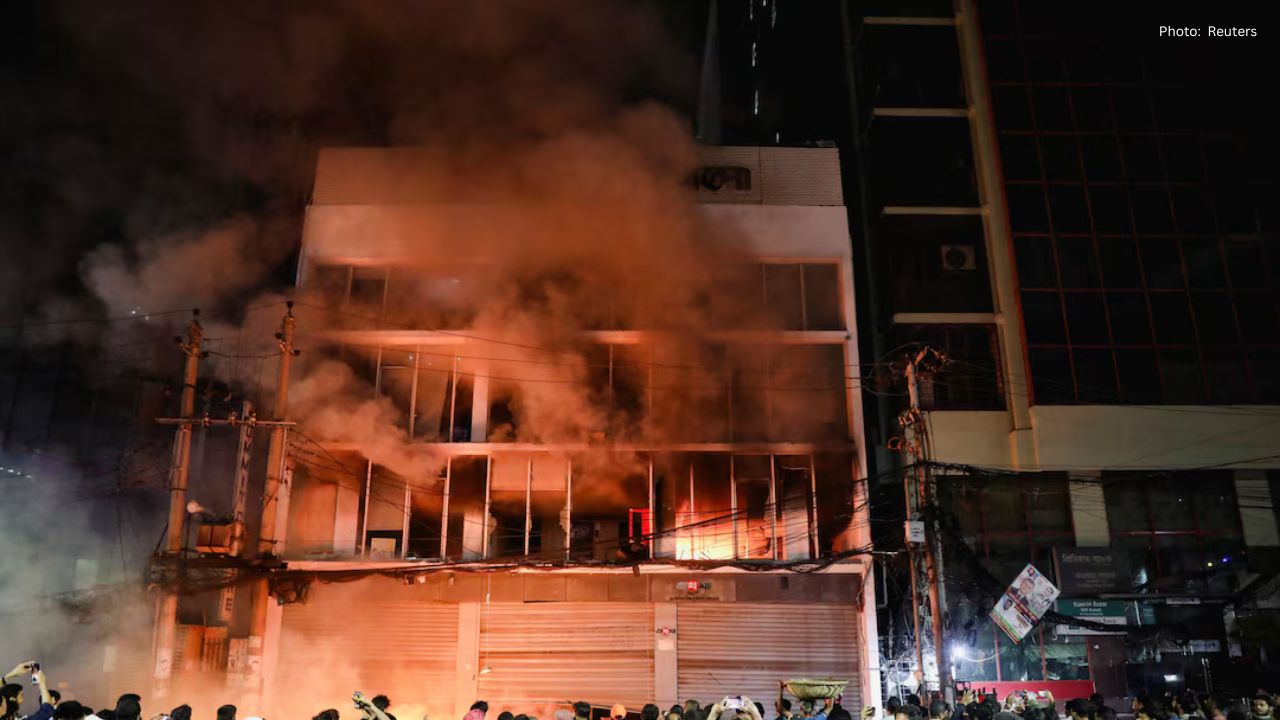
Protests erupted immediately following the announcement of his death, with large crowds gathering in Dhaka and other regions, chanting Hadi's name and demanding justice. Many demonstrations escalated into violence, leading to assaults on the offices of key newspapers, such as Prothom Alo and the Daily Star, and emergency responders had to rush in to aid journalists trapped in the chaos.
In an effort to control the unrest, police and paramilitary units were deployed, yet tensions remained palpable. Streets were barricaded, businesses shut down, and daily life ground to a halt in various areas. Social media revealed videos of enraged crowds confronting security forces and wreaking havoc.
The revolt cascaded beyond the capital. Protesters in Rajshahi used a bulldozer to destroy an Awami League office. In Chittagong, demonstrators targeted the Indian Assistant High Commission and set fire to a residence associated with a former Awami League education minister. Cultural landmarks were not spared either, with the residence of Sheikh Mujibur Rahman, the first president, being vandalized and torched again, along with an attack on the renowned cultural institution, Chhayanaut in Dhaka.
Such incidents reveal that this turmoil reflects broader frustrations concerning political reform and increasing distrust within the governance framework. Hadi, known for his critical stance on India, has spurred heightened anti-India sentiments amongst the crowd. Earlier in the week, hundreds had marched toward the Indian High Commission in Dhaka, insisting on Hasina’s return for accountability.
Bangladesh presently functions under an interim administration led by Nobel Peace Laureate Muhammad Yunus, who stepped in following the 2024 upheaval, promising the restoration of democracy and honest elections. Nevertheless, delays in enacting reforms and ongoing political instability have led to resurging protests. The exclusion of the Awami League from the upcoming February 12 election has amplified the tension.
In a national address post-Hadi's death, Yunus described the tragedy as a significant blow to Bangladesh’s democratic framework. He called for calm and warned that ongoing violence could jeopardize the prospect of a fair electoral process. Furthermore, a thorough investigation into the killing has been promised, with assurances that those responsible will be held accountable. The government has also observed a day of national mourning, with flags at half-mast and special prayers conducted across the nation.
Despite the government's pledges, public sentiment remains fraught with anger and skepticism. Protesters are demanding prompt arrests and transparent answers. To many young individuals, Hadi’s murder epitomizes the escalating peril intertwined in Bangladesh's political realm.
The nation now stands at a precarious juncture. Continued unrest could undermine democratic principles, threaten press freedoms, and tarnish Bangladesh’s international standing. The leadership must navigate these waters judiciously, balancing the quest for justice with the preservation of peace.
The impact of Sharif Osman Hadi’s death has left a significant scar on the nation. The pathway Bangladesh takes toward either stability or further disorder hinges on the response of its leaders during this trying time.