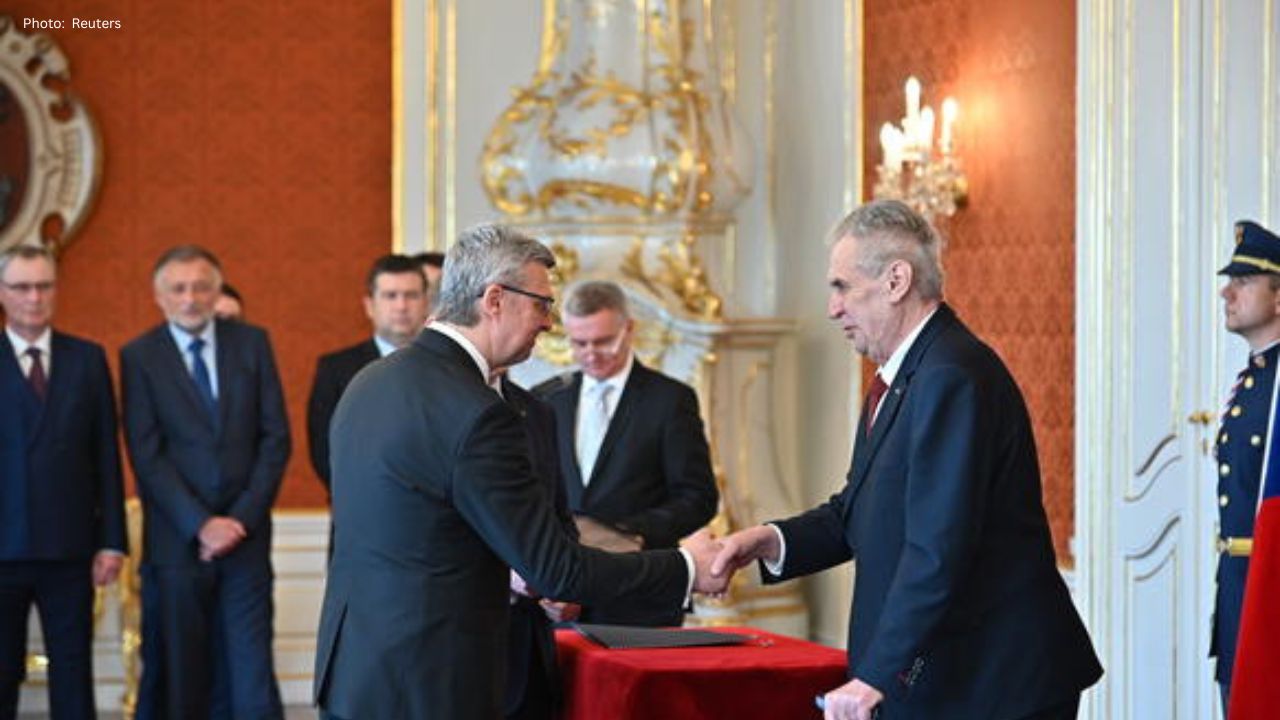
The Czech Republic is embarking on a transformative political era as President Petr Pavel has officially appointed Andrej Babis as prime minister. This ceremony, held at Prague Castle and broadcast live, marks a significant return for one of the nation's key political figures.
At 71 years of age, Babis, the leader of the ANO party, emerged victorious in the parliamentary elections held on October 3 and 4. After spending four years in opposition, he is set to take office fully once his cabinet is finalized later this month, superseding the existing center-right government.
This leadership transition is eliciting a mix of optimism and apprehension. Advocates are hopeful that Babis will supply the stability and decisive governance they seek, while detractors express concern regarding his political alignments and strategy. Throughout his opposition tenure, Babis has distanced himself from the liberal center and gravitated towards more far-right factions across Europe. He is now part of the Patriots for Europe group within the European Parliament.
An area drawing significant attention is the intended cooperation with the far-right SPD and the Motorists for Themselves party. These entities are noted for their staunch opposition to the European Union and its climate initiatives, hinting at a potential recalibration in the Czech Republic's ties with European bodies.
Babis has also made promises to recalibrate foreign policy. For instance, he intends to reduce military assistance to Ukraine, voicing skepticism about a Czech-led initiative that supplies large caliber ammunition, calling for more transparency and questioning its financial sustainability, though no definitive decision has yet been made. This contrasts sharply with the current president's robust backing of the initiative, possibly straining government-presidential relations.
Moreover, concerns about conflicts of interest have emerged, as Babis is among the wealthiest entrepreneurs in the country, overseeing the Agrofert conglomerate with over 200 firms spanning agriculture, food production, and chemical industries. To mitigate these worries, he has declared his plan to place his core business assets into a trust, seeking to avoid direct influence while in office.
This initiative aims to illustrate his commitment to keeping business and politics distinct. Nevertheless, analysts will monitor how effectively this mechanism operates and whether it genuinely guarantees transparency.
Babis's rise reflects a broader shift happening in various European countries, where electorates are increasingly favoring leaders advocating for stronger national governance, diminished EU influence, and stricter fiscal and migration policies.
The upcoming months will be pivotal for the Czech Republic as the new administration confronts economic challenges, global tensions, and domestic political strife. Babis's approach to these issues will be instrumental in shaping the nation's trajectory.
In summary, Andrej Babis's resurgence in leadership transcends mere administrative change. It signals a prospective alteration in the nation's values, alliances, and policies. While some citizens embrace this new direction, others harbor reservations. The global audience will be keenly observing the Czech Republic's evolution under its new leadership.