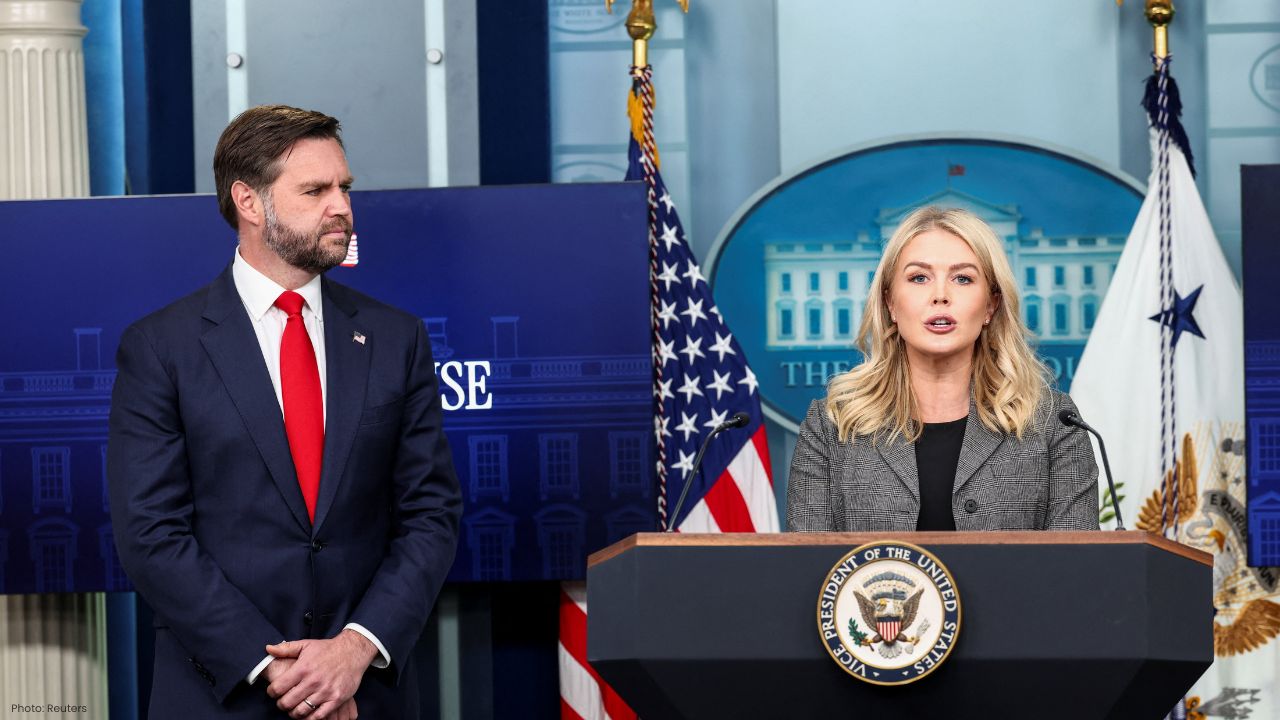
The U.S. government shutdown, now approaching its third week, is threatening to trigger additional federal workforce cuts, as Vice President JD Vance warned of escalating layoffs if a resolution is not reached soon.
“The longer this goes on, the deeper the cuts are going to be,” Vance said. “To be clear, some of these cuts are going to be painful.”
Democrats and Republicans Clash Over Healthcare Subsidies
The current impasse began on October 1, when Democrats rejected a short-term funding bill that did not include an extension of federal health insurance subsidies under the Affordable Care Act (ACA). Democrats insist that any spending package must restore these subsidies, while Republicans have refused to include them, framing the standoff as a political disagreement over budget priorities.
Senator Mark Kelly, an Arizona Democrat, reiterated his party’s position, saying, “We won’t back down from our demand to reinstate federal healthcare subsidies in the budget now, not later.” He further added that Republicans “don’t have to punish people” with layoffs.
Meanwhile, Republican Senator Lindsey Graham of South Carolina confirmed he would not vote to extend the healthcare subsidies. Vice-President Vance blamed Democrats for the current situation, stating, “This is not a situation we relish… the Democrats have dealt us a pretty difficult set of cards.”
Federal Agencies Begin Layoffs
The Trump administration announced last Friday that seven agencies, including the Centers for Disease Control and Prevention (CDC), had begun terminating over 4,000 staff members due to the funding lapse.
However, some of these layoff notices were later retracted. A spokesman for the U.S. Department of Health and Human Services, which oversees the CDC, confirmed that employees notified of layoffs were not subject to the reduction in force. Out of approximately 1,300 CDC employees initially fired, around 700 were reinstated, according to the employees’ union.
Despite these corrections, hundreds of thousands of federal employees remain on leave without pay, while essential personnel, such as federal law enforcement officers and air traffic controllers, are required to continue working without compensation.
Military Personnel Wages Secured
The Trump administration has made exceptions for certain essential workers, notably U.S. service members. President Trump directed Secretary of the Army Pete Hegseth to locate available funds to ensure military personnel receive wages during the shutdown.
The Department of Defense will redirect approximately $8 billion from “unobligated research, development, testing, and evaluation funds” to pay troops on October 15, if the shutdown continues, according to a Pentagon official.
National Institutions Feel the Impact
As the budget standoff continues, government services and institutions are increasingly affected. Several Smithsonian museums, research centers, and the National Zoo in Washington, D.C., closed on Sunday due to a lack of funding to maintain operations.
The shutdown not only affects federal employees but also has broader implications for public access to cultural, scientific, and educational resources. Citizens and tourists visiting the capital are facing unexpected closures and service interruptions.
No End in Sight
Currently, there is no scheduled congressional vote to reopen the government, raising concerns over further disruptions. The political standoff is emblematic of ongoing partisan tensions over healthcare funding and federal spending priorities.
While Democrats demand the restoration of ACA subsidies, Republicans argue that they are upholding fiscal responsibility. As both sides remain entrenched, federal employees and essential workers continue to bear the brunt of the impasse.
-
The government shutdown began on October 1 after Democrats rejected a short-term funding bill.
-
Vice-President JD Vance warns of deeper workforce cuts if no resolution is reached.
-
Democrats demand ACA health insurance subsidies be included in the budget; Republicans refuse.
-
Over 4,000 CDC employees faced layoffs, though some were reinstated after errors.
-
Essential workers like law enforcement and air traffic controllers work without pay; troops’ wages are being covered separately.
-
Smithsonian museums and the National Zoo closed due to a lack of funding.
With no compromise in sight, the shutdown threatens to escalate further, affecting federal employees, military personnel, and public services nationwide. The coming days will be critical as lawmakers decide whether to extend funding, restore subsidies, or face deeper disruptions across federal agencies.