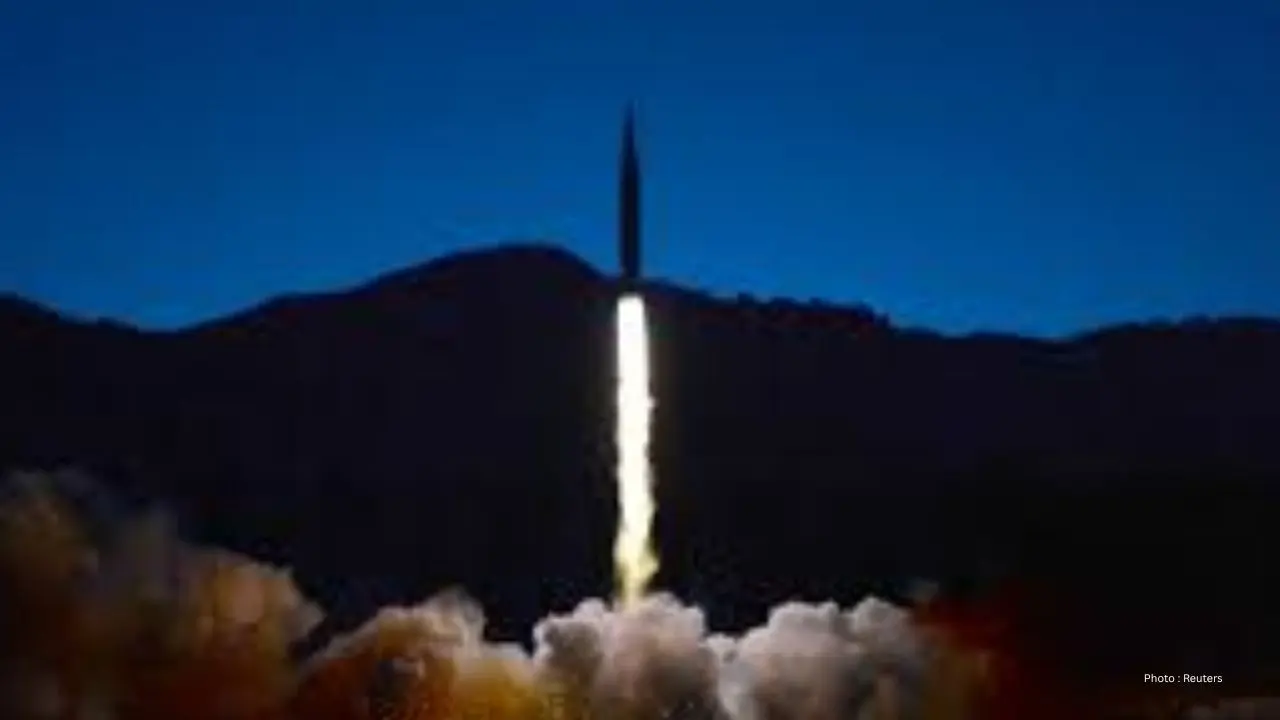
Engineers and scientists from the Ministry of Defence of Ukraine have conducted a detailed technical analysis of missile debris believed to be from North Korean systems, highlighting distinct design features that set them apart from Russian counterparts. The study focused on fragments recovered after a strike in Kharkiv in early 2024.
According to officials, the examined debris showed strong similarities to the KN-23 and KN-24, two short-range ballistic missiles developed by North Korea. Engineers identified several unique structural characteristics, particularly the geometry of the missiles. For instance, the KN-23 has a tail diameter of 110 cm that narrows to 90 cm at the front — a specification not commonly seen in missile designs from other countries. The KN-24, meanwhile, features a diameter of around 100 cm.
Experts also found multiple technical similarities between the debris and publicly available images from North Korean manufacturing facilities. These included details such as bolt configurations around the engine nozzle and specialized compartments designed to house satellite navigation components.
Despite some resemblance to Russian missile systems, particularly the 9M723 Iskander, Ukrainian officials concluded that the KN-23 and KN-24 are not direct copies or licensed versions. However, there are indications that North Korea may have adapted early design concepts related to the Iskander system during development.
The analysis also revealed differences in engineering quality and materials. North Korean missiles were found to use less efficient propellants and larger engine structures to achieve similar range capabilities. Additionally, manufacturing techniques appeared outdated, with soldering quality resembling older industrial standards.
Investigators noted the presence of commercially available electronic components inside the control units, suggesting that some parts may have been acquired through indirect channels despite international sanctions. The missiles also use a graphite-based nose cone to withstand high temperatures during flight, a cost-effective but less advanced solution compared to modern thermal protection systems.
Officials say such forensic examinations are part of ongoing efforts to better understand evolving missile technologies and assess potential threats in the context of the broader conflict involving Ukraine and Russia.