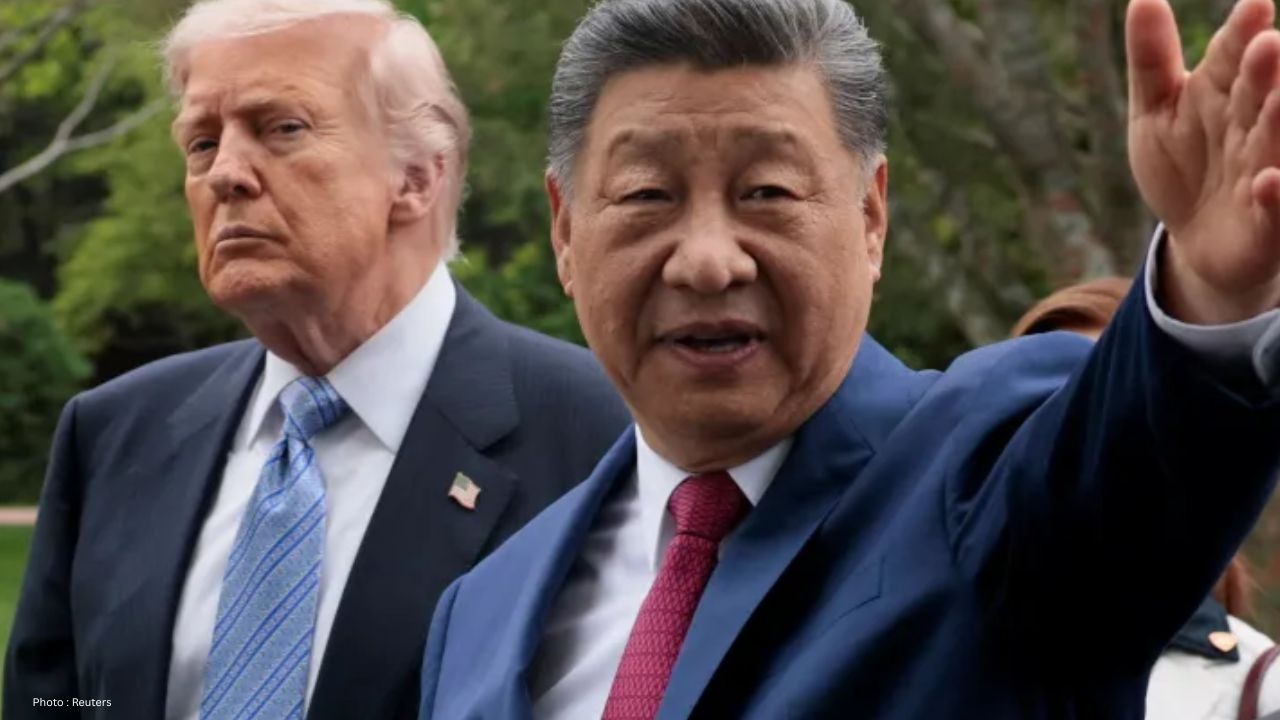
The upcoming summit between U.S. President Donald Trump and Chinese President Xi Jinping is attracting global attention as both countries attempt to manage growing economic and geopolitical tensions. While the high-level meeting could help improve communication between Washington and Beijing, analysts say expectations remain limited because many of the biggest disputes between the world’s two largest economies are deeply rooted and unlikely to disappear after a single summit.
The meeting comes during a period of rising pressure in the relationship between the United States and China. Trade disputes, technology competition, military concerns in the Indo-Pacific region, and disagreements over Taiwan continue to create serious tension between the two governments. Although both sides are expected to discuss cooperation and stability, experts believe the summit will mainly focus on preventing further deterioration rather than achieving major breakthroughs.
One of the biggest unresolved issues remains trade. The United States has repeatedly accused China of unfair trade practices, industrial subsidies, intellectual property violations, and market restrictions affecting American businesses. China, meanwhile, has criticized U.S. tariffs, export controls, and restrictions on Chinese technology companies. Analysts say even if both leaders agree to reduce tensions temporarily, the wider economic rivalry between the two countries is expected to continue.
Technology and artificial intelligence competition are also becoming central issues in U.S.-China relations. Washington has introduced measures limiting Chinese access to advanced semiconductor technology and sensitive AI-related systems, arguing that national security concerns require tighter controls. Beijing has strongly opposed those restrictions and continues investing heavily in its domestic technology sector to reduce dependence on Western companies.
Taiwan remains another major point of disagreement that the summit is unlikely to solve. China considers Taiwan part of its territory and has warned against increased American military and political support for the island. The United States officially follows the “One China” policy but continues providing defensive support to Taiwan. Military activities and tensions in the Taiwan Strait have increased international concerns about the possibility of future conflict.
Security experts also point to disputes in the South China Sea, cyber security concerns, and growing military competition across Asia as long-term problems that require more than diplomatic meetings alone. While summits can reduce immediate tensions and improve communication between leaders, analysts say the deeper strategic rivalry between China and the United States has now become part of global power politics.
Despite these challenges, both governments are expected to present the summit as an important effort to maintain stability. Business leaders and global markets are closely watching the talks because even limited cooperation between Washington and Beijing can affect international trade, supply chains, investment, and financial confidence worldwide.
Some analysts believe the meeting could still produce smaller agreements on climate cooperation, economic communication, military dialogue, or anti-drug enforcement. However, most experts caution that the summit should not be viewed as a solution to the broader competition shaping the future relationship between the United States and China.
As global uncertainty continues, many countries are carefully monitoring the outcome of the summit. The relationship between Washington and Beijing now influences not only trade and economics but also international security, technology development, diplomacy, and the balance of power across the world.