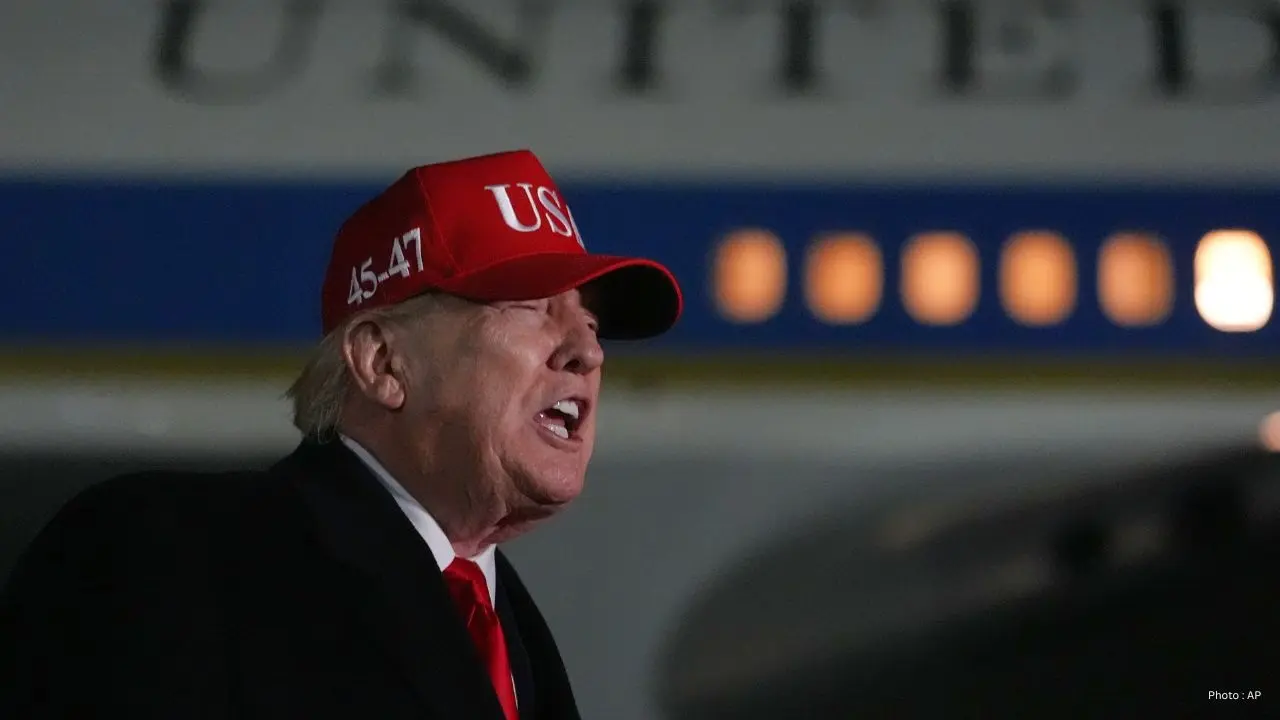
US President Donald Trump has launched a strong public attack on Pope Leo XIV through a lengthy social media post, intensifying an ongoing dispute between the White House and the Vatican over global conflicts, including the Iran war.
In his post, Trump described the pope as “weak on crime” and “terrible for foreign policy,” while also criticizing his stance on international issues. The president said he disagrees with the pope’s views on Iran, particularly regarding nuclear weapons, and defended his own policies as necessary for national security and global stability.
Trump also expressed frustration over what he sees as political criticism from the pope, stating that he was elected to take strong decisions and would continue to do so. He further claimed that Pope Leo’s leadership is not beneficial for the Catholic Church and suggested that the pontiff should focus more on religious duties rather than political matters.
The comments came shortly after a US television interview featuring senior Catholic leaders and a recent peace vigil led by the pope at St. Peter's Basilica. During the event, Pope Leo called for an end to war and urged global leaders to choose dialogue over conflict. His remarks were widely seen as a response to rising tensions involving the United States and Iran.
Pope Leo XIV has increasingly spoken out on issues related to war, migration, and global leadership. He recently criticized strong rhetoric surrounding the Iran conflict and called for restraint, warning against what he described as the dangers of power and aggression.
The exchange highlights a growing divide between political and religious leadership on global matters. While Trump continues to promote a firm approach to foreign policy and security, the pope has emphasized peace, humanitarian values, and international cooperation.
The situation has drawn global attention, as both figures hold significant influence over public opinion. Observers say the disagreement reflects broader debates about the role of moral authority and political power in addressing international crises.