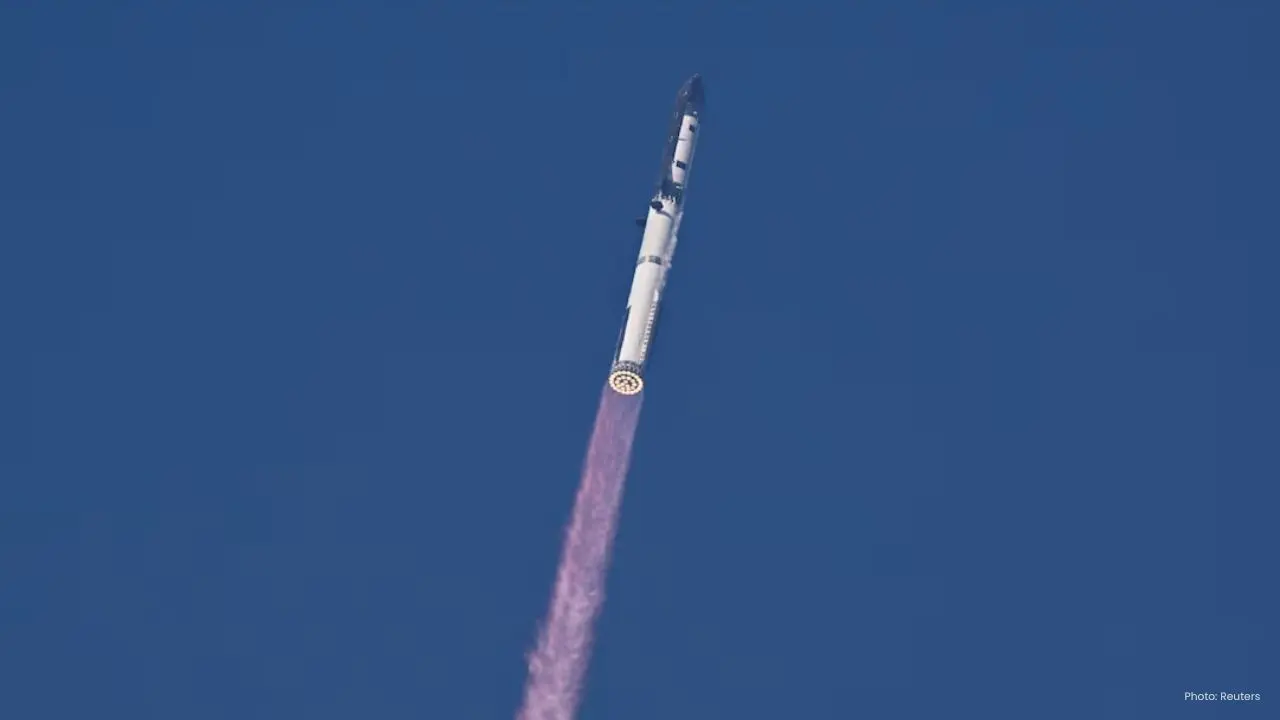
SpaceX has achieved a significant milestone with a successful test flight of its advanced Starship rocket, marking a crucial step forward in its development. This uncrewed mission involved the deployment of satellites and a controlled splashdown in the Indian Ocean.
This marks the 12th test flight of the Starship series since 2023, and it also represents the inaugural launch of the upgraded V3 version. The rocket launched from SpaceX’s Starbase in Texas, propelled by the Super Heavy booster, which is powered by 33 Raptor engines.
Throughout the flight, the rocket efficiently separated into two stages. The upper-stage Starship persisted with its mission even after experiencing a loss of one of its six engines. It successfully deployed 20 mock Starlink satellites along with two experimental satellites meant for heat shield data collection.
The separation of the Super Heavy booster occurred as anticipated; however, the booster failed to execute its boost-back burn for returning. Notably, SpaceX had previously indicated that recovery operations for both the booster and the spacecraft weren’t planned for this mission.
Upon completing its suborbital flight, the Starship re-entered Earth’s atmosphere and executed a controlled splashdown in the Indian Ocean. The craft was destroyed upon landing, in alignment with expectations for this test.
According to SpaceX, the mission met most primary objectives and supplied invaluable engineering data. Over $15 billion has been invested in Starship's development, aiming for full reusability to enable upcoming missions, including extensive Starlink satellite launches and deep-space exploration.
The upgraded V3 model boasts enhanced thrust, lighter engines, and advanced systems to facilitate long-duration space travel, in-space refueling, and spacecraft docking. These enhancements are essential for forthcoming lunar missions as part of NASA’s Artemis program, which awarded SpaceX a contract exceeding $3 billion in 2021.
The triumph of this test flight arrives as SpaceX gears up for a potential initial public offering (IPO), potentially valuing the company at approximately $1.75 trillion. Investors are closely monitoring the advances of Starship, integral to SpaceX's future endeavors including lunar operations and orbital infrastructure development.
Despite experiencing some technical challenges during the flight, including an engine malfunction and a booster burn anomaly, SpaceX views this test as a vital progression in substantiating the vehicle’s preparedness for upcoming missions.