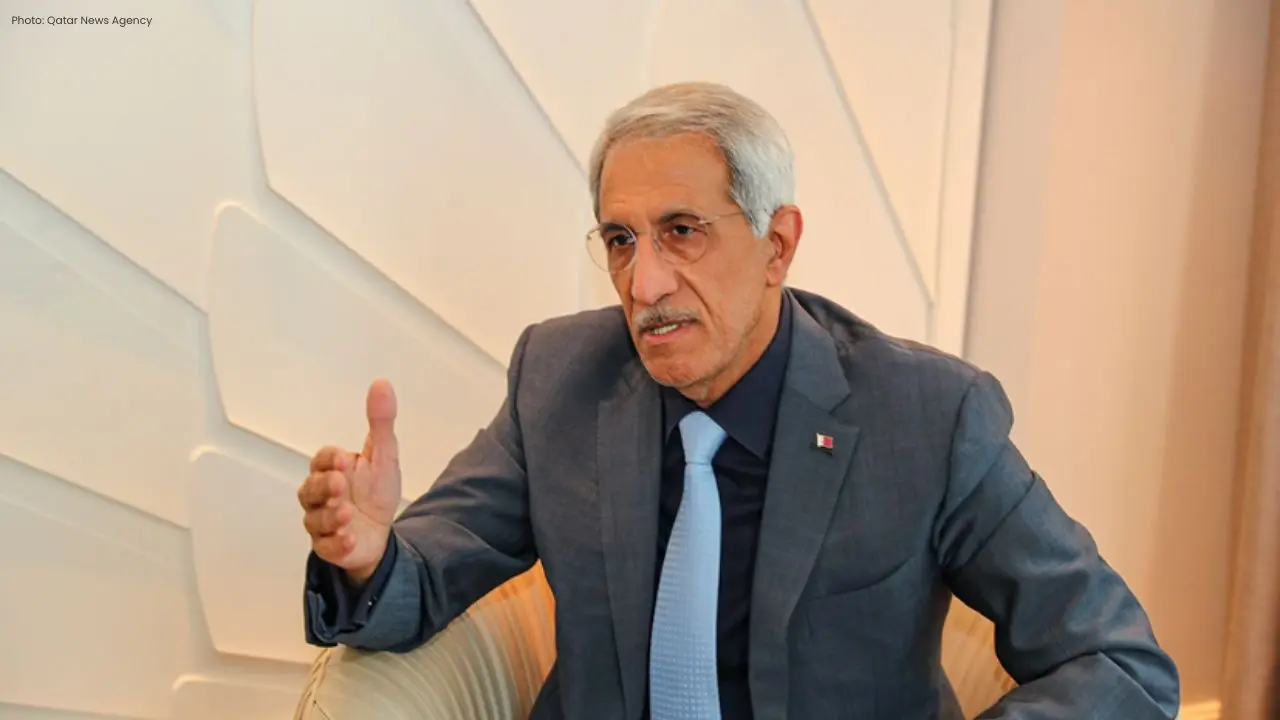
The State of Qatar has expressed its enthusiasm following the conclusion of negotiations on a free trade agreement between the Gulf Cooperation Council (GCC) and the United Kingdom, deeming it a vital progression in Gulf–British relations.
During a statement to Qatar News Agency (QNA), HE Sheikh Abdullah bin Mohammed bin Saud Al-Thani, Qatar's Ambassador to the UK, emphasized that this agreement transitions from mere negotiations to a robust, long-term economic partnership.
The ambassador remarked that this deal aligns with Qatar's vision of diversifying its international economic ties and fortifying its status as a central hub for trade, investment, and energy. This agreement also propels Qatar National Vision 2030, which aims to cultivate a competitive, open, and globally interconnected economy.
He highlighted that the GCC–UK agreement introduces an innovative framework for collaboration, extending beyond traditional trade relations. It aspires to enhance involvement in investment, energy, technology, and the digital economy while advocating for sustainable development, knowledge sharing, and private sector enhancement.
The agreement is poised to unlock numerous opportunities for Qatar across crucial industries such as energy, financial services, logistics, education, healthcare, technology, and investment, facilitating easier access to the UK market for Qatari enterprises and fostering mutual investment.
The ambassador noted Qatar's intention to leverage this agreement to expedite its economic diversification, amplify its digital and knowledge-driven economy, and elevate the global competitiveness of its private sector.
He stated that ratifying the deal amidst current global challenges sends a robust message: GCC nations and the UK are dedicated to economic stability, sustained cooperation, and robust global supply chains.
Furthermore, he underscored Qatar's commitment to economic diplomacy, reinforcing its standing as a reliable international partner that promotes stability, dialogue, and collaboration, also advancing energy security.
The forthcoming phase of collaboration is anticipated to explore sectors like artificial intelligence, cybersecurity, clean energy, financial services, digital evolution, and innovation. Qatar aspires to cultivate advanced partnerships centered on technology, knowledge transfer, and capacity enhancement.
Regarding implementation, the ambassador indicated that the agreement would now undergo legal verification and formal endorsement, leading to the establishment of technical committees and cooperation frameworks between government entities and the private sector. The primary goal is to convert this agreement into tangible investment and business opportunities.
He further explained that the agreement is designed to minimize trade barriers, enhance trade and investment flows, and bolster cooperation in services, digital commerce, and investment safeguards.
In his remarks, he highlighted that GCC nations have emerged as pivotal allies in the UK's trade strategy due to their economic prowess and significance in the global energy market. He reiterated Qatar's strong and reliable relationship with the UK across politics, energy, investment, education, defense, and culture.
Concluding his remarks, the ambassador asserted that Gulf–British relations are advancing toward a more profound strategic economic integration, driven by collaboration in sectors like technology, finance, AI, and innovation, thereby supporting Qatar's aspiration to establish a diversified and sustainable knowledge-based economy.