The Ottawa firefighters' union is imploring the city council to allocate funds for laundry equipment in every fire station, highlighting crucial health and safety concerns.
During a city council budget committee meeting for the 2026 draft, Genna McMillan, president of the Ottawa Professional Fire Fighters Association, called for each fire station to have a washer and dryer. She deemed this request as “low-hanging fruit” while underscoring its importance for safety.
In recent years, the International Agency for Research on Cancer (IARC), part of the WHO, recognized firefighting as a Group 1 carcinogen, linking it to heightened cancer risks.
“Each year, we see more retired and current members receiving cancer diagnoses,” stated McMillan. “We believe implementing straightforward preventative measures can significantly lower these risks.”
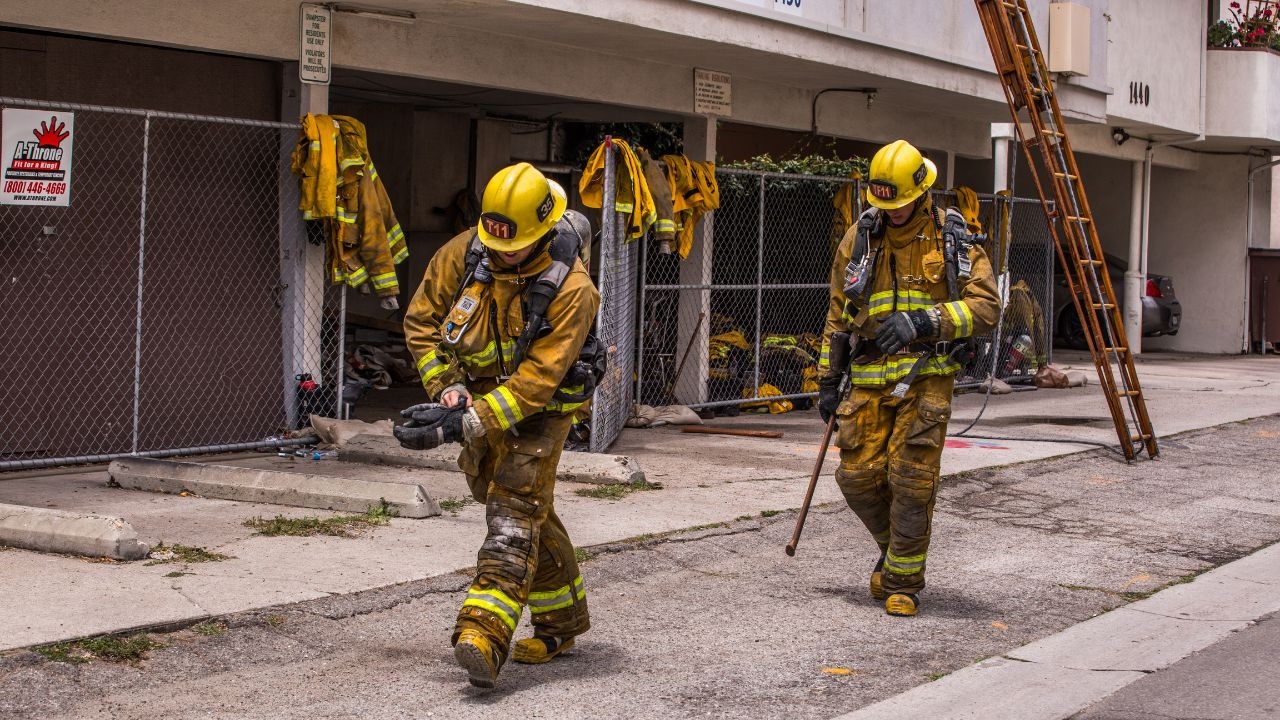
Firefighters face harmful smoke and contaminants that can infiltrate their protective clothing. McMillan pointed out that having dedicated laundry facilities would help prevent these toxins from entering their homes.
“Requesting washers and dryers for our contaminated gear is reasonable and doable. This is standard in many fire departments across the country but not universally adopted here in Ottawa,” she noted. “This initiative would protect our families, notably our spouses and children, from these harmful substances.”
At present, only about 15 out of Ottawa’s 45 fire stations are equipped with laundry facilities. Firefighters without access can send their uniforms to other stations for cleaning via internal mail, a process McMillan described as unsatisfactory.
“Many worry about sending their gear to another location for washing,” she added. “Another option involves taking gear to those stations during laundry, causing service disruptions in the community.”
She also called for funding to ensure proper ventilation in gear storage areas.
Ottawa Fire Chief Paul Hutt reiterated that the health and safety of firefighters is a top priority, particularly concerning cancer prevention. He explained each suppression firefighter has two sets of bunker gear. “If a set gets soiled at a fire, it’s sent for cleaning while they use the second set,” he explained.
Hutt acknowledged that upgrading facilities is a gradual process since some stations are over a century old, but he affirmed its priority status.
The draft 2026 budget suggests extra spending on firefighter health and safety, including $3.6 million earmarked for updating aging breathing equipment. It also proposes a nine-percent funding increase for the Ottawa Fire Service to cover a collective agreement. However, the number of firefighters will not be expanded.
“Staffing has always been a challenge for us,” McMillan stated. “We frequently have vehicles that aren’t operational due to personnel on leave. We aim for four individuals on all apparatus in the city, which is currently not the case.”
In contrast, the Ottawa Paramedic Service is seeing an increase, with 23 new full-time equivalent positions that Chief Pierre Poirier claims will improve response times.
The budget will also support six additional by-law officers. Roger Chapman, director of by-law and regulatory services, noted one officer will focus on property standards, while the others will handle parking enforcement.
River Ward Councillor Riley Brockington, chair of the emergency and protective services committee, stressed the importance of enhanced enforcement in school zones, especially working in tandem with police to address frequent infractions like U-turns and no-stopping violations.