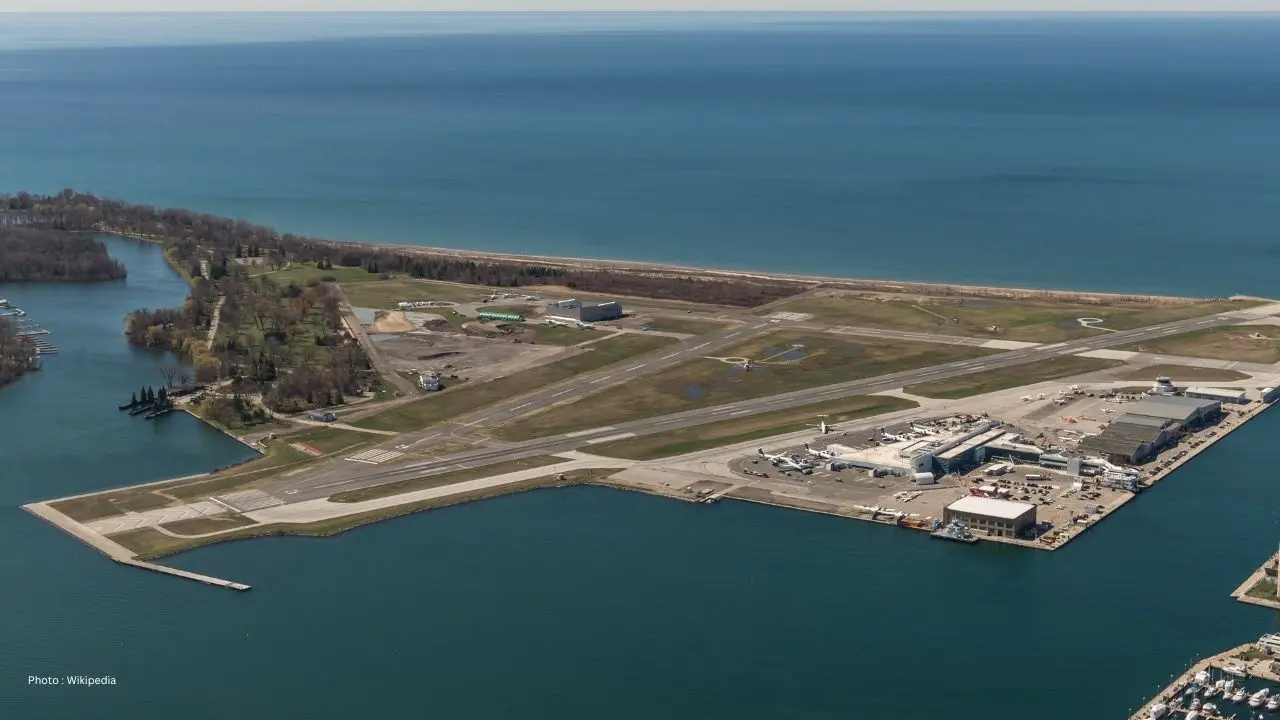
The government of Ontario has introduced a proposed law that could allow it to take control of large parts of the Toronto Islands, raising concerns among local leaders and residents. However, provincial officials have stated that they do not intend to seize all of the land and will only acquire areas required for the expansion of Billy Bishop Toronto City Airport.
The proposal is part of a broader plan supported by Premier Doug Ford to expand the airport’s capacity. The plan includes extending runways to allow jet aircraft operations and increasing passenger capacity to as many as 10 million annually. Currently, only smaller turboprop aircraft operate at the airport due to existing restrictions.
According to Transportation Minister Prabmeet Sarkaria, the legislation would give the province authority to take over land currently owned by the City of Toronto. This move would also remove the city from its longstanding agreement with federal authorities that governs airport operations and currently prohibits jet traffic.
One of the key concerns is that the legislation lists broad property identification numbers (PINs), including a large parcel that covers most of the city-owned land on the Toronto Islands. This has raised fears that beaches, parks, and public spaces could be affected. The bill also includes parts of Little Norway Park on the mainland, though officials later clarified that the park itself would remain intact.
Provincial representatives have said that the wide scope of land listed is only temporary and based on existing property boundaries. They added that the government will work with the city to narrow down the exact land needed for the airport project. The intention, they claim, is not to take over all island land but only what is necessary for expansion.
The proposal has faced strong criticism from opposition leaders and local representatives. Marit Stiles warned that the bill could allow excessive control over public land, while other officials described the move as undemocratic and lacking transparency. Critics have also raised concerns about environmental impact, noise levels, and the effect on nearby communities.
Toronto Mayor Olivia Chow has also opposed the plan, calling for more clarity and public consultation. She questioned the lack of detailed information and indicated that the city may consider legal action to challenge the proposal.
The federal government will also play a key role, as any major changes to airport operations require approval under existing agreements. Officials in Ottawa have stated that they will review any proposal carefully, especially in terms of safety, environmental protection, and community impact.
Overall, while the Ontario government insists the legislation is focused on airport development, the broad powers outlined in the bill have sparked a wider debate about land control, governance, and the future of Toronto’s waterfront.