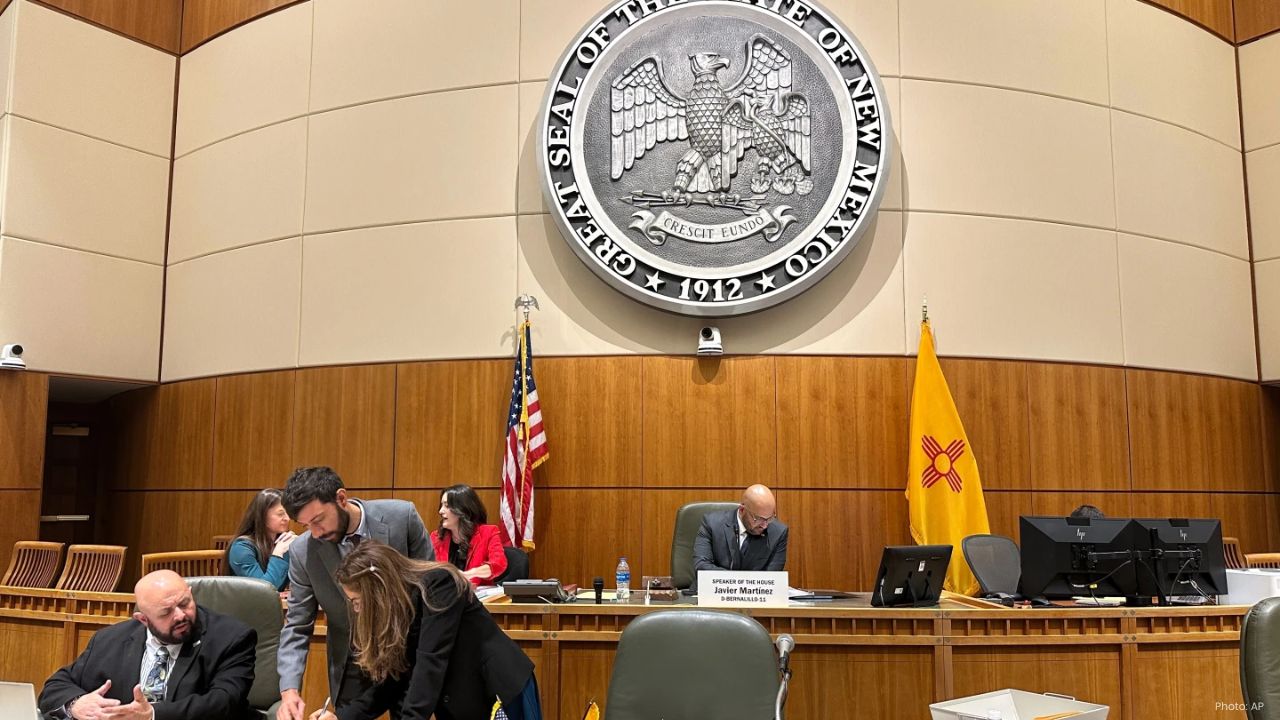
New Mexico lawmakers moved fast on Thursday during a special legislative session to protect funding for food assistance and rural health care services. This action comes after President Donald Trump proposed major cuts to federal spending on Medicaid and nutrition programs.
The Democratic-led Legislature sent several bills to Governor Michelle Lujan Grisham. These bills include over $16 million to keep food assistance running through the Supplemental Nutrition Assistance Program (SNAP) and extra funds to support food banks. The move comes as the federal government ends SNAP eligibility for many noncitizens and changes benefit calculations for others.
“We need to act to make sure that New Mexicans don't go hungry with SNAP changes at the federal level,” said Democratic state Senator George Muñoz of Gallup.
Rural Health Care Receives Support
Another $50 million will go toward maintaining medical services at rural health clinics and hospitals, which rely heavily on Medicaid funding. These clinics provide vital care for small towns and communities across New Mexico.
Republicans in the state legislature opposed the spending measures. They argued that major Medicaid changes are still several years away and that New Mexico should focus on reducing mistakes in benefit distribution rather than spending more money now.
Despite opposition, Democrats and some Republicans supported measures to maintain health insurance subsidies on New Mexico’s Affordable Care Act exchange. This is important because federal subsidies may expire soon. The issue of subsidies is a key part of the ongoing budget fight in Washington that caused a federal government shutdown earlier this week.
Governor Lujan Grisham said she will sign the bills to protect families from rising insurance costs and ensure health care is available in small communities.
Temporary Fixes for Long-Term Cuts
Many federal health care changes under Trump’s proposed bill will not take effect until 2027 or later. Democratic legislators in New Mexico acknowledge that the state’s bills are only a temporary solution.
“Some of the most significant federal cuts are delayed a few years, and these are deeply significant,” said state Representative Nathan Small of Las Cruces, who sponsored the spending bill. “We need to think about billions of dollars in reduced Medicaid support for our state.”
Several Democratic-led states are acting quickly to address federal cuts, while Republican-led states are not moving as urgently.
“These are temporary fixes,” said Democratic state House Speaker Javier Martínez. “But they are critical because these are massive holes for any state to fill.”
SNAP Funding for Food Assistance
New Mexico approved a quick infusion of state funds to support SNAP, especially for elderly recipients. About one-fourth of New Mexico residents rely on SNAP for food, making it an important safety net against hunger.
The state also gave food banks an $8 million boost in direct support. An additional $2 million will go to restock food pantries at universities and public schools.
Trump’s proposed federal changes to SNAP include stricter work and reporting requirements, ending eligibility for many noncitizens, and altering benefit calculations.
Challenges for Rural Hospitals
The federal plan sets aside $50 billion over five years for rural hospitals, clinics, and health providers. However, New Mexico lawmakers warn this may not offset the cuts completely. About 38% of New Mexicans rely on Medicaid, highlighting the high stakes for health care access.
Rural areas face a particular challenge in keeping hospitals and clinics open. Recruiting and retaining medical professionals has been difficult.
State Senator Pat Woods, a Republican from eastern New Mexico, co-sponsored a bill to provide grants that help rural clinics and hospitals maintain services. The bill passed the House with a 64-3 vote and now awaits the governor’s approval.
“We’re trying to find a way to fund and keep some of these clinics open. What will happen in the future? Who knows,” Woods said. “My main concern is keeping these clinics and hospitals open until things stabilize.”
Protecting Health Insurance Subsidies
Lawmakers set aside $17 million to ensure health insurance subsidies on New Mexico’s Affordable Care Act exchange do not lapse. The plan also extends subsidies to middle-income families earning up to 400% of the federal poverty level, which is about $128,000 per year for a family of four.
Democratic state Senator Carrie Hamblen of Las Cruces said these subsidies will prevent a “perfect storm of unaffordability.” Rising insurance rates could reduce participation in the exchange, making health coverage even harder to access.
Support for Public Broadcasting and Vaccines
New Mexico legislators approved $6 million in state funding for public broadcasting. This includes $430,000 for five tribal stations that were hit hard when federal funding from the Corporation for Public Broadcasting was reduced by Congress and the Trump administration.
Another bill waiting for the governor’s signature would give the New Mexico Health Department more control over adult and childhood vaccinations, as well as state vaccine purchases.
Why It Matters
These state actions highlight the pressure on local governments when federal funding is cut. While the bills are temporary, they aim to protect vulnerable populations, including low-income families, elderly residents, and rural communities.
By boosting SNAP funding, supporting rural health care, and extending insurance subsidies, New Mexico lawmakers are trying to prevent immediate crises in food security and health care access.
Democrats emphasize that the state must prepare now, even though some federal cuts are years away. Republicans warn that spending more money now may not be necessary yet and that the state should improve management of existing programs.
The session demonstrates the urgency of state-level intervention when federal policies threaten essential services.