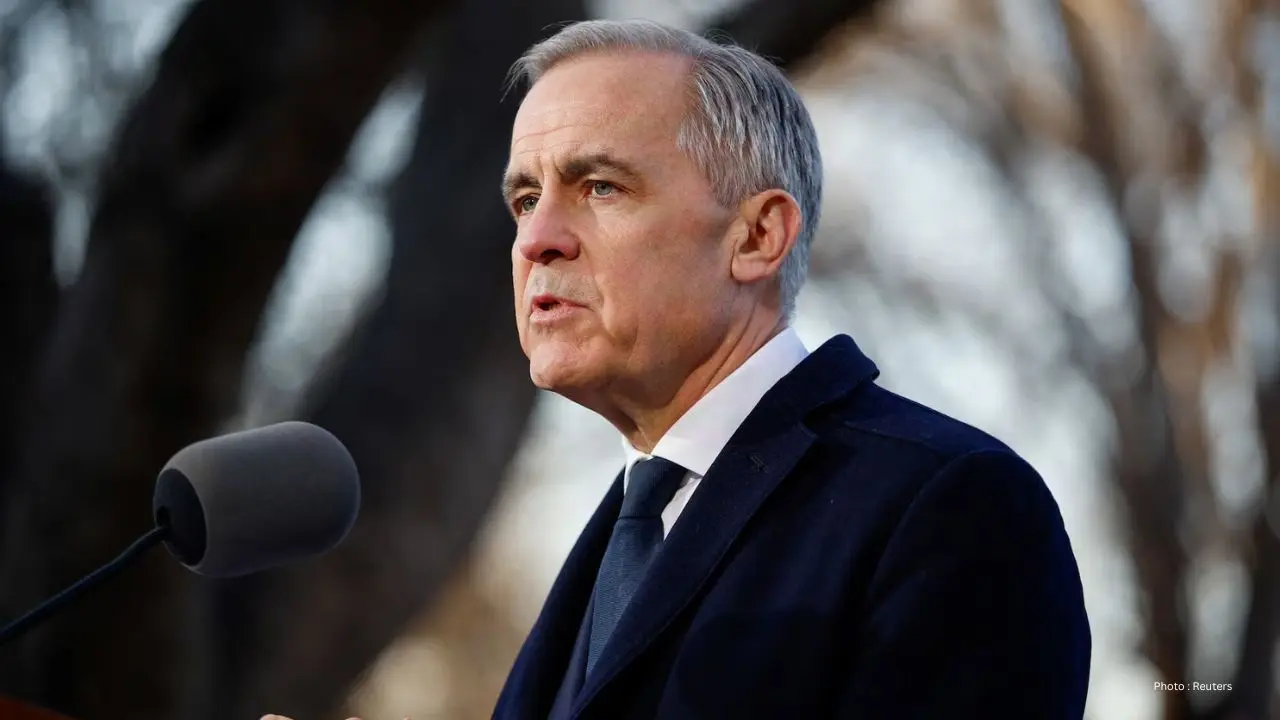
As Mark Carney enters his second year as leader of Canada, he continues to enjoy strong public support, but expectations around his leadership are steadily increasing. After rising quickly from a background in global finance to lead a G7 nation, Carney is now approaching a critical phase where his performance will be closely judged on both domestic and international fronts.
Carney’s early political success has been notable. Despite having no prior elected experience, he secured leadership of the Liberal Party after Justin Trudeau and led the party to form a government that later strengthened into a narrow majority. His global profile has also grown, with recognition from international leaders such as Christine Lagarde, who praised his role in shaping discussions around a changing global order.
In his first year, Carney focused heavily on international diplomacy, visiting countries including India and the United Arab Emirates to attract investment and strengthen economic ties. His speech at the World Economic Forum further raised his global standing, positioning him as a key voice among middle powers responding to rising geopolitical tensions.
However, analysts suggest that Carney’s extended “honeymoon period” may soon come to an end as attention shifts to his ability to deliver results at home. His government has made ambitious promises, including large-scale housing development, economic reforms, and reducing reliance on the United States. These goals come with significant challenges, especially as Canada faces economic pressures and shifting global conditions.
One of the most immediate tests for Carney is managing relations with the United States, particularly around the review of the North American trade agreement. Ongoing tariffs on Canadian industries have impacted jobs and economic growth, and progress on negotiations has been limited so far. This has drawn criticism from opposition leader Pierre Poilievre, who has questioned the government’s approach and transparency.
Domestically, affordability remains a major concern. Rising fuel prices, high housing costs, and youth unemployment continue to affect many Canadians. While the government has introduced temporary relief measures such as tax breaks and rebates, experts argue that some long-term promises, particularly around housing, may be difficult to achieve quickly.
Despite these challenges, Carney still benefits from time and political stability, with a majority government potentially lasting until 2029. This gives him a window to implement policies and demonstrate results. However, as public expectations grow, the coming months are likely to define whether his leadership can match the high hopes set during his early tenure.