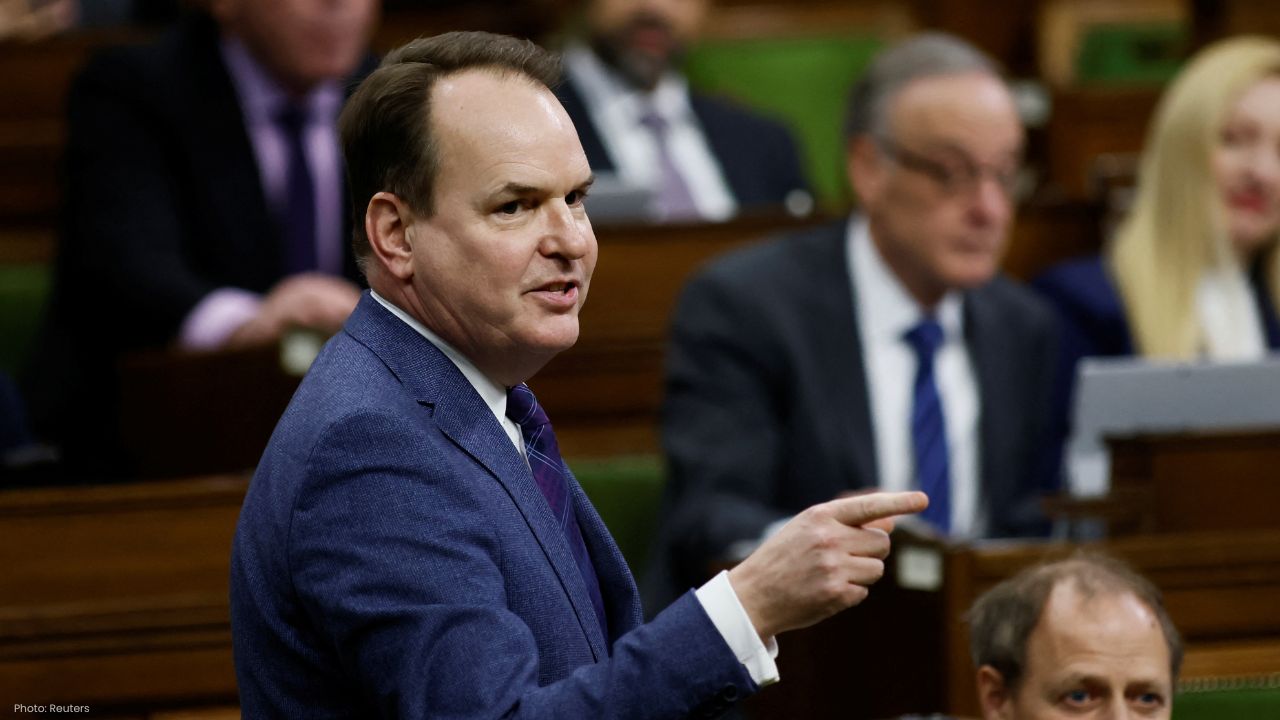
With less than two weeks to go before Ottawa tables its new budget, Liberal House Leader Steve MacKinnon has raised concerns that the government’s fiscal plan may not secure the necessary support to pass in Parliament — a scenario that could trigger another federal election.
Speaking to reporters on Parliament Hill on Tuesday, MacKinnon said he was worried by signals from opposition parties that they might reject the upcoming November 4 budget, even before seeing its contents.
“When I see opposition parties ruling out the possibility of voting for the budget, that’s starting to worry me,” MacKinnon said.
Because the federal budget is considered a confidence vote, a failed motion would dissolve Parliament and send Canadians back to the polls — less than a year after the last election.
Opposition Parties Set Demands
Opposition parties have already begun outlining their fiscal and policy priorities, setting the stage for a tense political showdown.
On Monday, Conservative Leader Pierre Poilievre wrote to Prime Minister Mark Carney demanding what he called an “affordable budget.” His proposals include broad-based tax cuts, limiting the federal deficit to $42 billion, and curbing government spending to reduce inflationary pressures.
Meanwhile, the Bloc Québécois has outlined six key priorities, including:
-
Increased federal health transfers to provinces
-
New infrastructure investments
-
An expansion of the rapid housing initiative
-
Interest-free loans for first-time homebuyers
-
Boosting Old Age Security (OAS) payments for seniors aged 65 to 75
-
Additional funding for Quebec’s language and culture programs
Despite the range of demands, MacKinnon dismissed the opposition’s positions, calling them “unrealistic” and politically motivated.
“We intend to present a plan to Canadians to deal with this very critical moment in our history,” MacKinnon said. “What we’re seeing is opposition parties — the Bloc Québécois, without having even read the budget, ruling out support — and Conservatives making ludicrous demands.”
NDP Pushes Back: ‘It’s the Government’s Job’
NDP interim Leader Don Davies fired back at MacKinnon’s remarks, saying that in a minority Parliament, the responsibility to build consensus lies squarely with the government.
“The question of whether there is an election is entirely up to Mr. Carney,” Davies told reporters in Ottawa. “As the leader of a minority government, it’s his job to craft a budget that can win the support of at least one opposition party.”
Davies said he was “concerned” by MacKinnon’s comments, suggesting they reflected a lack of outreach by the Liberal government.
“For Mr. MacKinnon to say he’s worried, well, that has me worried,” he added. “The government should be reaching out to all parties and working collaboratively to make sure the budget passes.”
Although the NDP caucus was reduced to seven seats in the April election, their votes remain pivotal. The Liberals can pass the budget if the New Democrats either support it outright or abstain from voting — both options keeping the minority government in power.
NDP Priorities: Jobs, Housing, and Health Care
Davies confirmed that he recently met with Prime Minister Carney to discuss his party’s priorities. Following their meeting, he said the NDP wanted to see “substantial investment” in job creation, public health care, and affordable housing, but stopped short of specifying funding levels or timelines.
While the NDP is unlikely to back Conservative-style tax cuts, the party has been pushing for stronger social spending and targeted relief for low- and middle-income Canadians — priorities that could shape their final decision on budget day.
Deficit and Spending Under Scrutiny
Prime Minister Carney has already indicated that the 2025–26 deficit will be larger than the previous year’s, though his government maintains that operational spending — the day-to-day running of departments — will be balanced within three years.
Last month, the Parliamentary Budget Officer (PBO) projected a $68.5 billion federal deficit for the current fiscal year, up from $51.7 billion last year. The forecast does not yet factor in plans to increase defense spending to meet the new NATO target of five per cent of GDP by 2035, nor the government’s strategy to trim public service spending over the next three years.
Economists have warned that balancing the competing demands of fiscal discipline, inflation control, and affordability will be one of the government’s toughest tests.
Countdown to Budget Day
With just days remaining before the budget is unveiled, political observers say the next round of negotiations will be crucial. The Liberals must find at least one partner — most likely the NDP — to keep the government afloat.
If the budget fails, Canada could face an election campaign before the end of the year, marking yet another chapter in an era of political volatility.