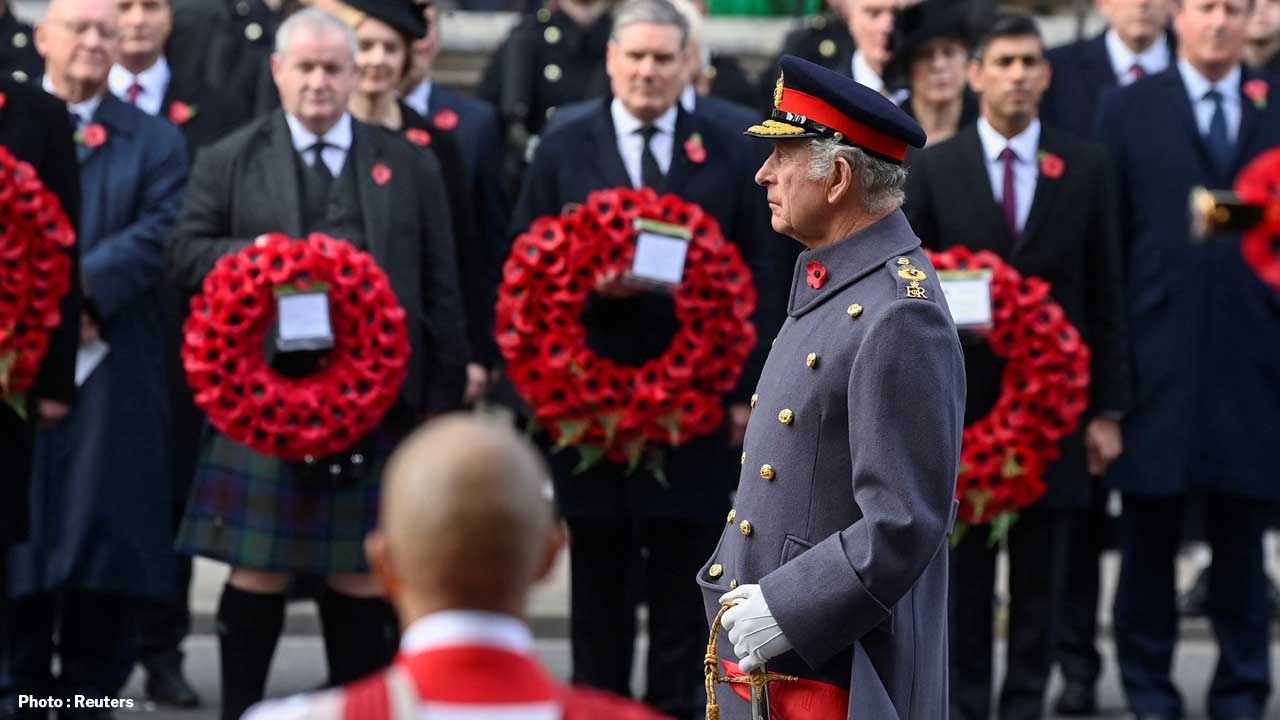
London, UK: King Charles III presided over a commemorative Remembrance Ceremony in Britain on Sunday, honoring the nation’s war dead under clear skies in November while concerns over the Ukraine conflict loom over Europe.
As the clock struck 11 a.m. with Big Ben's chimes, a large gathering of military personnel, veterans, and citizens observed a poignant two minutes of silence. This tranquil moment was interrupted only by a ceremonial gun salute and the sorrowful notes of “The Last Post” played by buglers from the Royal Marines.
In his army field marshal uniform, King Charles III laid a wreath of bright red paper poppies at the Cenotaph, a significant memorial honoring British and allied troops who lost their lives in World War I and subsequent conflicts. This Portland stone monument has stood for over a century as the heart of annual remembrance ceremonies across the nation.
Following the king, Prince William, the heir to the throne, laid his own wreath, alongside other royals including Prince Edward. Notably absent was former Prince Andrew Mountbatten Windsor, who faced title removal and eviction from his royal residence last month.
Prime Minister Keir Starmer, various political figures, and Commonwealth diplomats joined in laying wreaths adorned with the iconic scarlet poppies. Many attendees wore poppies on their lapels, a tradition rooted in the poignant imagery of World War I depicted in the poem In Flanders Fields.
Queen Camilla, the Princess of Wales, alongside other royal family members, observed the ceremony from a balcony of the Foreign, Commonwealth and Development Office. After the wreath-laying, approximately 10,000 veterans, including around 20 from World War II, paraded past the Cenotaph, receiving cheers from the crowd. Among these veterans was 101-year-old Donald Poole, a former Royal Army Ordnance Corps explosives expert during WWII, who expressed pride in honoring both fallen soldiers and the courageous civilians who withstood the Blitz.
The ceremony reaffirmed Britain’s commitment to defense amid ongoing conflicts, with plans to dedicate 3.5% of GDP to military allocations by 2035. This year’s observance was both a solemn tribute to past sacrifices and a reminder of the necessity for vigilance in a world marked by conflict.
King Charles III’s presence underscored the monarchy’s role in collectively honoring and remembering both military and civilian heroes who have defended Britain throughout its tumultuous history.