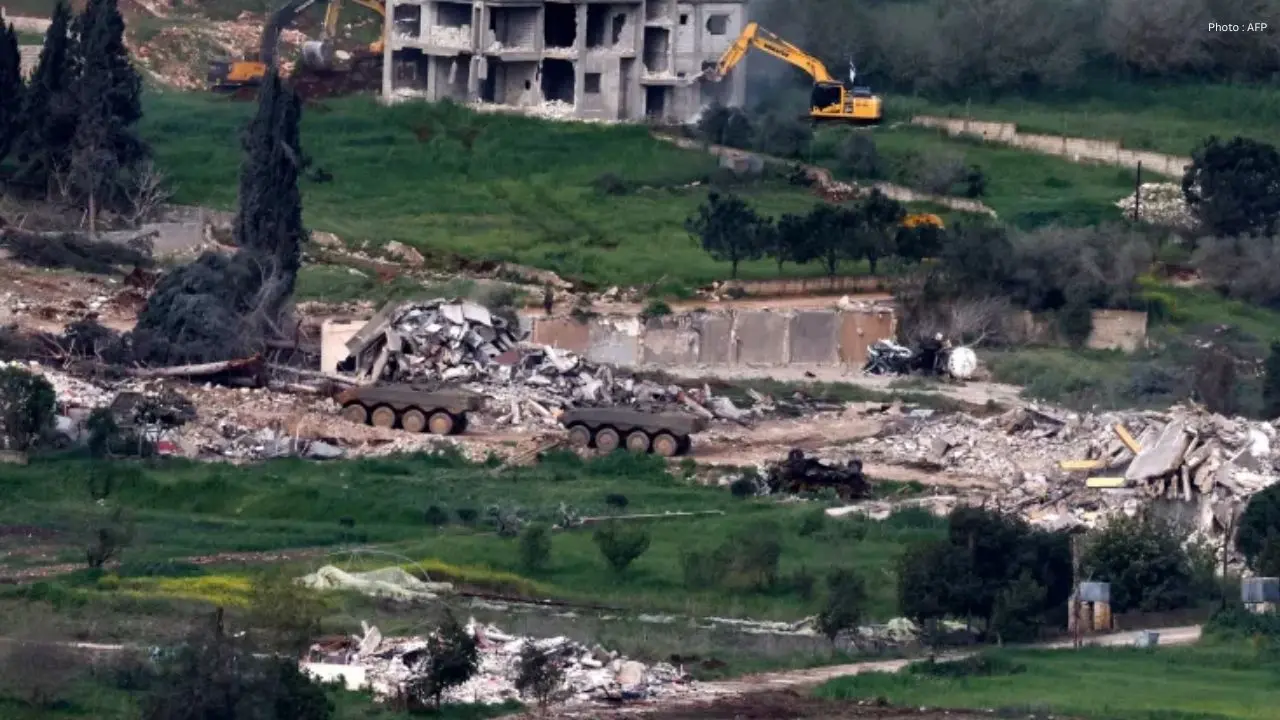
A new military boundary created by Benjamin Netanyahu’s government, known as the “Yellow Line,” is creating serious concerns about whether the ceasefire between Israel and Lebanon is being violated. The zone stretches about 10 kilometers inside southern Lebanon and is currently under Israeli military control.
The ceasefire, which began after weeks of intense fighting, was expected to stop all hostilities. However, reports from the ground suggest that Israeli forces have continued activities such as demolishing homes, firing artillery, and clearing land in areas near the border. These actions have raised questions about whether the ceasefire is truly being respected.
Israeli officials say the “Yellow Line” is a necessary security buffer zone. They argue that maintaining control in this area helps prevent threats from Hezbollah and allows Israel to act in self-defense if needed. The government has also stated that it plans to keep troops in the area and continue operations when it considers them necessary.
On the other hand, Lebanon and Hezbollah strongly reject this move. They say the presence of Israeli forces inside Lebanese territory is a violation of sovereignty and goes against the spirit of the ceasefire agreement. According to them, a ceasefire should mean a complete stop to all military actions, not selective enforcement.
The situation is further complicated by unclear wording in the ceasefire agreement. While it calls for a halt in fighting, it also allows Israel to take action in self-defense against perceived threats. Experts say this creates confusion and gives room for different interpretations, making it difficult to enforce the agreement properly.
There are also growing fears that this temporary military zone could become permanent. Some analysts believe Israel may use control of this land as leverage in future negotiations. This has increased concerns among Lebanese residents, many of whom are already displaced and unable to return to their homes within the restricted zone.
The tensions are not limited to Lebanon alone. The ongoing situation is also linked to wider regional developments involving Iran and the United States. Any escalation in Lebanon could impact diplomatic efforts in the region and increase the risk of further conflict.
Despite both sides officially stating that the ceasefire is still in place, continuous military activity and disagreements over the “Yellow Line” suggest that the situation remains fragile. For now, the future of the ceasefire depends on whether both parties can agree on clear terms and reduce actions that could lead to renewed violence.