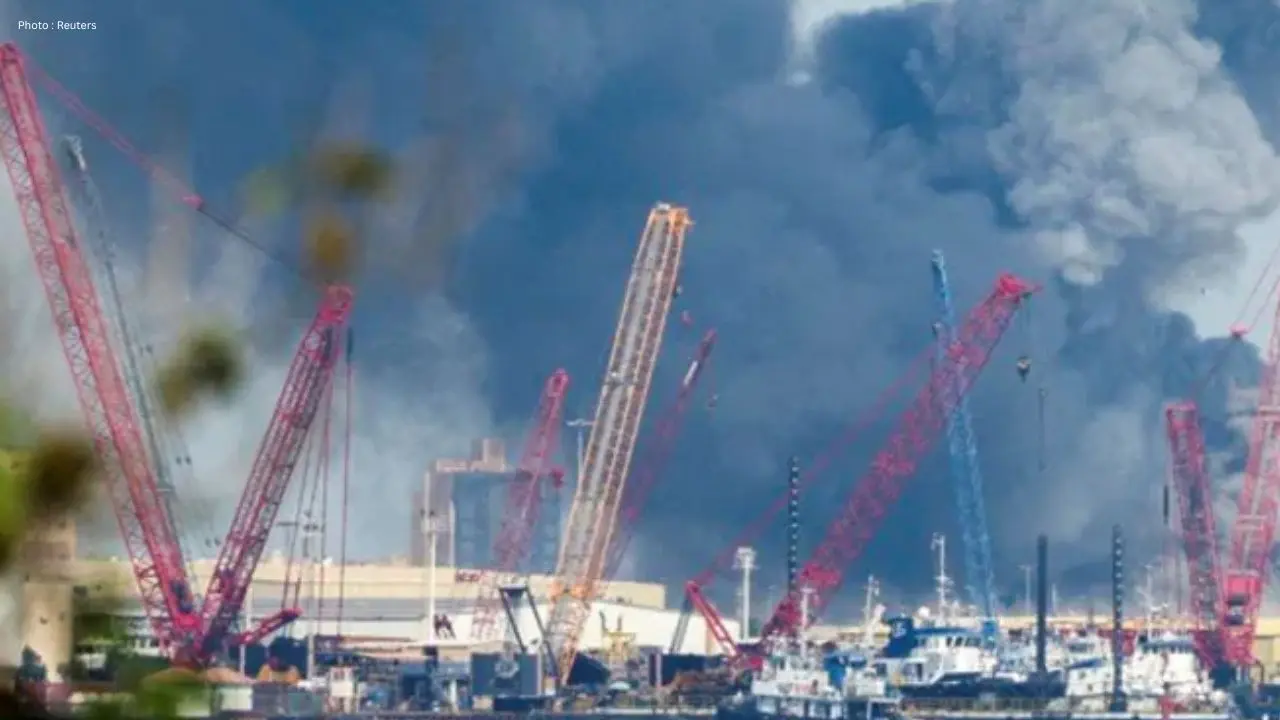
The growing Iran crisis has pushed Gulf monarchies into one of the most difficult strategic situations in recent years, forcing regional powers to balance security concerns, economic stability, and diplomatic relations at the same time. Countries including Saudi Arabia, the United Arab Emirates, Qatar, Bahrain, Kuwait, and Oman are now facing increasing pressure as tensions between Iran, the United States, and Israel continue to affect the Middle East.
The conflict has created major uncertainty across the Gulf region, especially after military operations, naval blockades, and attacks linked to the Iran war disrupted important trade and energy routes. Gulf monarchies have traditionally depended on strong security partnerships with the United States, but at the same time, they also share geographic, economic, and political connections with Iran. This has placed regional governments in a difficult position where supporting one side too strongly could create serious risks for their own national stability.
According to regional analysts, Gulf states have mostly tried to avoid direct involvement in the conflict. Countries such as Saudi Arabia, Qatar, and the UAE have focused on diplomatic efforts and calls for de-escalation instead of openly joining military operations. However, despite their cautious approach, several Gulf countries have still faced security threats, including missile and drone attacks targeting energy infrastructure, airports, ports, and civilian areas.
One of the biggest concerns for Gulf monarchies is the growing instability around the Strait of Hormuz, one of the world’s most important shipping routes for oil and natural gas exports. Nearly 20 percent of global energy shipments pass through the narrow waterway, making the region extremely important for the global economy. Recent tensions and naval restrictions have already reduced shipping activity and caused major increases in global oil prices.
The economic impact of the crisis is becoming increasingly serious for Gulf economies. While rising oil prices may increase short-term government revenues for some Gulf countries, the broader economic damage caused by instability, reduced tourism, shipping disruptions, and investor concerns is creating long-term pressure. Reuters recently reported that Gulf Cooperation Council economies are now facing their worst economic crisis since the COVID-19 pandemic because of the ongoing regional conflict.
Security experts also warn that Gulf monarchies are becoming more vulnerable as the conflict continues. Reports suggest that several countries in the region have used a large portion of their missile defense systems to intercept Iranian drones and ballistic missiles. Analysts believe this could weaken regional defense capabilities if the conflict expands further or continues for several more months.
At the diplomatic level, Gulf states are trying to maintain relations with both Washington and Tehran. Oman has continued efforts to support negotiations and mediation between the United States and Iran, while other Gulf governments are calling for regional dialogue and political solutions. However, experts say the war has exposed the limits of the Gulf monarchies’ influence because major military decisions are still largely controlled by larger global powers.
The crisis is also reshaping regional security thinking. Analysts believe Gulf monarchies may now move toward stronger collective defense coordination and deeper cooperation within the Gulf Cooperation Council. Some experts argue that the conflict has shown Gulf leaders that relying only on outside powers for protection may no longer be enough in an increasingly unstable Middle East.
Meanwhile, Iran continues to send strong messages about its role in the Gulf region. Iranian leaders recently stated that Tehran intends to play a larger role in controlling security around the Strait of Hormuz following the war with the United States and Israel. These statements have increased concerns among Gulf monarchies about the future balance of power in the region.
The ongoing Iran crisis has therefore created a major strategic dilemma for Gulf monarchies. Regional governments are trying to protect their economies, avoid direct military conflict, maintain international partnerships, and ensure domestic stability at the same time. As tensions continue across the Middle East, Gulf leaders are expected to face even more difficult political and security decisions in the coming months.