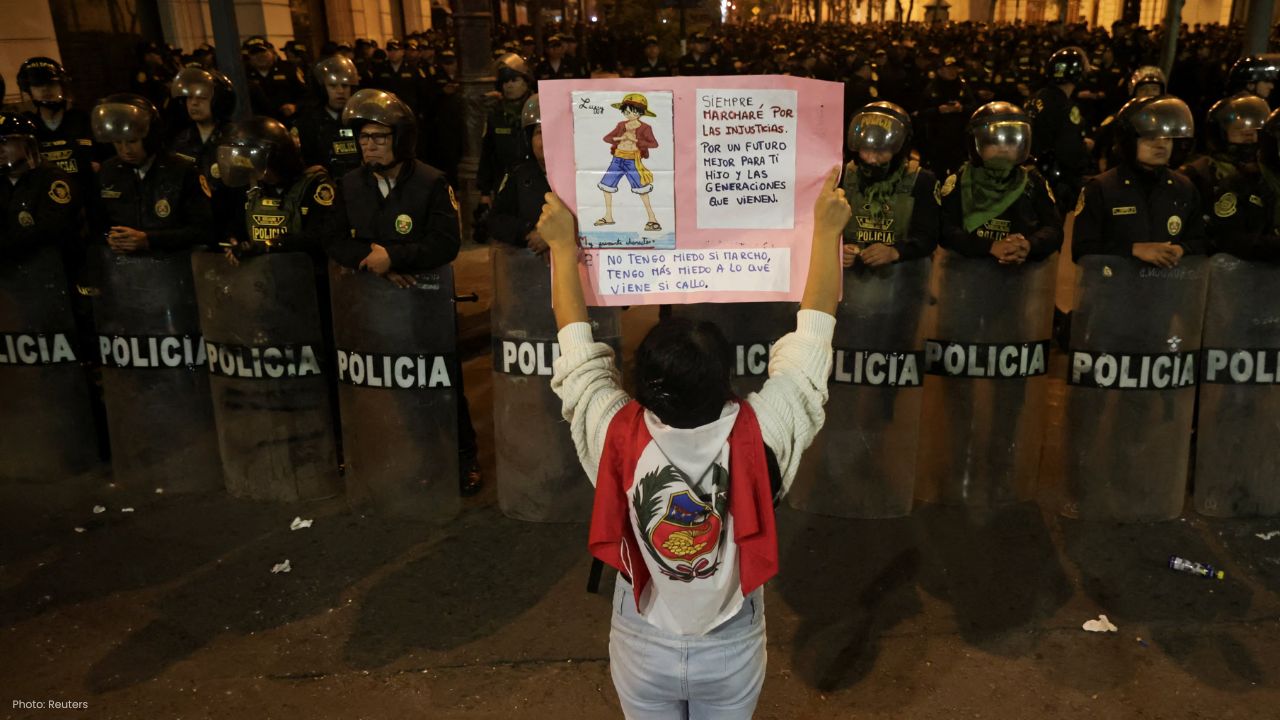
From the Andes to the Himalayas, a new wave of protests is emerging worldwide, driven by young people expressing generational discontent against governments.
This week, Madagascar’s President Andry Rajoelina was forced out of power following a military mutiny, the culmination of weeks of demonstrations led by young protesters identifying as “Gen Z Madagascar.”
Similar movements have unfolded in countries such as Nepal, the Philippines, Indonesia, Kenya, Peru, and Morocco. While each protest started over specific grievances, underlying factors include widening inequality, economic uncertainty, corruption, and nepotism.
The Gen Z Identity and Protest Motivation
Most participants are members of Generation Z, defined roughly as those born between 1996 and 2010, the first generation to grow up entirely in the internet era.
“What connects these youth-led protests is a shared sense that traditional political systems aren’t responsive to their generation’s concerns, whether that’s corruption, climate change, or economic inequality. Protest then becomes the logical outlet when institutional channels feel blocked,” said Sam Nadel, director of Social Change Lab, a U.K.-based nonprofit studying social movements.
Cross-Border Influence and Inspiration
Though their demands vary, these protests are often sparked by government overreach or neglect and sometimes meet harsh security crackdowns.
-
Morocco: The leaderless collective Gen Z 212 demands better public services and more investment in health and education.
-
Peru: Protests over pension reforms expanded into calls for action against corruption and insecurity.
-
Indonesia: Deadly demonstrations erupted over lawmakers’ perks and rising living costs, prompting cabinet reshuffles.
In Nepal, youth protests led to the resignation of the prime minister in September, drawing inspiration from anti-government movements in Sri Lanka (2022) and Bangladesh (2024). Protesters in Madagascar cited these South Asian movements as a model for their own actions.
Cultural Symbols Unite Protesters
A unique pop culture symbol has emerged across multiple protests: a black flag with a grinning skull wearing a straw hat, taken from the Japanese manga and anime One Piece. This emblem represents resistance against corrupt governments.
In Nepal, the flag was hoisted on the gates of the Singha Durbar government complex. It has also appeared in Indonesia, the Philippines, Morocco, Madagascar, and Peru.
David Tafur, a 27-year-old electrician in Lima, Peru, said:
“We’re fighting the same battle — against corrupt officials who, in our case, are also killers.”
Social Media as a Mobilization Tool
While previous youth movements, like Occupy Wall Street, the Arab Spring, and Hong Kong’s Umbrella Revolution, used the internet for mobilization, Gen Z protests are taking it further. Platforms like TikTok, Instagram, X, and Discord are central to planning, awareness, and coordination.
In Nepal, a government ban on social media triggered VPN use to evade restrictions, with young activists spotlighting political inequalities, sharing rally locations, and even discussing interim leadership online.
“Whatever movement happens, whether against corruption or injustice, it spreads through digital media. The changes after the Gen Z protests in Nepal influenced other countries as well,” said protester Yujan Rajbhandari.
Global Citizens Connected
These movements highlight the role of digital connectivity in shaping global activism. As Rajbhandari noted:
“We realized that we are global citizens and the digital space connects us all and plays a powerful role across the world.”
From Madagascar to Peru, Nepal, and beyond, Gen Z protesters are challenging traditional political systems, demonstrating that youth-led movements in the digital age can have both local and global impact.