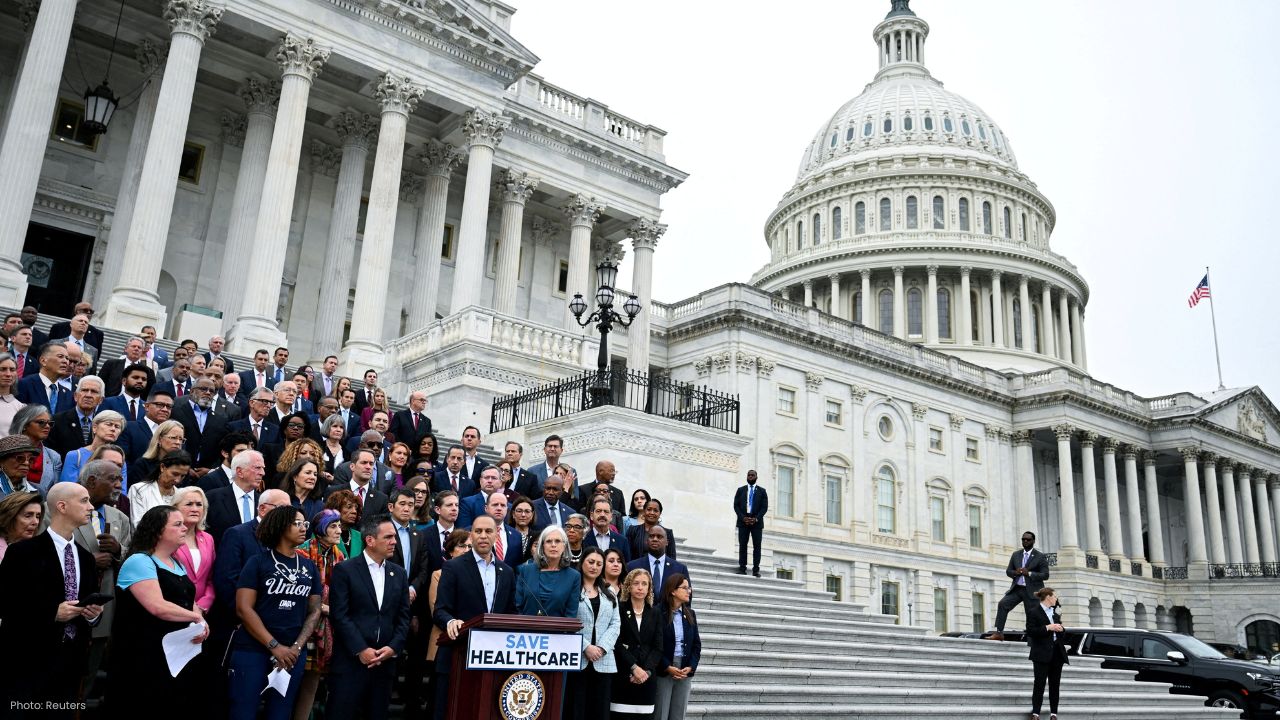
They denounced the layoffs as politically motivated and potentially unlawful. Senate Minority Leader Chuck Schumer accused the White House of “deliberate chaos” and said the administration’s decision would not withstand legal scrutiny.
“Russell Vought just fired thousands of Americans with a tweet,” Schumer said in a statement, calling the decision “an outrageous act of cruelty.” He added, “They are choosing to hurt the very people who protect our country, inspect our food, and respond when disasters strike.”
Unions representing over 800,000 federal employees have already filed a motion in federal court seeking an emergency injunction to halt the firings. A hearing on the matter is scheduled for October 16 in San Francisco, where labor representatives will argue that the dismissals violate employment protections and constitutional guarantees.
Federal departments begin staff reductions.
Multiple federal departments have started notifying employees of impending terminations. A spokesperson from the Treasury Department confirmed that official layoff notices have begun circulating, while the Department of Health and Human Services (HHS) said it was terminating “nonessential personnel” due to the ongoing Democrat-led funding impasse.
A source within the Department of Education also confirmed workforce reductions, saying the move was “inevitable” as long as Congress remains gridlocked.
The layoffs have compounded fears among federal employees, many of whom have already gone weeks without pay. Even those retaining their positions face uncertainty, as the shutdown continues to strain government operations across multiple sectors.
Impact on military and public services
The consequences of the shutdown extend beyond the civil service. More than 1.3 million active-duty military personnel are expected to miss their upcoming paychecks, an unprecedented outcome in modern shutdown history.
Republican House Speaker Mike Johnson acknowledged the growing frustration in Washington, calling it “a somber moment” as lawmakers struggle to find common ground. “We’re not in a good mood here in the Capitol,” he said during a press briefing marking the tenth day of the shutdown.
Nonessential government services have ceased operations since the September 30 funding deadline passed. Senate Democrats have repeatedly blocked a Republican-backed resolution to reopen agencies, objecting to provisions that would reduce subsidies under the Affordable Care Act, which currently helps 24 million Americans afford health insurance.
Trump’s focus shifts amid political gridlock
Despite the escalating crisis, President Trump has largely remained focused on other priorities. In recent days, he has directed his attention toward negotiating a Gaza ceasefire deal and deploying federal troops to assist in immigration enforcement efforts in Democratic-led cities such as Chicago and Portland.
This perceived detachment has frustrated lawmakers from both parties, who are calling for the president to personally intervene to end the standoff. “The American people are sick and tired of the chaos, crisis, and confusion that has been visited upon the country,” said House Minority Leader Hakeem Jeffries, accusing the administration of reckless governance.
Economic fallout and data delays
The shutdown’s ripple effects are now being felt across the economy. The Bureau of Labor Statistics (BLS) announced that it will delay the release of key inflation data—originally scheduled for next week—until October 24. Officials said the postponement was necessary to ensure the Social Security Administration can continue processing payments accurately.
Economists warn that prolonged disruptions to data reporting could complicate fiscal planning and undermine market confidence, particularly as the Federal Reserve continues to assess inflation trends and labor market stability.
A growing sense of uncertainty
As the shutdown drags on, uncertainty looms large for millions of Americans dependent on federal services and paychecks. Analysts caution that if the political stalemate persists beyond mid-October, the U.S. economy could see measurable slowdowns in consumer spending, delayed public projects, and wider disruptions in social programs.
For now, the administration appears determined to maintain its hardline stance, with President Trump showing no sign of compromise. The coming week may prove decisive, as court challenges, congressional negotiations, and mounting public frustration converge to test the durability of one of the most consequential shutdowns in recent U.S. history.