Photo:AFP
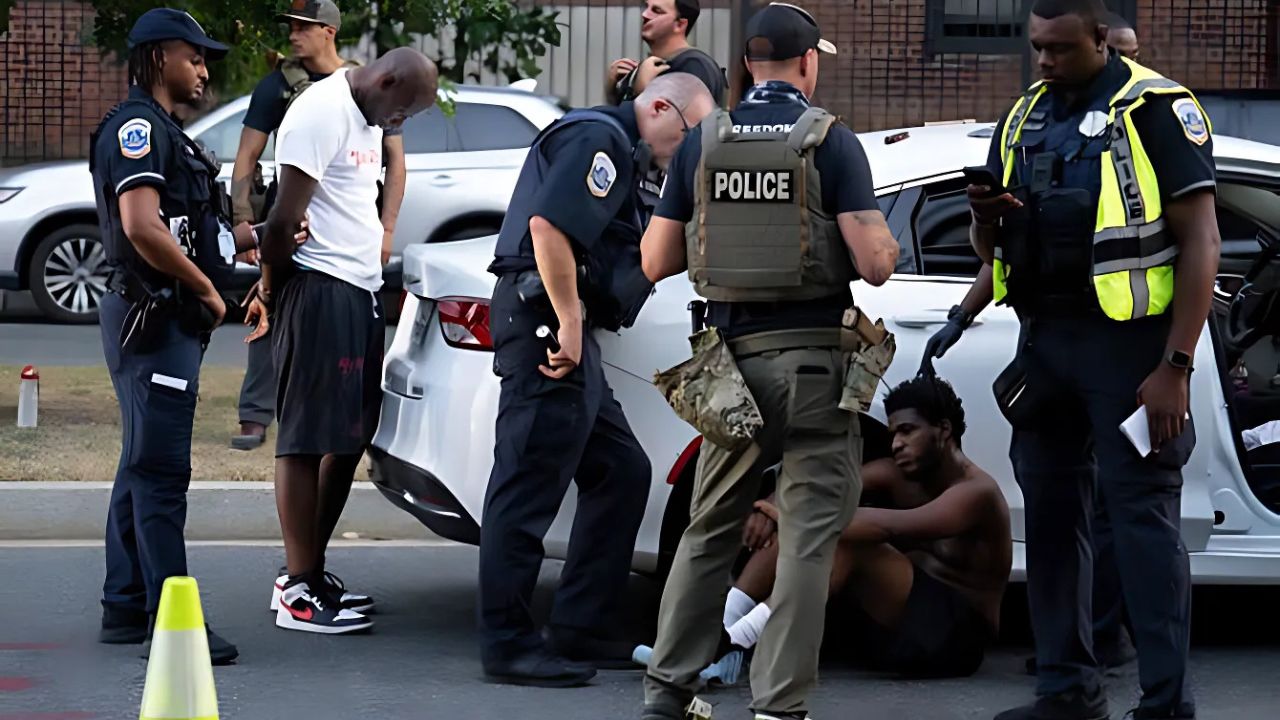
Washington, DC, recently took an unprecedented step in law enforcement leadership with the appointment of Terance "Terry" Cole as the city’s emergency police commissioner. This measure, spearheaded by U.S. Attorney General Pam Bondi as part of the federal government's effort to combat rising crime in the nation's capital, marks a significant shift in authority over the Metropolitan Police Department (MPD). The federal administration, led by then-President Donald Trump, invoked emergency powers under the Home Rule Act to take a direct role in directing DC’s policing during a declared state of emergency.
Background and Context
Washington, DC, like many major U.S. cities, has grappled with challenges related to crime and public safety over the past years. Concerns about increasing rates of violent crime, including homicides and drug-related offenses, have been widely reported. In response to what was described as a worsening law and order situation in the capital, President Trump declared a public emergency and ordered the federal takeover of the city’s police command structure.
Attorney General Pam Bondi acted swiftly following the announcement, naming Terry Cole—then serving as the Director of the U.S. Drug Enforcement Administration (DEA)—as the emergency police commissioner of DC. In this new role, Cole was granted all the powers and duties typically held by the local police chief, effectively superseding the authority of Pamela Smith, DC’s regular police chief, who reports to the city’s mayor.
Terry Cole: Profile and Experience
Terry Cole brings with him over three decades of extensive experience in law enforcement. His career has spanned diverse and challenging environments, including assignments with the DEA in Washington, New York, Colombia, Afghanistan, and the Middle East. Cole holds a bachelor’s degree in criminal justice and has held leadership roles that involved enforcement, intelligence gathering, diversion control, and public outreach.
His appointment was presented as a strategic move to leverage his specialized expertise in drug enforcement and federal law enforcement operations to address the immediate crisis in DC. The federal government signaled that Cole’s leadership would enable a stronger, more integrated approach involving federal agencies like the DEA, FBI, and National Guard alongside local law enforcement.
The Legal and Political Controversy
The decision to appoint Cole was met with staunch resistance from local DC officials and political leaders. Mayor Muriel Bowser and DC Attorney General Brian Schwalb publicly condemned the move, asserting that it violated the city’s home rule and the legal autonomy granted under the Home Rule Act of 1973. They argued there was no legal basis for transferring personnel authority over the District’s police force to a federal official.
Schwalb issued a legal opinion branding the federal directive as “unlawful,” instructing the MPD to continue following the orders of its locally appointed police chief and not those of Cole. The controversy revealed deep tensions between federal control and local governance, with DC leaders emphasizing the importance of local accountability and community-based policing.
Despite the legal challenges and lawsuits filed by the city, Cole’s appointment and the federal takeover proceeded. The Justice Department also required the MPD to revoke local policies that protected undocumented immigrants and previously limited cooperation with federal immigration enforcement—aligning the police department’s operations more closely with federal immigration priorities.
Impact on Policing and Public Safety
With Cole’s appointment, the DC Metropolitan Police Department found itself under an unprecedented federal monitoring and command system aimed at quickly reducing crime and violence. Approximately 800 National Guard troops, alongside federal law enforcement officers, were deployed in visible roles in key parts of the city, including near landmarks and major transportation hubs like Union Station.
This federal surge in personnel and authority was intended to create a more robust law enforcement presence and demonstrate federal commitment to public safety. However, critics worried that the approach risked undermining community trust in the police and potentially disrupted long-established local practices.
Local officials, while endorsing the goal of reducing crime, expressed concern about the lack of consultation and the abruptness of the federal intervention. They pointed out that effective policing requires community cooperation and nuanced understanding of local issues which a federal takeover might hinder.
Broader Political Context
The federal intervention in DC law enforcement took place against a backdrop of heightened political polarization in the United States. The Trump administration’s tough stance on crime and immigration was part of a wider national agenda that included reducing sanctuary city policies and emphasizing law enforcement’s role in immigration control.
The appointment of a federal law enforcement leader over DC’s police was viewed by many as a symbolic and strategic assertion of federal authority in a mostly Democratic city known for its strong advocacy for local governance. The legal battles and public disputes underscored the complexity of federalism and the sometimes conflicting roles of local, state, and national governments.
Future Prospects and Considerations
Attorney General Bondi indicated that Cole’s appointment was intended to last only for the duration of the declared emergency, initially 30 days, with any extension requiring congressional approval. Still, President Trump hinted at possible expansions of such federal oversight to other cities.
The continuing legal and political challenges, including lawsuits and public protests, signaled that the issue would remain contentious and highly debated. The outcome would likely influence future federal-local relations concerning policing and public safety, especially in cities with strong local governance traditions.