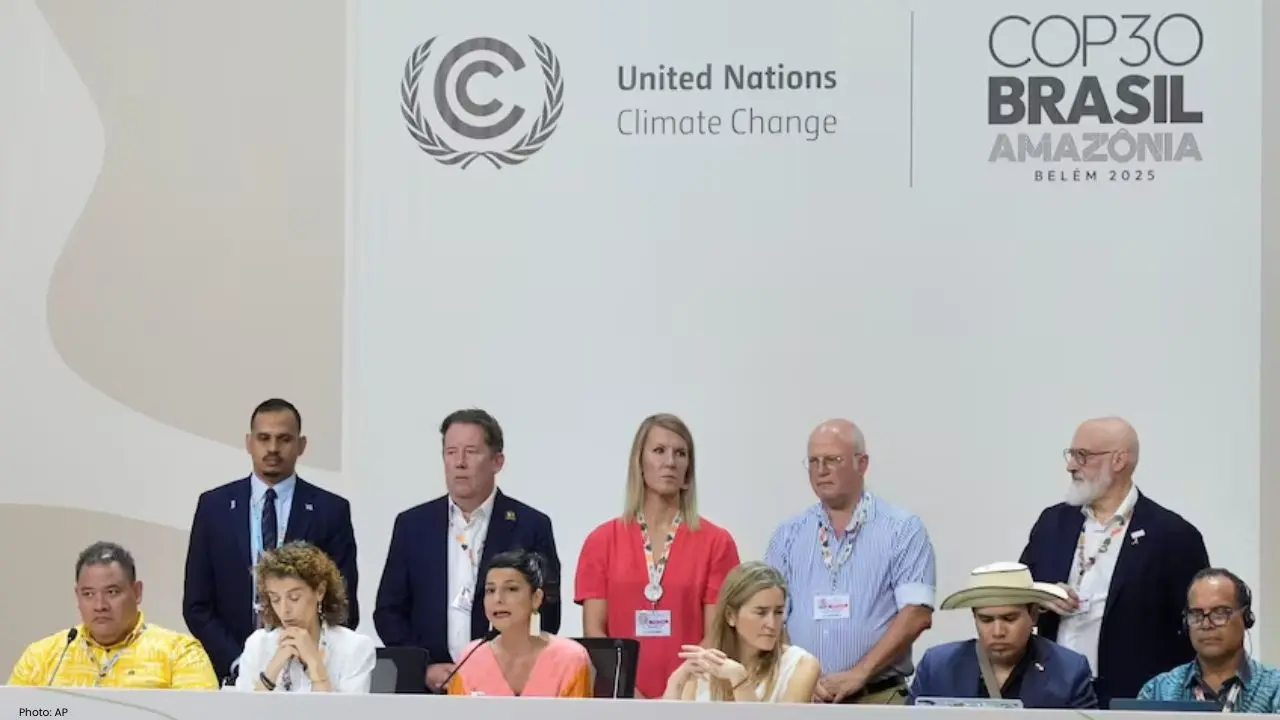
The COP30 climate summit witnessed heightened tensions on Friday as Brazil, the host nation, excluded a global plan to phase out fossil fuels from its draft agreement.
The new draft, unveiled early Friday, removed all references to fossil fuels, sparking debates at the two-week gathering in the Amazon city of Belém, which draws nearly 200 countries.
A coalition of over 30 nations submitted a letter to the COP30 presidency late Thursday, emphasizing their inability to endorse a deal lacking a commitment to a clear transition away from fossil fuels.
Disagreements Surround Draft Adjustments
EU Climate Commissioner Wopke Hoekstra condemned the draft for its lack of ambition, underscoring that it fails to propel emissions reduction efforts. Delegates were set to address the draft in a public plenary session that began Friday morning, with consensus needed for adoption.
The fossil fuel roadmap has emerged as one of the summit's most divisive topics. Nations like Saudi Arabia and other oil-dependent states resist including a phased plan, while numerous countries advocate for a structured approach to uphold commitments made during COP28 two years prior.
A negotiator from a developing country expressed willingness to explore a fossil fuel phase-out but raised concerns that the draft ignores other essential matters, such as climate finance. The supporting letter included nations such as Colombia, France, Germany, Kenya, the Marshall Islands, Mexico, the Netherlands, South Korea, Spain, and Britain.
Canada chose not to endorse the letter. An Environment and Climate Change Canada spokesperson highlighted the nation's commitment to promoting climate action and supporting fossil fuel transitions that align with national interests. Canadian delegates are focused on achieving practical results that reflect domestic policies.
Challenges in Climate Finance and Trade
The draft agreement proposes to triple global financing for climate adaptation by 2030 from 2025 levels but remains silent on the sources of this funding—whether it will stem from wealthy nations, development banks, or private sector investment. This lack of clarity could unsettle poorer nations that are in need of robust public finance assurances for crucial adaptation initiatives, which are vital for saving lives but often offer limited financial returns.
The agreement also hints at initiating discussions on trade during upcoming COP summits, engaging governments and organizations like the World Trade Organization. This proposal is likely to resonate with countries such as China, which has long pushed for trade considerations in climate dialogues. However, this could spark contention within the European Union, as discussions on trade frequently revolve around the EU carbon border levy, criticized and sought to be abolished by South Africa and India.