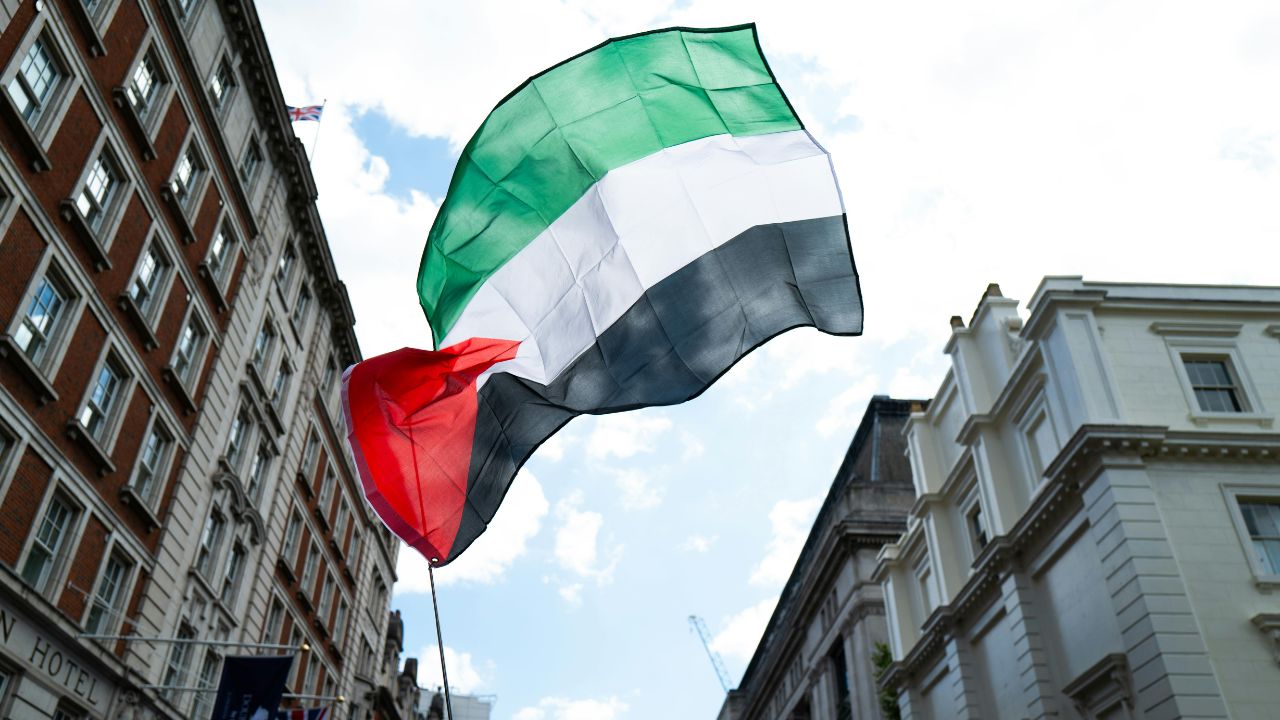
Last Sunday, Prime Minister Mark Carney announced that Canada would formally recognize Palestinian statehood. This move places Canada alongside countries including Australia, Portugal, the U.K., and France, contributing to the majority of United Nations members—147 out of 193—who already recognize Palestine as a sovereign state.
Carney emphasized that the decision was prompted by the Israeli government’s “avowed policy” of preventing the establishment of a Palestinian state.
The announcement received immediate support from Palestinian officials. The Palestinian Authority welcomed the move, and Hamas officials connected it to the aftermath of the deadly October 7, 2023, attacks against Israel.
Israel, unsurprisingly, reacted with strong condemnation. Israeli ambassador to the UN Danny Danon described the recognition as “empty declarations,” while Prime Minister Benjamin Netanyahu stated that it “gives a huge reward to terrorism” and reaffirmed that “a Palestinian state will not be established west of the Jordan River.”
What Defines a State?
The question of Palestinian statehood raises complex issues. Catherine Frost, a political science professor at McMaster University, notes that state recognition is fluid and highly political.
The 1933 Montevideo Convention outlines four criteria for statehood:
However, meeting these criteria does not automatically guarantee recognition. Frost explains that a state is often recognized only when another state acknowledges it as such, making recognition “binary” and largely political.
George Kyris, an international relations expert at the University of Birmingham, emphasizes that recognition has historically been influenced by political considerations rather than purely legal ones.
Does Palestine Meet the Criteria?
Experts debate whether Palestine meets the Montevideo Convention’s standards.
-
Population: Palestine has a permanent population.
-
Territory: Borders are disputed but generally encompass the West Bank, Gaza Strip, and East Jerusalem.
-
Government: Mahmoud Abbas heads the Palestinian Authority, which has limited control in parts of the West Bank. Gaza is controlled by Hamas following Israel’s withdrawal in 2005 and subsequent conflict in 2007.
-
Capacity for international relations: Recognition by other states strengthens Palestine’s capacity for diplomacy, though its authority on the ground remains limited.
Daniel Kurtzer, former U.S. ambassador to Egypt and Israel, notes that disputed borders complicate the matter, but Frost points out that new states like South Sudan were recognized despite unresolved border issues, highlighting the subjectivity in state recognition.
Symbolic or Practical Impact?
Some experts describe the latest recognition as mostly symbolic. Kurtzer argues that Israel retains control over the territories, limiting the practical impact of diplomatic recognition.
Romain Le Boeuf, a professor of international law in France, agrees that recognition does not confer new legal rights but marks a shrinking minority of UN members who do not acknowledge Palestinian statehood.
Recognition may bring practical benefits, however. Countries recognizing Palestine could engage in international treaties and commerce, providing Palestinians better access to global goods.
Ardi Imseis, former UN official and law professor at Queen’s University, notes that recognition also prompts countries to reassess bilateral relations with Israel, ensuring that Israel respects obligations toward a recognized Palestinian state.
Canada, for example, could now establish an embassy in Ramallah, strengthen diplomatic ties, and exchange ambassadors with Palestine, reinforcing its official status in international law.
Canada’s recognition of Palestinian statehood reflects a growing international consensus, even as Israel continues to reject a two-state solution. While the immediate legal and political impact may be limited, the move enhances Palestine’s standing in global diplomacy and underscores the continued evolution of international recognition as both a political and legal instrument.