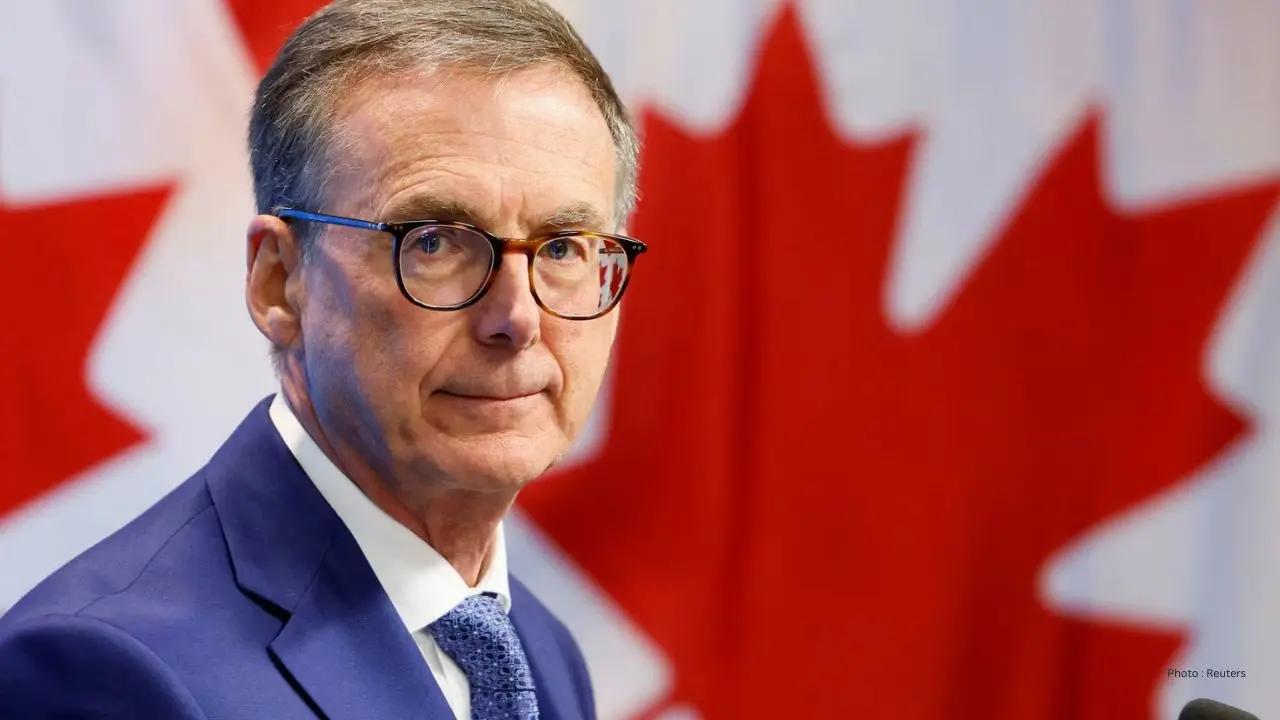
The Bank of Canada is widely expected to keep its benchmark interest rate unchanged as policymakers navigate growing economic uncertainty caused by global tensions and trade pressures. Analysts and market participants anticipate that Governor Tiff Macklem and his council will hold the key rate at 2.25% in their upcoming decision, marking the fourth consecutive pause in monetary policy adjustments.
The central bank faces a complex situation, balancing the inflationary impact of rising oil prices linked to the ongoing conflict involving Iran, against the economic slowdown triggered by U.S. tariffs on Canadian exports. This dual pressure has made it difficult for policymakers to determine the next direction for interest rates.
Recent data shows that inflation in Canada rose to 2.4% in March, largely driven by higher gasoline prices. However, underlying inflation — which excludes volatile items like food and energy — remains relatively subdued at 1.9%, indicating that broader price pressures are still under control. This has given the central bank some room to remain cautious rather than rushing into rate hikes.
Officials have previously indicated that they may “look through” temporary spikes in inflation caused by external shocks such as oil price surges. However, there is growing concern that if higher energy costs persist, they could begin to influence long-term inflation expectations, which may eventually require tighter monetary policy.
At the same time, Canada’s economic growth has shown signs of weakness. The economy is estimated to have expanded by around 1.5% in the first quarter, reflecting the impact of reduced exports due to U.S. tariffs on key sectors such as steel, aluminum, automobiles, and forestry. Slower population growth has also contributed to softer economic momentum.
Economists suggest that the central bank is likely to adopt a wait-and-watch approach for now. With limited evidence of sustained inflationary pressure and ongoing risks to growth, there is little urgency to change the current policy stance. The uncertainty created by the conflict in the Middle East and fluctuating oil prices further supports a cautious outlook.
As a major energy exporter, Canada could benefit from higher oil prices through increased revenues, potentially supporting overall economic activity. However, experts note that this positive effect depends on whether companies reinvest these gains into the economy, which has not yet been clearly observed.
The upcoming monetary policy report is expected to provide more detailed insights into how the Bank of Canada views the path of inflation and economic growth in the coming months. However, with global conditions remaining volatile, policymakers are unlikely to offer strong forward guidance on future rate changes.
Overall, the central bank appears set to maintain stability in its policy while closely monitoring evolving economic conditions, signaling a careful balance between controlling inflation and supporting growth.